
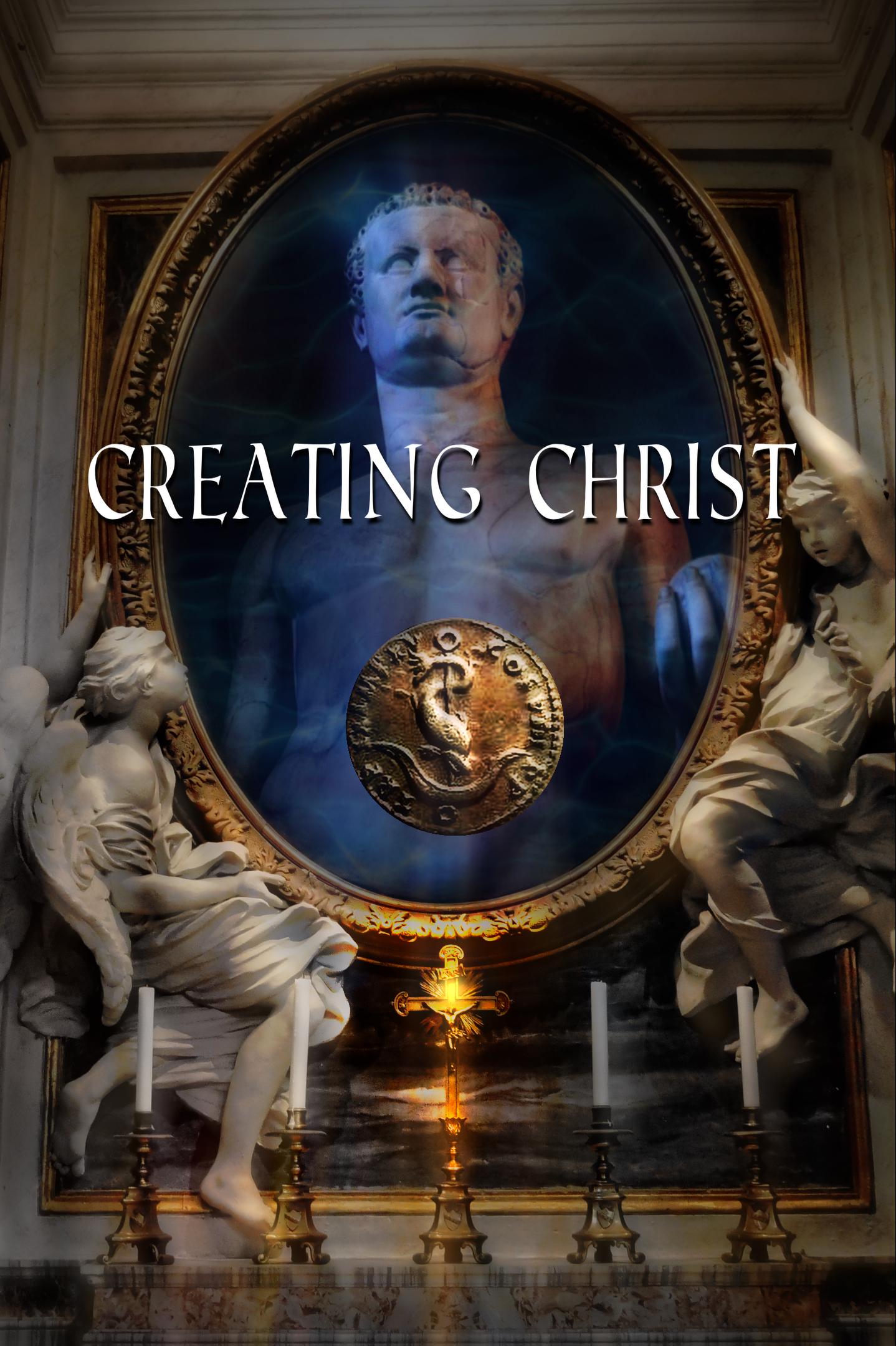
Forensics expert J.S. Valliant reconstructs back story of how Roman Elites conspired to create Christianity, changing the course of history.
Trailer
Pemeran
Fritz Heede
Director
Nijole Sparkis
Director
Robert Eisenman
Self
Warren Fahy
Self
Robert Price
Self
Acharya Sanning
Self
James S. Valliant
Self
Nijole Sparkis
Writer
Mungkin Anda Juga Suka
Creating Christ
Addicted to Sexting
Sonic Sea
Stormy
Madagascar Weirdest
Secrets of Size: Atoms to Supergalaxies
How to Get Rich
Marvel Studios: Assembled
The BMF Documentary: Blowing Money Fast
The Walking Dead: Origins
Trust Me: The False Prophet
Michael Jackson: The Verdict
Emergency NYC
Eat the Rich: The GameStop Saga
Paranormal Caught on Camera
Nelly & Ashanti: We Belong Together
Should I Marry a Murderer?
Girls Gone Wild: The Untold Story
Turning Point: The Bomb and the Cold War
Bad Influence: The Dark Side of Kidfluencing
David Blaine: Do Not Attempt
Katrina: Come Hell and High Water
One Day at Disney
Countdown: Inspiration4 Mission to Space
Komentar
4 Komentar
An interesting survey of roman imperial power and it's creation, adaptation, utilisation, neogtiation and final adoption of the emerging forms of Christian religion. If there is a weakness it would be that the work has an american slant to the narrative and seems to have been made for american Christian digestion. So with that said, the film misses a trick by mislaying Jesus Christ altogether. He simply occurs as a bit part player in the epilogue and one can't help wondering why the film does this, considering the apparant intended viewer. The film comes close to but misses the opportunity of inserting a real Jesus. 1. It states in passing that the word 'Christ' is originally greek but omits to give further definition or explain what the original greek term reffered to, being the 'annoited one' mentioned as a messiah in Jewish scripture. 2. It notes that the gospels are much more literary device than factual testimony but fails to explain the origins of gospel writing which leads to a clue that Jesus may have been a real person. If it's important to include the distant possiblity of the real Jesus, then the origins of gospel writing need presenting: The roman world revered all Greek literature as the highest pinacle of human culture. In fact they revered all things greek in general and greek slaves were routinely employed to educate the aristoratic and elite's children. Likewise, the roman empire relied on a news gathering network of 'libraries' which wrote the news of the day and this was done by 'scribes'. The tradition of being a scribe was passed through the male line from father to son and the apprentice to the craft and job meant a life already determined but considered a privilldge to be born into such a fate. Part of the training of the scribe was emersion in greek literature, with the work of Plato considered the highest quality, relating particually to the character of Socrates, someone we have only been able to know of through Plato's works. So it is understood that in a far off province, a trial of a man called Jesus did take place and that the scribes were excited to see that the form of argument manifested during the trial resembled and evoked Plato's trial and Death of Socrates. This contemporary manifestation excited the scribes and a tradition took root in training, to write the trial of an unknwn provoncial named Jesus in the manner of the Trial and death of Socrates so as to elevate the quotidian subject to the level of Socrates. This educational practice spread so that greek slaves educating roman aristcrats also applied what was in essence a literary exercise which gave insight into the strucutre of literature, drama, Plato and the character of Socrates. So it was that by the time the gospels occur, the tradition of writing the trial of Jesus as a mark of a recieved greek education was well established. The literay orgins of the gospels are part and parcel of the rite of passage of a well educated person in the roman world. The fall, trial and death of a man called Jesus as told in the gospels is a formal exercise in dramatic writing lifted straight from Plato's own work about Socrates death and a reading of the latter makes plain the evidence. The fact that an exercise originally devised to celebrate and teach greek culture becomes included in the bible highlights the Greek literary root of Christianity alongside the more literary contributions of Jewish scripture. Both together make the idea of text and a book being central to Christian religion highly inevitable. I think it's important to re-insert a real jesus into the picture this film makes, but from a historical perspective and the scribe exercise proposal fits as well as all the other historical assertions mentioned in the film.
source: Creating Christ