
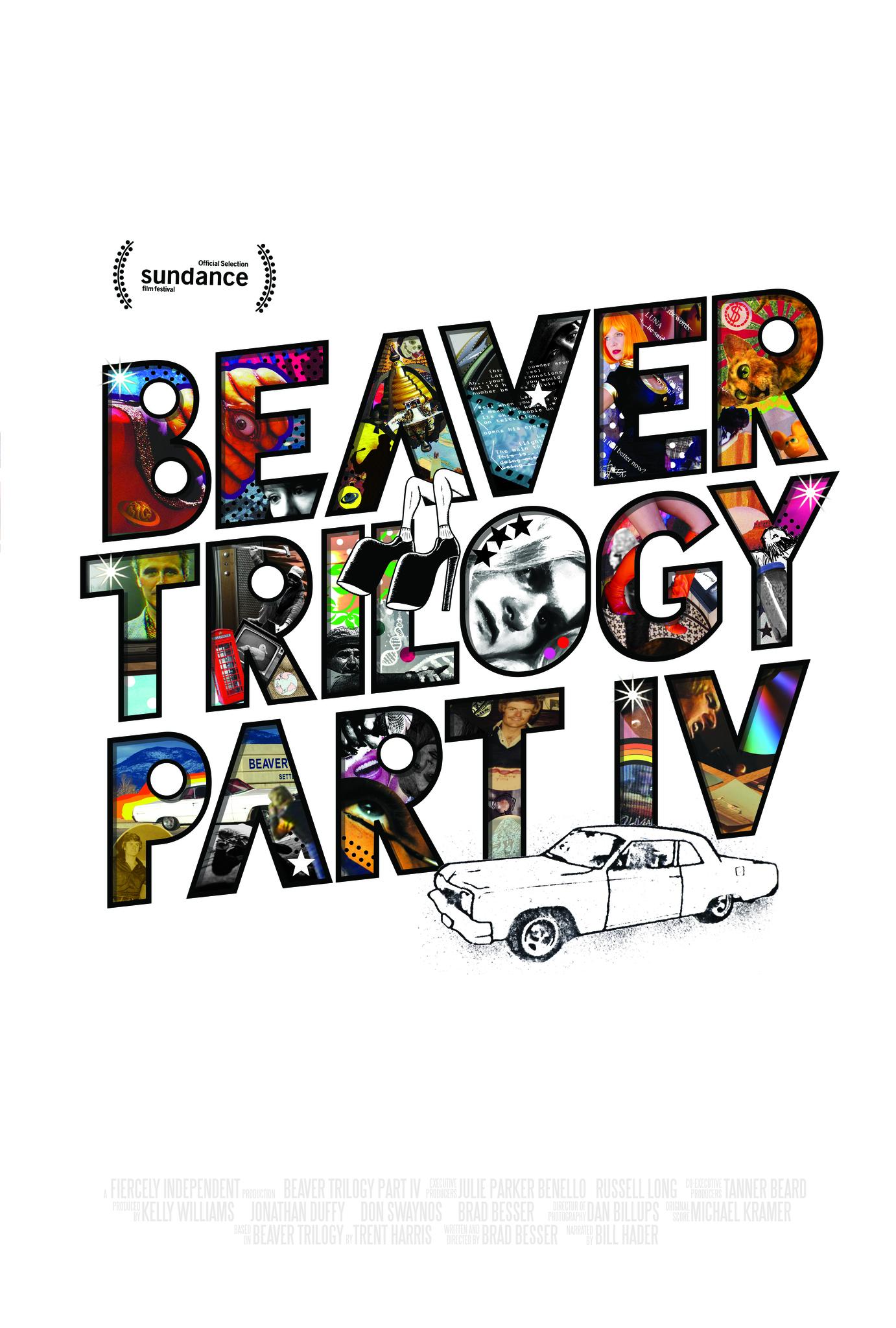
A chance meeting in a parking lot in 1979 between filmmaker Trent Harris and a young man from Beaver, Utah inspired the creation of an underground film that is now known as Beaver Trilogy. But the film itself is only part of the story.
Trailer
Pemeran
Bill Hader
Self - Narrator
Trent Harris
Self
Groovin' Gary
Self
Brad Besser
Self
Robert Burgos
Self
Alex Caldiero
Self
Scott Carrier
Self
Rod Decker
Self
Ken Fall
Self
Nancy Griffiths George
Self
Laurie Griffiths
Self
Richard Lavon Griffiths
Self
Trevor Groth
Self
Jared Hess
Self
Vicki Griffiths Hutchings
Self
Starlee Kine
Self
Kent Maxwell
Self
Sean P. Means
Self
Mungkin Anda Juga Suka
Beaver Trilogy Part IV
Addicted to Sexting
Rat Film
Stripped: Las Vegas
Not So Pretty
Sex Next Door
The Business of Drugs
Magic City: An American Fantasy
America's Sweethearts: Dallas Cowboys Cheerleaders
Animal
The BMF Documentary: Blowing Money Fast
The Principles of Pleasure
The Mind, Explained
Trust Me: The False Prophet
Michael Jackson: The Verdict
Nelly & Ashanti: We Belong Together
Should I Marry a Murderer?
Behind Bars: The World's Toughest Prisons
Wanted: The Escape of Carlos Ghosn
Spycraft
David Blaine: Do Not Attempt
Murder 360
One Day at Disney
What's Next: The Future with Bill Gates
Komentar
7 Komentar
source: Beaver Trilogy Part IV
Almost 12 years ago, I had the privilege of taking Trent Harris' film class at the University of Utah, and we were assigned to observe the original "Beaver Trilogy" for an assignment. For those who don't know, this collection of three short films begins with the actual 1979 encounter with Dick Griffiths (aka Goovin' Gary) outside the KUTV studios. Griffiths eventually invites Mr. Harris to film a talent show in Beaver, Utah where he performs as "Olivia Newton Dawn." The following two elements are fictionalized recreations Mr. Harris developed starring Sean Penn and Crispin Glover respectively. Director Brad Besser sets two paths into motion in this "Where Are They Now?" endeavor as he seeks to find the whereabouts of Mr. Griffiths nearly 36 years later and showcases Mr. Harris' wild film career. While the latter takes viewers from the L.A. riots to Southeast Asia with Mr. Harris' undertakings, it's the candid interviews and uproarious tales from friends and family in central Utah that provide the most entertainment. Rather than having the story lines veer away from each other, it would have been more appealing to keep the direct line to the source material intact with additional stories from the Griffiths and their friends. -Jimmy Martin
When I first saw the original Beaver Trilogy someone described it to me as being "something like Grey Gardens". I was actually appalled after I watched it. This has nothing to do with carefully rounded portray that Maysels brothers created. The Beaver Triology is just based on some random footage of an awkward, seemingly repressed and maybe disturbed young man, exploiting his obvious naivety to present him as a freakish fool. Trent Harris looks at his subject with a voyeuristic lense, he never tries to get a fuller, more nuanced picture of Groovin' Gary. This new documentary claims to show us the bigger picture by giving us insights into both Harris' and Dick Griffiths' (aka Groovin' Gary) side of the story. And while it does give us some of that it never really asks the right questions. At about 15min into the film, Dianne Orr, a producer for the TV station that Harris worked for, is the one of the few voices of reason here: "When Trent showed me the footage from that talent show, I was really worried. I thought it went too far and exposed too much". Sadly this sentiment is never fully explored in this feature. It does not ask Harris straightforward if he feels reponsible for the suicide attempt of Griffiths. It never asks what it would mean for the subject to be portrayed as a somewhat queer personality in a conservative Utah town. Griffiths, who has passed away since, is represented by his sisters and friends, who can only give us a misty-eyed second hand picture of him, but can't really answer the question how his state of mind was at the time. Harris on the other hand is given plenty of opportunity to glorify himself, promoting his new movie and playing down the moral obligation that a filmmaker has to an unwitting subject.
source: Beaver Trilogy Part IV
Almost 12 years ago, I had the privilege of taking Trent Harris' film class at the University of Utah, and we were assigned to observe the original "Beaver Trilogy" for an assignment. For those who don't know, this collection of three short films begins with the actual 1979 encounter with Dick Griffiths (aka Goovin' Gary) outside the KUTV studios. Griffiths eventually invites Mr. Harris to film a talent show in Beaver, Utah where he performs as "Olivia Newton Dawn." The following two elements are fictionalized recreations Mr. Harris developed starring Sean Penn and Crispin Glover respectively. Director Brad Besser sets two paths into motion in this "Where Are They Now?" endeavor as he seeks to find the whereabouts of Mr. Griffiths nearly 36 years later and showcases Mr. Harris' wild film career. While the latter takes viewers from the L.A. riots to Southeast Asia with Mr. Harris' undertakings, it's the candid interviews and uproarious tales from friends and family in central Utah that provide the most entertainment. Rather than having the story lines veer away from each other, it would have been more appealing to keep the direct line to the source material intact with additional stories from the Griffiths and their friends. -Jimmy Martin
When I first saw the original Beaver Trilogy someone described it to me as being "something like Grey Gardens". I was actually appalled after I watched it. This has nothing to do with carefully rounded portray that Maysels brothers created. The Beaver Triology is just based on some random footage of an awkward, seemingly repressed and maybe disturbed young man, exploiting his obvious naivety to present him as a freakish fool. Trent Harris looks at his subject with a voyeuristic lense, he never tries to get a fuller, more nuanced picture of Groovin' Gary. This new documentary claims to show us the bigger picture by giving us insights into both Harris' and Dick Griffiths' (aka Groovin' Gary) side of the story. And while it does give us some of that it never really asks the right questions. At about 15min into the film, Dianne Orr, a producer for the TV station that Harris worked for, is the one of the few voices of reason here: "When Trent showed me the footage from that talent show, I was really worried. I thought it went too far and exposed too much". Sadly this sentiment is never fully explored in this feature. It does not ask Harris straightforward if he feels reponsible for the suicide attempt of Griffiths. It never asks what it would mean for the subject to be portrayed as a somewhat queer personality in a conservative Utah town. Griffiths, who has passed away since, is represented by his sisters and friends, who can only give us a misty-eyed second hand picture of him, but can't really answer the question how his state of mind was at the time. Harris on the other hand is given plenty of opportunity to glorify himself, promoting his new movie and playing down the moral obligation that a filmmaker has to an unwitting subject.
Beaver Trilogy Part IV