
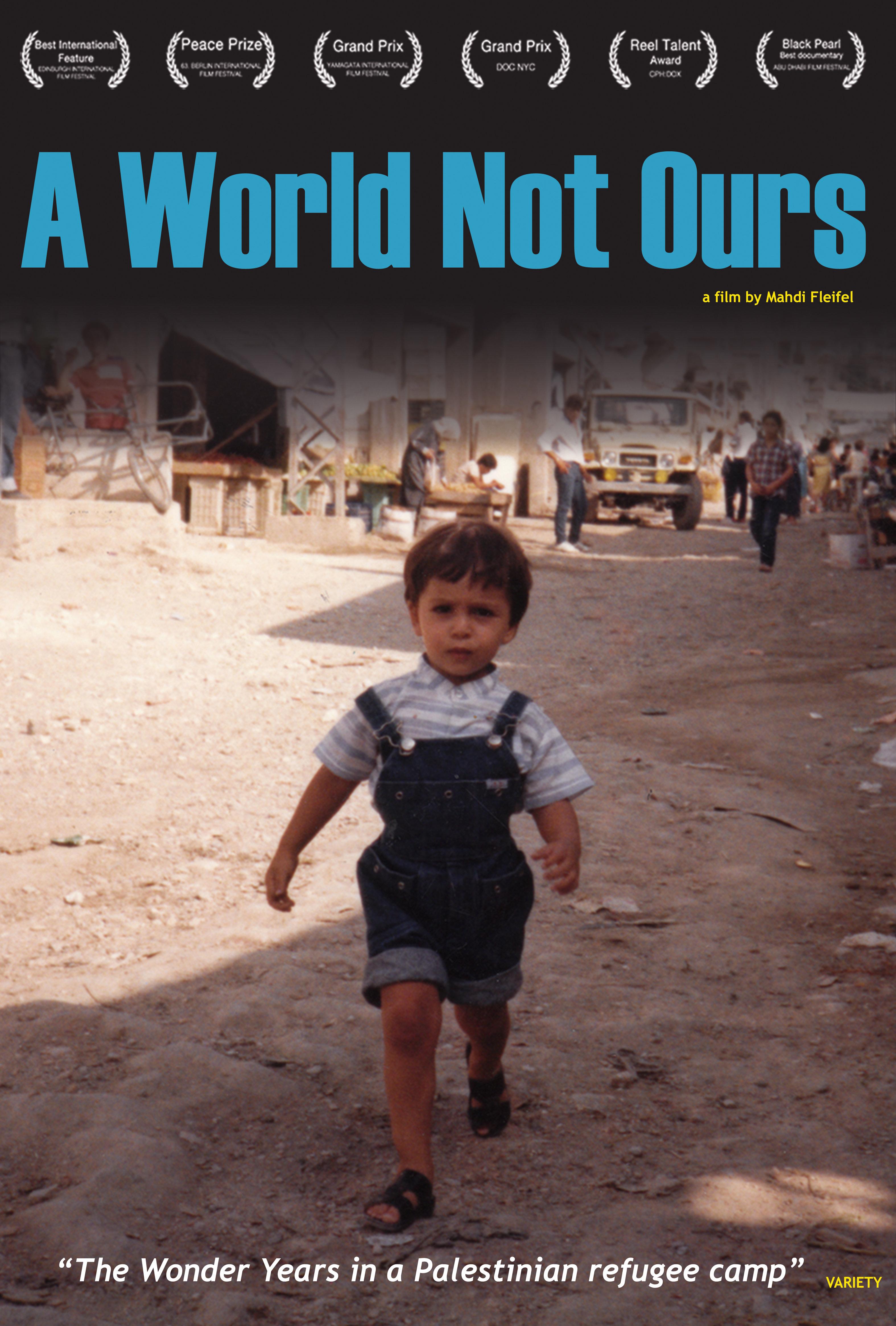
An intimate, and often humorous, portrait of three generations of exile in the refugee camp of Ein el-Helweh, in southern Lebanon. Based on a wealth of personal recordings, family archives, and historical footage, the film is a sensitive, and illuminating study of belonging, friendship, and family in the lives of those for whom dispossession is the norm, and yearning their daily lives.
Trailer
Pemeran
Mahdi Fleifel
Director
Mahdi Fleifel
Writer
Mungkin Anda Juga Suka
A World Not Ours
Tech Billionaires: Bill Gates
12 O'Clock Boys
Anna Nicole Smith: You Don't Know Me
Pirates: Behind the Legends
Genghis Khan: The Secret History of the Mongols
The Beatles: Get Back
Porn King: The Rise & Fall of Ron Jeremy
The Boleyns: A Scandalous Family
The Last Dance
The Trials of Winnie Mandela
Churchill at War
How to Become a Tyrant
The Men Who Built America
Dark Side of the '90s
Hitler: The Lost Tapes of the Third Reich
Uncensored
Muhammad Ali
Benjamin Franklin
Kennedy
Grant
Theodore Roosevelt
Kevin Costner's the West
Dynasty: The Murdochs
Komentar
4 Komentar
Mahdi Fleifel's documentary is a fascinating piece that works on two levels. At one level it looks at the plight of the Palestinian refugees who have spent decades in a camp in Lebanon; unable to return to their own country and deprived of the right to work in their adopted nation, they lead a kind of half-life. The camp is a dense network of narrow roads and alleyways, stuffed full of shops, cafés and meeting-places, where families of different generations congregate. Fleifel's film is set round the World Cup of 2010, where different members of the Palestinian community support different teams - Germany, Italy, Brazil. The tournament provides the context for drawing people together both to enjoy the soccer as well as their own company. But this event provides only a temporary respite for many refugees, who spend their days doing nothing except driving round the camp, defending it from Israelis and brandishing weapons. At another level Fleifel explores his own feelings; as a Palestinian born in Dubai, he might have considered himself an expat, but having spent time living in the camp, he understood precisely how everyone felt. However his family decided to move away from the camp and settle in Denmark, giving Fleifel a European passport so that he could readily escape from the camp whenever he chose. He returns regularly to the camp, but always considers himself an outsider, despite the fact that many of his close friends still live there. A heartfelt, passionate analysis of life on the margins, A WORLD NOT OURS not only explores feelings of alienation, shared by Fleifel and the camp residents alike, but shows how many Palestinians have become so disillusioned that they don't even support their nation any more in its struggle against Israel. They think of themselves as the forgotten people, left to rot in an alien nation with few rights to improve their lives.
Talented director. He is clearly ambient with the people, evident from their ease with his filming them, receiving him (his lens) with open and kind willingness. The characters themselves are strikingly charismatic. The interception of political historical events is very balanced, and almost embedded in the storyline, as if without notice. Subjects of discussion come in conversation instead of interview, which feel so pertaining, genuine, reflective and timely. It is neither romantic nor melodramatic, also not propagandist nor neutral, perhaps a most real form of documentary. There's almost an absence of mise-en-scène, though the sets are highly cinematic and effective. The open confidence in the storytelling had me weary for privacy, especially the earlier footage had it not been intended for a film, I felt it intrusive to find its way to the public screen. The documentary made me reflect more on the production, the personalities, than the actual Palestinian tragedy. Beyond and above the misery, was a reality that somehow could be seen as universal. A universal meaning: a man is and remains what he is, irrespective of where he is. Ayn El Helwe, Danmark, Athens, change the setting, the man is very much himself, like a condition overriding context. Another very marking element in the film is the distinct presence of humor and kindness in a life devoid of elements for humor. Also symbolic is that the thinking of a man is what makes him. The man who appears to survive his generation with his unshaken foundational faith - in return, for example. Another who appears to maintain an unfaltering cool has his plan - to leave. Mahdi Fleifel excelled at narration and editing footage, and engaging key characters to relate his story and history.