
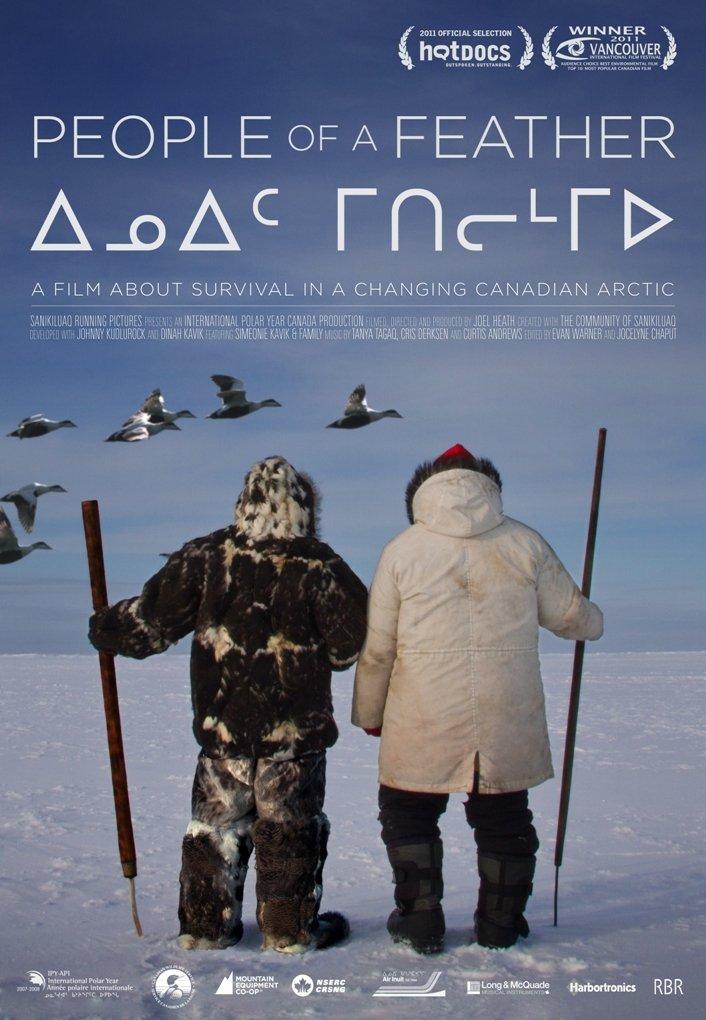
Featuring stunning footage from seven winters in the Arctic, People of a Feather takes you through time into the world of the Inuit on the Belcher Islands in Canadas Hudson Bay. Connecting past, present and future is a unique rel...
ट्रेलर
कलाकार
Joel Heath
Director
Joel Heath
Writer
Dinah Kavik
Writer
Johnny Kudluarok
Writer
आपको ये भी पसंद आ सकते हैं
People of a Feather
Serviced
Mostly Sunny
Journey of royalty
Creedon's Atlas of Ireland
Faits divers, l'Histoire à la une
Undercover: Caught on Tape
I, Hostage
High Maintenance
Ice Vikings
The Big Dry
Timber Titans
This Is High School
Secrets in the Jungle
Restoration Garage
Cursed Histories
Sex, Explained
Sex Sells
How to Get Rich
Good Girl's Guide to Kinky Sex
Porn Laid Bare
The Mind, Explained
Trust Me: The False Prophet
Michael Jackson: The Verdict
टिप्पणियाँ
10 टिप्पणियाँ
source: People of a Feather
This remarkable documentary, directed by Joel Heath, focuses on the residents of the community of Sanikiluaq, in the Canadian Artic area, and their relationship with the fragile ecosystem that surrounds them. I was struck certainly by the teamwork and cooperation the Inuit villagers display, which enables them to sustain themselves through extremely harsh conditions. Their hunting of the animals in their environment is only for their own sustenance, with the mainstays being the eider duck and seals. The eider ducks are prominently featured in the movie, as they make that area their home, utilizing their eider feathers (the warmest in the world) to survive the Artic winters. The depictions in the film of their diving deep down into the frigid sea for food and then propelling themselves back to the surface were amazing. The Inuit residents also make good use of the eider feathers for their clothing and protection from the cold. The documentary also strongly makes the point of alerting the viewer to the threat, which started in the 1970's, of hydroelectric stations and dams further South, which threaten the already fragile ecosystem there. The projects are allowing too much fresh water into the sea thus affecting the critical polynas from staying open, with current changes that are already taking place. Polynas are areas of open water, surrounded by sea ice (like sea "oases"), that stay open in the winter and allow eiders and other creatures to exist there and hunt for food. In summary, I thought this documentary offered a fascinating look at the people of this area, as well as their natural environment. The nature footage and cinematography were often truly spectacular, and I learned quite a lot from the movie.
I saw this movie a few years back at UC Berkeley and am sad to see it has been little noticed. It is one of the best documentaries I've ever seen and I hope people find it and see it. The camera work and music draw you in and you are truly immersed in the experience of this place and the people. When I think on this film I feel as if I am inside the film, immersed and bearing witness to the story that unfolds. This is an environmental film but it is not a preachy film. Silence and juxtaposition are used in such a precise manner so that the film communicates volumes more than words. In fact I think words would only detract from the message in this film. I relish the subtlety used in this film, so much is conveyed by contrast and astute observation. A must see. Powerful stuff.
It's not too often that a documentary can artfully bridge the gap between straight up scientific facts, along with emotion, aesthetics, heart and history, all the while accomplishing nods and heads-ups to other films, Inuit humour and climate change. A huge chunk for a first time filmmaker to bite off, but this documentary amply achieves this feat and rises to the challenge. Maybe it has something to do with the 7 years spent working on this project. The underwater cinematography of the Eiders diving for food, fighting currents, struggling for life, is on par with any episode of Blue Planet. We're shown a vast swatch of their life cycle, from nest to death, from laughter to sadness. The camera work in general lets the audience in on this beautiful place, these little known Belcher Islands in Hudson's Bay, and the time lapse photography allows us to feel the passage of time in several different activities, sometimes informative and others contemplative. The passage of time is front and centre and the various generations of humans who interact on-screen, contrasting new and old knowledge, technology, understandings, and humour, all conveyed a sensitive appreciation on the director's part of life in that region. Depictions of historical lifestyles, the interaction between Eider and Human, were absolutely fascinating. The choice to tightly contrast various community activities in past and present was original and well executed, and created many memorable moments. Watching this movie is simultaneously informative, meditative, and a call to action. Rarely do all these qualities come together with such zeal. For cinephiles who enjoy documentaries, I highly recommend this wonderful work... which I should add, is not yet a completed project. The international theatre release is this week in Paris. Following this, the small crew will put together a DVD in which the special features will hold many surprises, according to the director's comments following the viewing at Whitehorse's Available Light Film Festival.
source: People of a Feather
This remarkable documentary, directed by Joel Heath, focuses on the residents of the community of Sanikiluaq, in the Canadian Artic area, and their relationship with the fragile ecosystem that surrounds them. I was struck certainly by the teamwork and cooperation the Inuit villagers display, which enables them to sustain themselves through extremely harsh conditions. Their hunting of the animals in their environment is only for their own sustenance, with the mainstays being the eider duck and seals. The eider ducks are prominently featured in the movie, as they make that area their home, utilizing their eider feathers (the warmest in the world) to survive the Artic winters. The depictions in the film of their diving deep down into the frigid sea for food and then propelling themselves back to the surface were amazing. The Inuit residents also make good use of the eider feathers for their clothing and protection from the cold. The documentary also strongly makes the point of alerting the viewer to the threat, which started in the 1970's, of hydroelectric stations and dams further South, which threaten the already fragile ecosystem there. The projects are allowing too much fresh water into the sea thus affecting the critical polynas from staying open, with current changes that are already taking place. Polynas are areas of open water, surrounded by sea ice (like sea "oases"), that stay open in the winter and allow eiders and other creatures to exist there and hunt for food. In summary, I thought this documentary offered a fascinating look at the people of this area, as well as their natural environment. The nature footage and cinematography were often truly spectacular, and I learned quite a lot from the movie.
I saw this movie a few years back at UC Berkeley and am sad to see it has been little noticed. It is one of the best documentaries I've ever seen and I hope people find it and see it. The camera work and music draw you in and you are truly immersed in the experience of this place and the people. When I think on this film I feel as if I am inside the film, immersed and bearing witness to the story that unfolds. This is an environmental film but it is not a preachy film. Silence and juxtaposition are used in such a precise manner so that the film communicates volumes more than words. In fact I think words would only detract from the message in this film. I relish the subtlety used in this film, so much is conveyed by contrast and astute observation. A must see. Powerful stuff.
It's not too often that a documentary can artfully bridge the gap between straight up scientific facts, along with emotion, aesthetics, heart and history, all the while accomplishing nods and heads-ups to other films, Inuit humour and climate change. A huge chunk for a first time filmmaker to bite off, but this documentary amply achieves this feat and rises to the challenge. Maybe it has something to do with the 7 years spent working on this project. The underwater cinematography of the Eiders diving for food, fighting currents, struggling for life, is on par with any episode of Blue Planet. We're shown a vast swatch of their life cycle, from nest to death, from laughter to sadness. The camera work in general lets the audience in on this beautiful place, these little known Belcher Islands in Hudson's Bay, and the time lapse photography allows us to feel the passage of time in several different activities, sometimes informative and others contemplative. The passage of time is front and centre and the various generations of humans who interact on-screen, contrasting new and old knowledge, technology, understandings, and humour, all conveyed a sensitive appreciation on the director's part of life in that region. Depictions of historical lifestyles, the interaction between Eider and Human, were absolutely fascinating. The choice to tightly contrast various community activities in past and present was original and well executed, and created many memorable moments. Watching this movie is simultaneously informative, meditative, and a call to action. Rarely do all these qualities come together with such zeal. For cinephiles who enjoy documentaries, I highly recommend this wonderful work... which I should add, is not yet a completed project. The international theatre release is this week in Paris. Following this, the small crew will put together a DVD in which the special features will hold many surprises, according to the director's comments following the viewing at Whitehorse's Available Light Film Festival.