
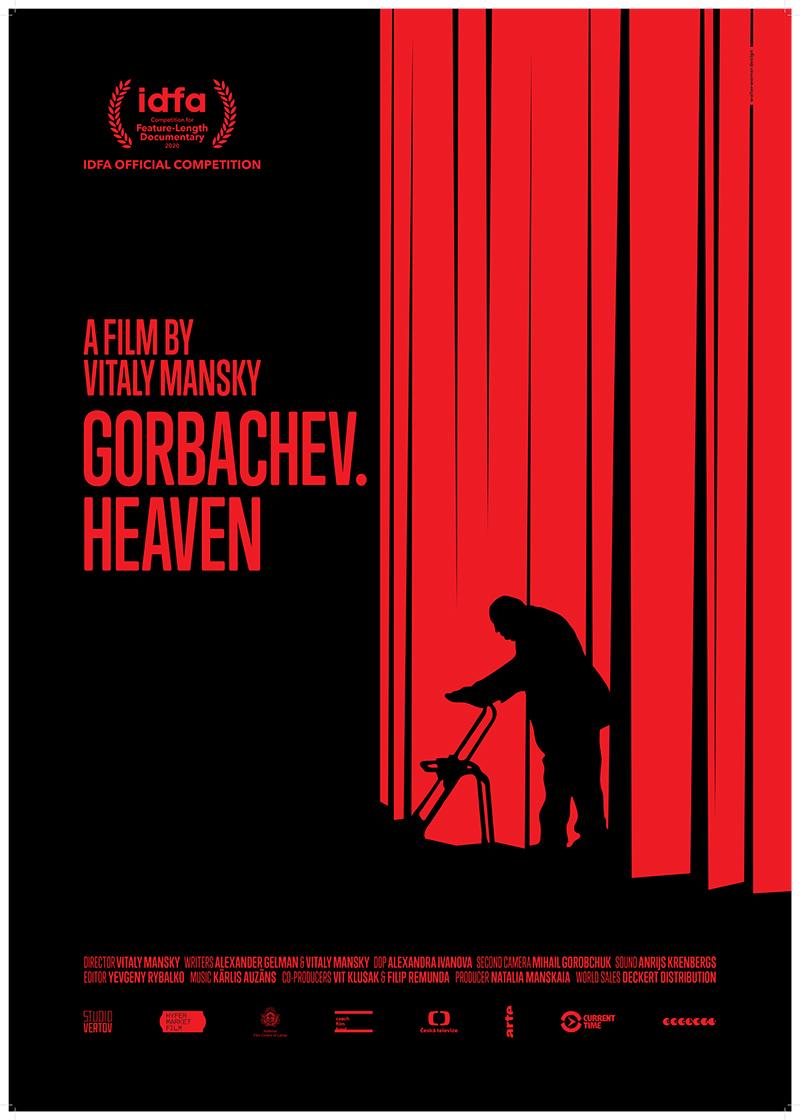
An interview with former USSR president Mikhail Gorbachev, one of the most influential figures of the last century, whose rule heralded the end of the Soviet Union. In an intimate setting, he gives his view of Russia then and now.
ट्रेलर
कलाकार
Vitaliy Manskiy
Director
Mikhail Gorbachev
Self
Chulpan Khamatova
Self
Evgeniy Mironov
Self
Vladimir Putin
Self
Vitaliy Manskiy
Writer
आपको ये भी पसंद आ सकते हैं
Gorbachev. Heaven
Putin's Witnesses
My Father the Spy
Sexology
Untold Stories of Hip Hop
Sex Sells
Kingdom
How to Get Rich
The Business of Drugs
Our Planet
Animal
Slay Queens
Inside the World's Toughest Prisons
Money Heist: From Tokyo to Berlin
Top Guns: The Next Generation
Trust Me: The False Prophet
Secrets of Penthouse
Michael Jackson: The Verdict
The Elon Musk Show
Should I Marry a Murderer?
Mammals
FC Barcelona: A New Era
Turning Point: The Bomb and the Cold War
Working: What We Do All Day
टिप्पणियाँ
10 टिप्पणियाँ
source: Gorbachev. Heaven
It's common for a documentary to be labelled as an intimate portrait; but rarely is it true. But 'Gorbachev. Heaven' is unquestionably intimate, following the last leader of the Soviet Union shortly before his recent death. The film's subject was ninety years old, far from senile but undoubtedly frail, and his physical weakness is no way hidden. Indeed, there's a tragic feeling to the story. Gorbachev was living in grace-and-favour accomodation when filming started (he later moved to a hospital, although he remained well enough to venture out on occasion), a grand house that nonetheless appears not to have been decorated in 30 years. The setting seems to emphasise his position in modern Russian society as a forgotten man. He's an interesting interviewee, in part because he is not accomodating to his interviewer or audience. Instead, he is thoughtful but defensive, and shows a surprising rigidity of thought: the man who dared to try to change the U. S. S. R. still seems grounded in the intellectual framings of his youth, proud of the fact he didn't commit mass murder to prop up the state, but still regretful of the fact that the state failed; and unwilling to speak directly of Putin, his eventual successor. For all his significance, it's easy to see why he fell into irrelevence long even when he remained physically vigourous. Nonetheless, the world owes him its thanks; dealt a losing hand, he played it the best way he could have done.
It truly feels like you're there as he tells his life story, watching this after his death feels so surreal. This is incredibly heart wrenching and moving, I can't help but cry for this poor man, he did all he could. Gorbachev is a truly inspirational figure for me, and seeing this was an amazing experience, getting up-close and personal with this incredible man. In a way, this film is kind of awkward to watch because of how intimate it is, watching him articulate his heartbreak is in no way easy to watch. That's the only negative aspect I can think of when it comes to watching this, but it in no way hinders the quality of the movie.
This is one of the most beautiful examinations of once the most powerful man in the world at the end of his life. Beauty in silence, the filmmakers let daily events shine light on President Gorbachev in this 'interview with a crank' as he describes it himself. We enter Gorbachev's home, hear him recite childhood poems, listen to him sing of memories of his mother, clearly miss his beloved wife Raisa (the better of them in the relationship he allows), and watch as he struggles with mobility issues at the end of his life. Illuminating, touching, poignant, revelatory, and somehow pitiful, it's a remarkable documentary. It is a true treasure.
A documentary masterpiece, a 1h and 40m long Yesenin poem. A moving portrait of a man who changed the course of history. A history which by his own words is a restless lady. A man who says a lot by saying nothing at all. A man so lucid at 90 to know his time is yet to come.
It truly feels like you're there as he tells his life story, watching this after his death feels so surreal. This is incredibly heart wrenching and moving, I can't help but cry for this poor man, he did all he could. Gorbachev is a truly inspirational figure for me, and seeing this was an amazing experience, getting up-close and personal with this incredible man. In a way, this film is kind of awkward to watch because of how intimate it is, watching him articulate his heartbreak is in no way easy to watch. That's the only negative aspect I can think of when it comes to watching this, but it in no way hinders the quality of the movie.
source: Gorbachev. Heaven
A documentary masterpiece, a 1h and 40m long Yesenin poem. A moving portrait of a man who changed the course of history. A history which by his own words is a restless lady. A man who says a lot by saying nothing at all. A man so lucid at 90 to know his time is yet to come.
This is one of the most beautiful examinations of once the most powerful man in the world at the end of his life. Beauty in silence, the filmmakers let daily events shine light on President Gorbachev in this 'interview with a crank' as he describes it himself. We enter Gorbachev's home, hear him recite childhood poems, listen to him sing of memories of his mother, clearly miss his beloved wife Raisa (the better of them in the relationship he allows), and watch as he struggles with mobility issues at the end of his life. Illuminating, touching, poignant, revelatory, and somehow pitiful, it's a remarkable documentary. It is a true treasure.
It's common for a documentary to be labelled as an intimate portrait; but rarely is it true. But 'Gorbachev. Heaven' is unquestionably intimate, following the last leader of the Soviet Union shortly before his recent death. The film's subject was ninety years old, far from senile but undoubtedly frail, and his physical weakness is no way hidden. Indeed, there's a tragic feeling to the story. Gorbachev was living in grace-and-favour accomodation when filming started (he later moved to a hospital, although he remained well enough to venture out on occasion), a grand house that nonetheless appears not to have been decorated in 30 years. The setting seems to emphasise his position in modern Russian society as a forgotten man. He's an interesting interviewee, in part because he is not accomodating to his interviewer or audience. Instead, he is thoughtful but defensive, and shows a surprising rigidity of thought: the man who dared to try to change the U. S. S. R. still seems grounded in the intellectual framings of his youth, proud of the fact he didn't commit mass murder to prop up the state, but still regretful of the fact that the state failed; and unwilling to speak directly of Putin, his eventual successor. For all his significance, it's easy to see why he fell into irrelevence long even when he remained physically vigourous. Nonetheless, the world owes him its thanks; dealt a losing hand, he played it the best way he could have done.