
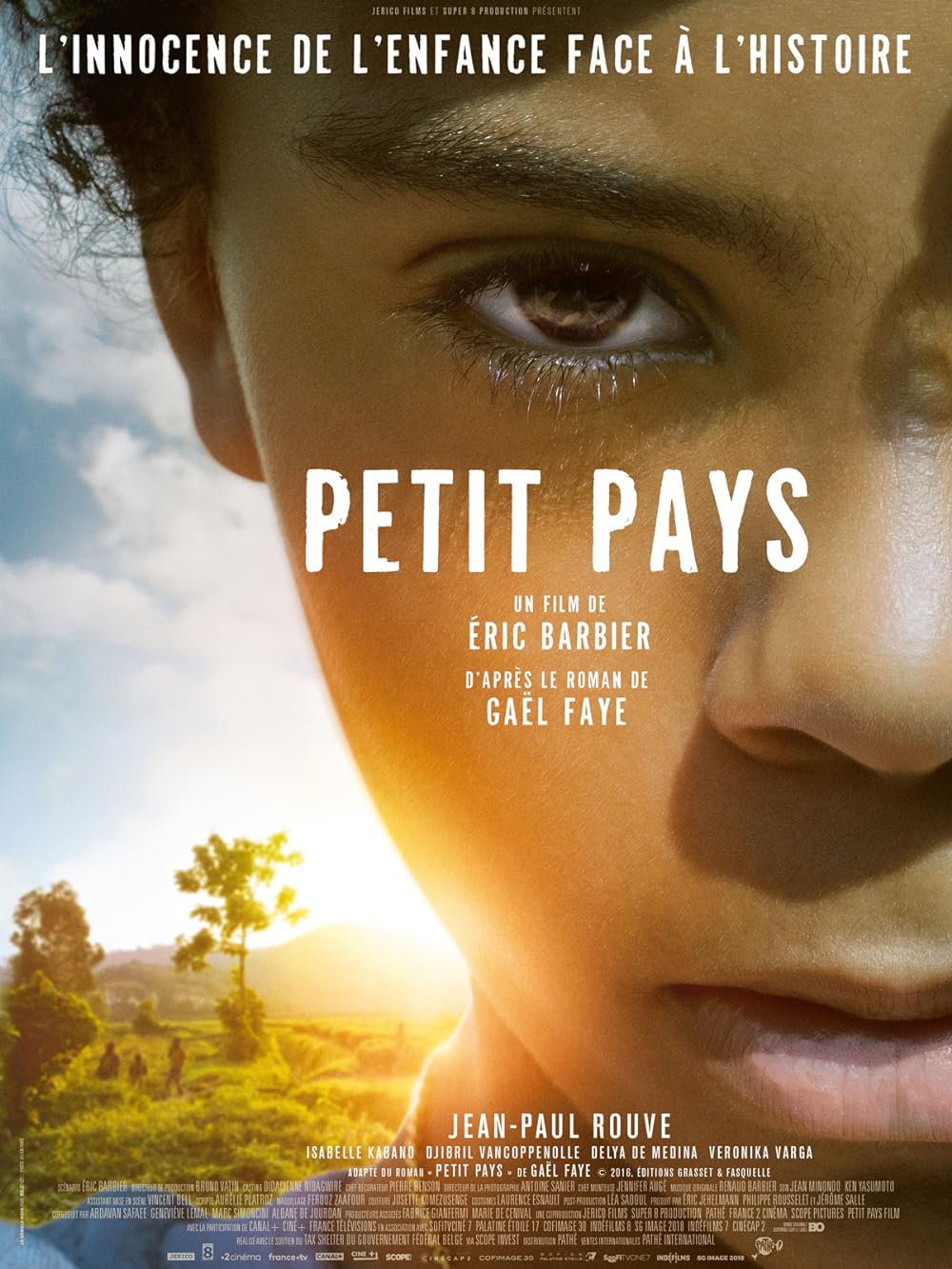
Dans les années 1990, un petit garçon vit au Burundi avec son père, un entrepreneur français, sa mère rwandaise et sa petite soeur. Il fait les quatre cents coups avec ses copains jusqu'à ce que la guerre civile mette fin à son innocence.
Bande-annonce
Casting
Eric Barbier
Director
Jean-Paul Rouve
Michel Chappaz
Isabelle Kabano
Yvonne Chappaz
Djibril Vancoppenolle
Gabriel Chappaz dit Gaby
Dayla De Medina
Ana Chappaz
Tao Monladja
Gino
Ruben Ruhanamilindi
Armand
Brian Gakwavu
Lucien
Kenny Hubbawive
Paul
Nelson Membe
Francis
Edouard Niyonteze
Prothé
Elvis Nahimana
Innocent
Veronika Varga
Madame Economopoulos
Joseph Amani Ndume
Pascal
Chloé Gasaro
Felicite
Benny Bumako
Pacifique
Tatiana Nikuze
Mariana
Febronie Mukamabano
Rosalie
Florentine Kabasinga
Eusébie
Gaël Faye
Writer
Eric Barbier
Writer
Vous aimerez aussi
Petit pays
La promesse de l'aube
Théo et Hugo dans le même bateau
4.48
Le Comte de Monte-Cristo
Youngins
The Oval
The Originals
Snowfall
The Rookie : Le flic de Los Angeles
Power
The Witcher
Ginny & Georgia
Ruthless
La casa de papel
Shaka iLembe
L'été où je suis devenue jolie
La chronique des Bridgerton
The Family Business
Mes premières fois
Ithonga
Power Book IV: Force
Scandal
Commentaires
3 commentaires
Gael Faye's book was awarded the Goncourt high school students prize . It depicts a lost paradise ,or the childhood's harrowing end during three years (roughly 1992-1994) ; the first part is the (relatively) happy times of the young hero: there're already cracks in the mirror; Gaby is the son of a white French building contractor and his black wife , whose family is still living in Rwanda : for Xmas ,she left her children to call on them ,and their children suffer accordingly . Gaby leads a wild life with his friends , but he's a serious pupil at school where the teacher talks about democracy . In 1993 , the elections saw a Hutu president rise to power ,and the Tutsis ( dominating ethnicity ) are not prepared to accept it ; on October,the 21th ,the coup d' etat (in the army, the Tutsis were in the majority )sparks off the civil war between the ethnicities and the massacres. The fateful day is treated in admirably succint style: gunshots, then the desert street of the village ,and the father (a restrained Jean-Paul Rouve) desperately turning the buttons of his radio ,getting no news. The horrible massacres are seen through a child's eye ,and apart from the horrifying lynching (the man beaten up ,then burned in a car), they are suggested :when the car ,passes through dead bodies , the children are told :"close your eyes" ; the viewer may be lost in the politics ,and he feels all the more in a child's shoes ; the awful fate of his parents is treated with decency .The genocide in Rwanda is represented by the black and white photography of Pacifique's wedding ("he was killed by his brothers in arms").