
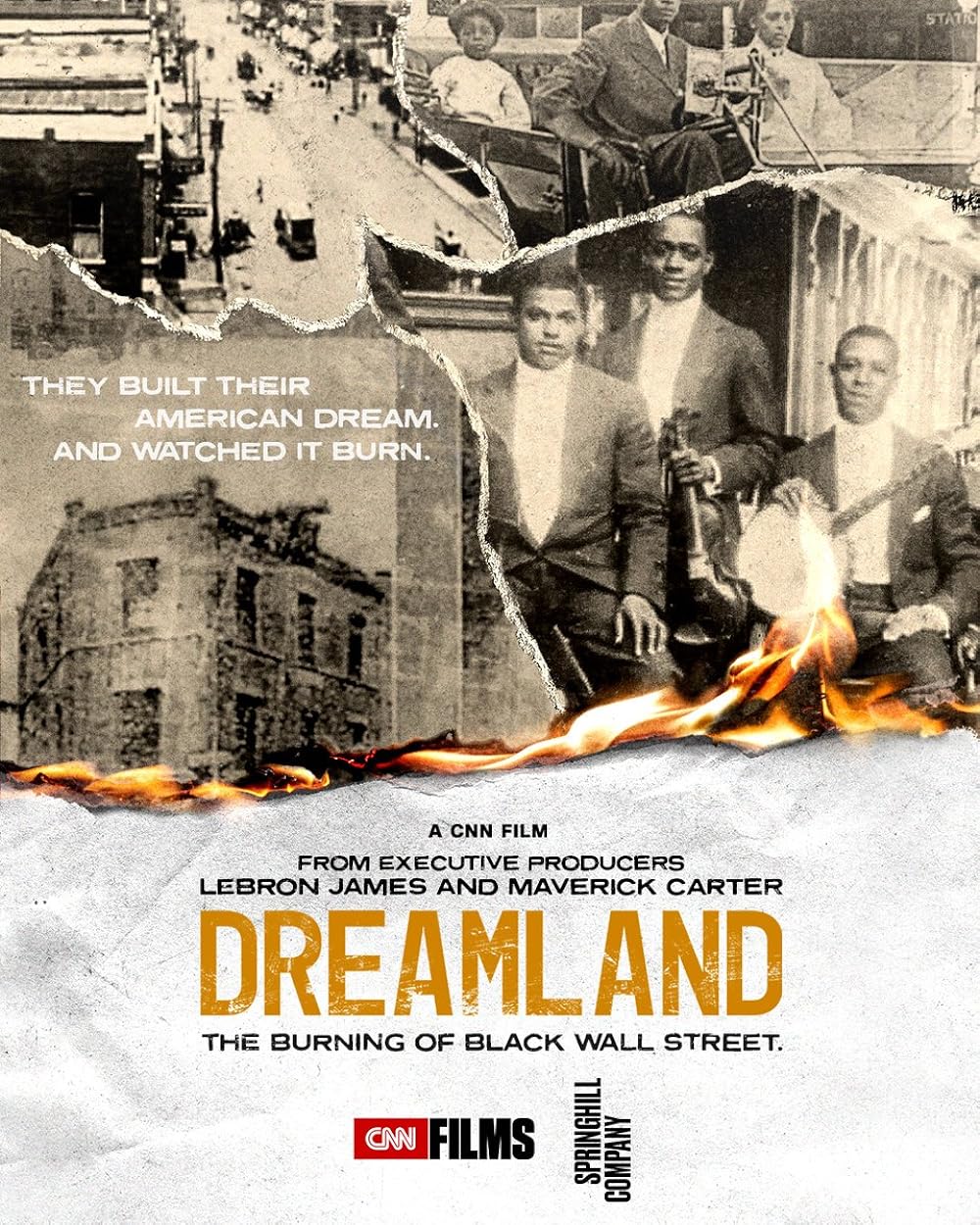
A documentary celebrating the Black cultural renaissance that existed in the Greenwood district of Tulsa, OK, and investigates the 100-year-old race massacre that left an indelible, though hidden stain on American history.
Bande-annonce
Casting
Salima Koroma
Director
Alicia Odewale
Self
Hannibal Johnson
Self
Kary Stacklebeck
Self
Chief Egunwale Amusan
Self
Jim Goodwin
Self
Kavin Ross
Self
Eli Grayson
Self
Regina Goodwin
Self
Keith Ewing
Self
Kristi Williams
Self
Robert R.A. Turner
Self
Tori Tyson
Self
G.T. Bynum
Self
Scott Ellsworth
Self
Bobby Eaton Jr.
Self
Randy Krehbiel
Self
Scott Hammerstedt
Self
Trey Eaton
Self
Vous aimerez aussi
Dreamland: The Burning of Black Wall Street
Addicted to Sexting
Stripped: Las Vegas
The Night Before
The Legacy of Black Wall Street
Rebuilding Black Wall Street
Sex Next Door
Le business des stupéfiants
Magic City: An American Fantasy
Le règne animal
Marvel Studios Rassemblement
The Mind, Explained
Trust Me: The False Prophet
Michael Jackson: The Verdict
Anunnaki: Ancient Secrets Revealed
Rich & Shameless
Cosmos: Une odyssée à travers l'univers
The Takedown: American Aryans
Should I Marry a Murderer?
Body Cam
Working: Passer sa vie à la gagner
David Blaine: Do Not Attempt
Murder 360
Kingdom of the White Wolf
Commentaires
6 commentaires
source: Dreamland: The Burning of Black Wall Street
As I mentioned in my review of the PBS documentary "Tulsa: The Fire and the Forgotten" (2021), "Dreamland: The Burning of Black Wall Street" is one in a slew of such TV and streaming commemorations of the 100th anniversary of the 1921 Tulsa Race Massacre. This one stands out because it recognizes rather reflexively the power of storytelling and particularly cinematic storytelling for the history of the massacre and the depiction of race in the United States overall. It's in the title: Dreamland being the name of the movie theatre in the Greenwood district of Tulsa--one of the many building to be burned to rubble amidst the attack from a white mob upon the black part of the segregated city. It's the same theatre featured prominently in the HBO "Watchmen" (2019) series. The dramatization in this documentary isn't quite as exciting as in that superhero saga, but I did appreciate the use of limited animation to stylistically recreate the massacre. Past video interviews of the survivors aren't merely shown without context of their creation, either, as we also see some discussion of their making. There's also the media from the era of the massacre. This includes the city's newspapers inciting racial animus (although Greenwood's black-owned paper doesn't receive the attention here that it does in the History Channel documentary, "Tulsa Burning: The 1921 Race Massacre" (2021)). And, cinematically, this includes, of course, that most notorious of racist epics, "The Birth of a Nation" (1915). Note that the elevator incident cited as instigating the massacre is the same trope of black men raping white women that was the central theme underpinning the narrative of D. W. Griffith's film. So, that's an apt connection made in this documentary. It's also pointed out that the KKK often serves as a boogeyman in consideration of such tragedies, but racism has been much more prevalent than that--even though some of the Tulsa police force and presumably some of the terrorists were Klansmen. The History Channel and PBS docs do better in some regards to discussing the culpabilities of Tulsa and Oklahoma governments for the massacre, but this one, too, goes into the blaming afterwards and internment of the newly-homeless African-American survivors. Moreover, the depiction of a white mob gunning down black people, setting their homes and businesses ablaze and even fire bombing Greenwood from airplanes over 16 hours on Memorial Day weekend leaves no doubt as to whether it could've happened without the support of government, the local police and fire services and, later, the National Guard. The picture does well to discuss the origins of Greenwood and its continuation after the massacre, as well, including the ultimate destruction of the neighborhood by so-called "urban renewal," later in the 20th century that removed residents from their homes and destroyed their businesses. Appropriately enough, the documentary investigates newsreels and photographs depicting these events with varying degrees of bias, too. At least, now, attention is being brought to the massacre by media, including with these documentaries.
source: Dreamland: The Burning of Black Wall Street
As I mentioned in my review of the PBS documentary "Tulsa: The Fire and the Forgotten" (2021), "Dreamland: The Burning of Black Wall Street" is one in a slew of such TV and streaming commemorations of the 100th anniversary of the 1921 Tulsa Race Massacre. This one stands out because it recognizes rather reflexively the power of storytelling and particularly cinematic storytelling for the history of the massacre and the depiction of race in the United States overall. It's in the title: Dreamland being the name of the movie theatre in the Greenwood district of Tulsa--one of the many building to be burned to rubble amidst the attack from a white mob upon the black part of the segregated city. It's the same theatre featured prominently in the HBO "Watchmen" (2019) series. The dramatization in this documentary isn't quite as exciting as in that superhero saga, but I did appreciate the use of limited animation to stylistically recreate the massacre. Past video interviews of the survivors aren't merely shown without context of their creation, either, as we also see some discussion of their making. There's also the media from the era of the massacre. This includes the city's newspapers inciting racial animus (although Greenwood's black-owned paper doesn't receive the attention here that it does in the History Channel documentary, "Tulsa Burning: The 1921 Race Massacre" (2021)). And, cinematically, this includes, of course, that most notorious of racist epics, "The Birth of a Nation" (1915). Note that the elevator incident cited as instigating the massacre is the same trope of black men raping white women that was the central theme underpinning the narrative of D. W. Griffith's film. So, that's an apt connection made in this documentary. It's also pointed out that the KKK often serves as a boogeyman in consideration of such tragedies, but racism has been much more prevalent than that--even though some of the Tulsa police force and presumably some of the terrorists were Klansmen. The History Channel and PBS docs do better in some regards to discussing the culpabilities of Tulsa and Oklahoma governments for the massacre, but this one, too, goes into the blaming afterwards and internment of the newly-homeless African-American survivors. Moreover, the depiction of a white mob gunning down black people, setting their homes and businesses ablaze and even fire bombing Greenwood from airplanes over 16 hours on Memorial Day weekend leaves no doubt as to whether it could've happened without the support of government, the local police and fire services and, later, the National Guard. The picture does well to discuss the origins of Greenwood and its continuation after the massacre, as well, including the ultimate destruction of the neighborhood by so-called "urban renewal," later in the 20th century that removed residents from their homes and destroyed their businesses. Appropriately enough, the documentary investigates newsreels and photographs depicting these events with varying degrees of bias, too. At least, now, attention is being brought to the massacre by media, including with these documentaries.
Dreamland: The Burning of Black Wall Street