
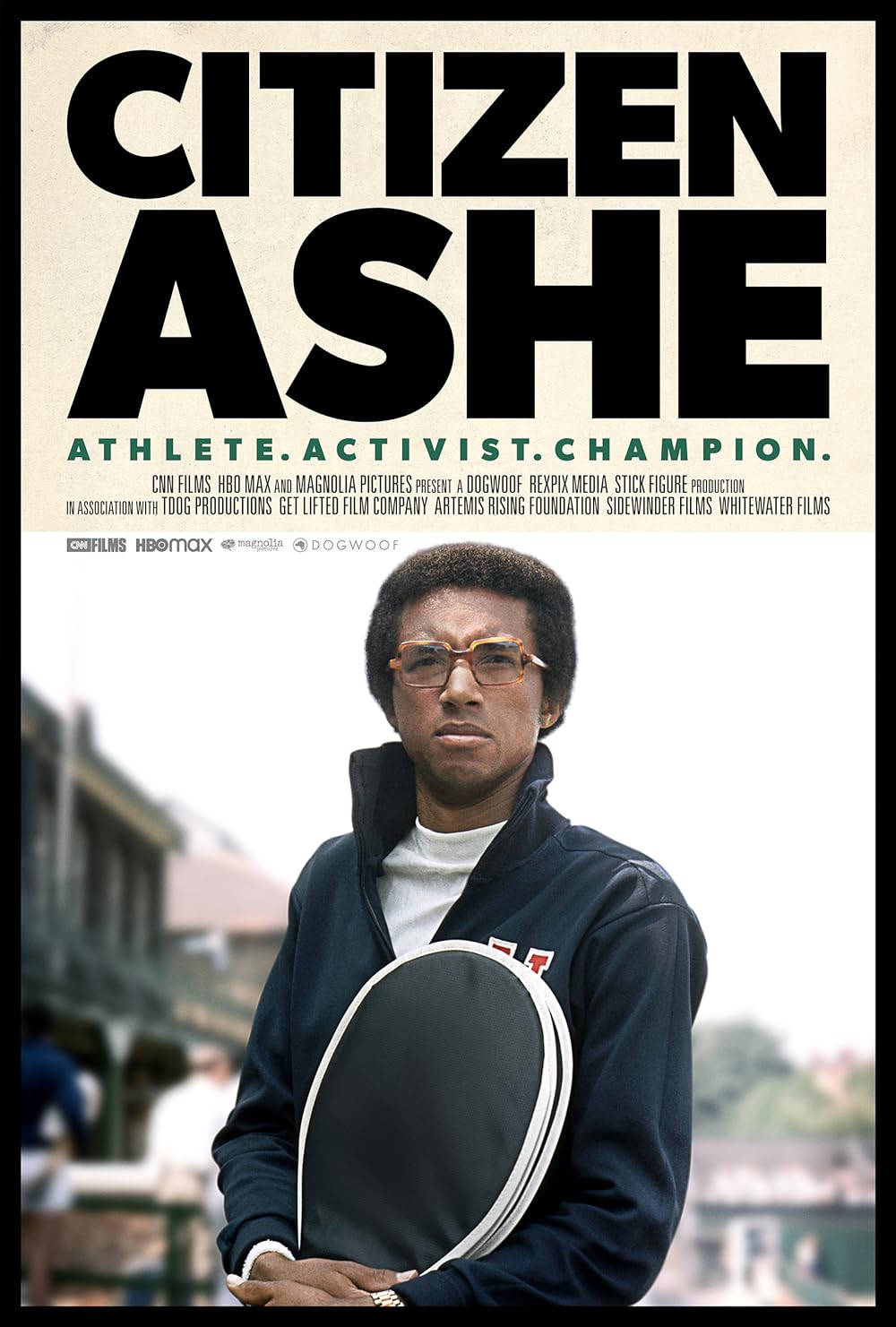
Explores the tennis career of Arthur Ashe and his impact on tennis and HIV activism.
Bande-annonce
Casting
Rex Miller
Director
Sam Pollard
Director
Johnnie Ashe
Self
Beth Barnes
Self - Church Member
Loretta Burnette
Self - Church Member
John Carlos
Self
Art Carrington
Self
Stephanie Cookie Carson
Self - Church Member
Karlton Davis
Self - Arthur Ashe
Galen De La Cruz
Self - Young Neil Amdur
Donald Dell
Self
Harry Edwards
Self
Victor Ellis
Self - Church Member
Billie Jean King
Self
John McEnroe
Self
Ej McGorda
Self - Stokley Carmichael
Tiana Melvina
Self - Church Member
Jeanne Moutoussamy-Ashe
Self
Maximilian Oehrlein
Self - Church Member
Charlie Pasarell
Self
T.J. Volgare
Writer
Vous aimerez aussi
Citizen Ashe
Althea
Korengal
Champs
Andy Warhol's America
Histoire du trafic de drogue
Greta Thunberg: A Year to Change the World
Kennedy, Sinatra, la mafia en héritage
The Circus: Inside the Greatest Political Show on Earth
Sean Combs: The Reckoning
The Last Dance
Neymar: Le chaos parfait
Justin Bieber: Seasons
Dear Mama
Biography: WWE Legends
La Guerre selon Churchill
Jeffrey Dahmer: Autoportrait d'un tueur
The Long Game: Bigger Than Basketball
The Men Who Built America
Shaq
John Wayne Gacy: Autoportrait d'un tueur
Hitler: The Lost Tapes of the Third Reich
Bill Russell: Légende de la NBA
Dynasty: The Murdochs
Commentaires
8 commentaires
source: Citizen Ashe
Greetings again from the darkness. Growing up, I loved watching Jimmy Connors and John McEnroe play tennis. Their talent was unmistakable and they had a certain flair for dramatic moments. But even as a kid, I was more drawn to the personalities of Bjorn Borg and Arthur Ashe - two champions who carried themselves with a quiet dignity and respect for the game and their opponents. They acted like grown-ups, not petulant kids. It wasn't until later that I really understood the obstacles Ashe faced, and co-directors Rex Miller and Sam Pollard expertly handle this remarkable man's story. Ashe's championship at Wimbledon in 1975 was likely the peak of his tennis career, yet not of his impact on society. It took more than a trophy for him to be labeled "the Jackie Robinson of Tennis". The film takes us back to his childhood in Richmond, Virginia, described here as 'the heart of Confederacy'. Many of those memorial statues that stood when Ashe was young have now been removed, but at the time, he accepted that his tennis playing was limited to the court at the public park next to his house. It wasn't until Althea Gibson's mentor, Dr. Johnson, brought Ashe into the fold that he began to hone his talent, as well as his demeanor. Against the odds, Ashe was awarded a tennis scholarship to UCLA in 1966, and there is some terrific footage and photographs of him on campus. Ashe later served in the US Army, and won the 1968 US Open. Some of the archival footage stands on its own, and especially insightful are the numerous interviews where we get to hear Ashe in his own words. Of course, others also have much to say, including his brother Johnnie, and Civil Rights activists Harry Edwards, (Olympian) John Carlos, and (US diplomat) Andrew Young. Tennis players Billie Jean King and John McEnroe also offer personal memories. This is not really a tennis documentary, but it's quite interesting to hear Ashe reveal the "why" behind his strategy against the aggressive Jimmy Connors at Wimbledon. Ashe was also a dynamic supporter of the Davis Cup and believed playing for one's country was an honor. Of course, Arthur Ashe is remembered as a tennis player and Human Rights Activist. He pushed to play in South Africa while Nelson Mandela was imprisoned to show the population what a free black man could do. He and Mandela later became friends. The personality contrast is also distinct between Ashe and fellow sports activists like Muhammad Ali and Lew Alcindor/Kareem Abdul-Jabbar, and it's pointed out that although the approaches differed, Ashe's words carried significant weight. This is quite apparent in the clip of the roundtable discussion featuring Ashe, Harry Edwards, and Jackie Robinson, amongst others. The respect for Ashe is evident. Genetics caused a heart attack at the early age of 36, and blood transfusions during his medical procedures led to his being HIV-positive. As you would expect, Ashe turned his attention to raising money and awareness for AIDS research, all while never losing his elegance and grace. It seems fitting that the story of Arthur Ashe is being told at the same time KING RICHARD is playing in theaters. Ashe clearly opened the door for black athletes like Venus and Serena Williams, and also inspired their activism, as well as that of athletes in other sports. The video footage and interviews allow this story to be told, and it leaves us with the message that Ashe never forgot his race ... the human race. In theaters and On Demand beginning December 3, 2021.
Documentary highlights Ashe pivotal tennis career from Highschool to winning Wimbledon championship. Sadly stress from discrimination, discipline and moral obligations to advocate against societal injustices takes a toll on Ashe entire existence.
source: Citizen Ashe
Documentary highlights Ashe pivotal tennis career from Highschool to winning Wimbledon championship. Sadly stress from discrimination, discipline and moral obligations to advocate against societal injustices takes a toll on Ashe entire existence.
Greetings again from the darkness. Growing up, I loved watching Jimmy Connors and John McEnroe play tennis. Their talent was unmistakable and they had a certain flair for dramatic moments. But even as a kid, I was more drawn to the personalities of Bjorn Borg and Arthur Ashe - two champions who carried themselves with a quiet dignity and respect for the game and their opponents. They acted like grown-ups, not petulant kids. It wasn't until later that I really understood the obstacles Ashe faced, and co-directors Rex Miller and Sam Pollard expertly handle this remarkable man's story. Ashe's championship at Wimbledon in 1975 was likely the peak of his tennis career, yet not of his impact on society. It took more than a trophy for him to be labeled "the Jackie Robinson of Tennis". The film takes us back to his childhood in Richmond, Virginia, described here as 'the heart of Confederacy'. Many of those memorial statues that stood when Ashe was young have now been removed, but at the time, he accepted that his tennis playing was limited to the court at the public park next to his house. It wasn't until Althea Gibson's mentor, Dr. Johnson, brought Ashe into the fold that he began to hone his talent, as well as his demeanor. Against the odds, Ashe was awarded a tennis scholarship to UCLA in 1966, and there is some terrific footage and photographs of him on campus. Ashe later served in the US Army, and won the 1968 US Open. Some of the archival footage stands on its own, and especially insightful are the numerous interviews where we get to hear Ashe in his own words. Of course, others also have much to say, including his brother Johnnie, and Civil Rights activists Harry Edwards, (Olympian) John Carlos, and (US diplomat) Andrew Young. Tennis players Billie Jean King and John McEnroe also offer personal memories. This is not really a tennis documentary, but it's quite interesting to hear Ashe reveal the "why" behind his strategy against the aggressive Jimmy Connors at Wimbledon. Ashe was also a dynamic supporter of the Davis Cup and believed playing for one's country was an honor. Of course, Arthur Ashe is remembered as a tennis player and Human Rights Activist. He pushed to play in South Africa while Nelson Mandela was imprisoned to show the population what a free black man could do. He and Mandela later became friends. The personality contrast is also distinct between Ashe and fellow sports activists like Muhammad Ali and Lew Alcindor/Kareem Abdul-Jabbar, and it's pointed out that although the approaches differed, Ashe's words carried significant weight. This is quite apparent in the clip of the roundtable discussion featuring Ashe, Harry Edwards, and Jackie Robinson, amongst others. The respect for Ashe is evident. Genetics caused a heart attack at the early age of 36, and blood transfusions during his medical procedures led to his being HIV-positive. As you would expect, Ashe turned his attention to raising money and awareness for AIDS research, all while never losing his elegance and grace. It seems fitting that the story of Arthur Ashe is being told at the same time KING RICHARD is playing in theaters. Ashe clearly opened the door for black athletes like Venus and Serena Williams, and also inspired their activism, as well as that of athletes in other sports. The video footage and interviews allow this story to be told, and it leaves us with the message that Ashe never forgot his race ... the human race. In theaters and On Demand beginning December 3, 2021.
Citizen Ashe