
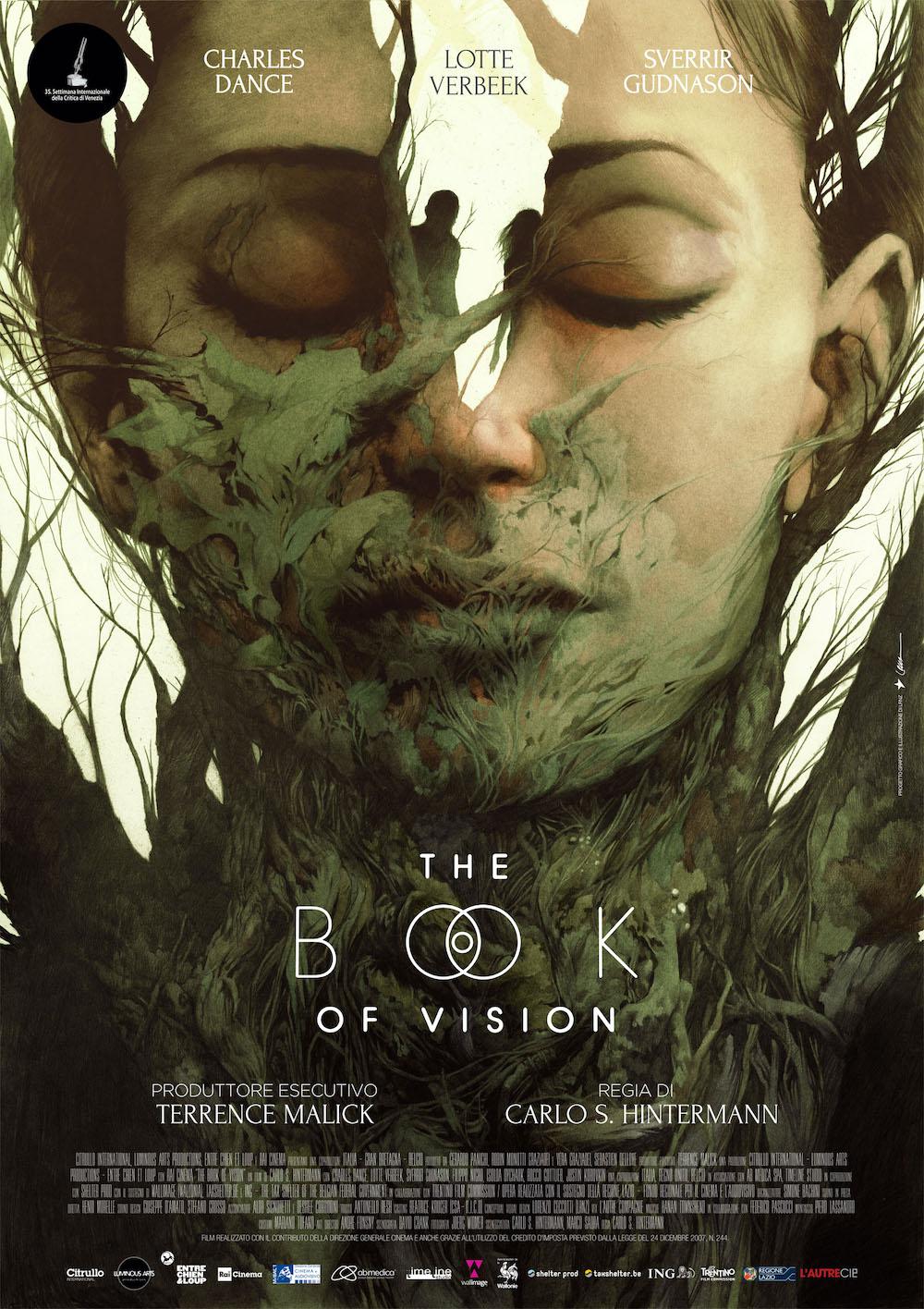
إيفا، طبيبة غامضة، تبحث عن إجابة لمعضلة مُلحة وهي تكشف كتاب رؤية الدكتور أنموث. يتدخل ستيلان في حياتها ويضطر لمواجهة طبيعتها وهي تواجه أهم قرار في حياتها.
الإعلان الترويجي
طاقم العمل
Charles Dance
Dr. Johan Anmuth
Lotte Verbeek
Eva
Lotte Verbeek
Elizabeth von Ouerbach
Sverrir Gudnason
Dr. Nils Lindgren
Filippo Nigro
Heinrich von Ouerbach
Isolda Dychauk
Maria
Rocco Gottlieb
Valentin von Ouerbach
Justin Korovkin
Günter von Ouerbach
Douglas Dean
Tutor
Vera Graziadei
Rivka Sorkin - Miss Dobileit
Marco Quaglia
Chris
Abel Tesch
Eva's ex husband
قد يعجبك أيضًا
The Book of Vision
Suspension of Disbelief
The Secret Sex Life of a Single Mom
Infidelity in Suburbia
من التالي؟
تعادل: فريق المشجعات المتمردات
Chloe
Chloe
The Vendetta of An
خفقان
التاج الإمبراطوري
Viral Scandal
Tom Swift
Kill My Sins
Mr. Kill
Shadow Detective
Lady Behind the Mask
The Family
Oderbruch
The Gift
الذكرى الأخيرة
Leh Game Rak
Darby and Joan
Antique Bureau Midgame
التعليقات
6 تعليق
source: The Book of Vision
The film's premise is certainly interesting: a multi-period exploration of the transition to modern medicine, the interplay between scientism and Western esotericism, and the subsequent change in doctor-patient dynamics. Dance lends his usual gravelly tones, Korovkin is terrifying, and Dychauk's performance is heartbreaking, yet all are shackled by Hintermann's clunky dialogue. Gudnason and Verbeek's talents are sadly wasted on underdeveloped characters. Indeed, it's the script that fails the actors. The dialogue is so disjointed it feels like a good deal was left on the cutting-room floor, and what remains is devoid of any poetry. The characters are one-dimensional receptacles for Hintermann's reductive ideas, either passionately romantic or coldly clinical, but never complex. It ruins what would otherwise be a very touching story. Hintermann has chosen to approach symbolism with all but the kitchen sink. Visually interesting as individual set pieces, the continuous lack of subtlety climaxes as Verbeek bursts into a 90-second musical number before swooning into Gudnason's arms with all the grace of Fanny Squeers. The next thirty minutes is a fever dream of dynamic shots and ever-changing Dutch angles more suited to a noughties flick than a sombre period piece. Many static shots are filmed on a shaky Steadicam (oxymoron intended) and occasionally the audio dubbing is visibly out of sync. That said, Tufano's costume design is breathtaking, the set design is gorgeous, the music and foley superb. The film's more artistic shots are beautifully composed. I appreciate the film for what it tried to be and look forward to Hintermann's next project - but this is a diamond in the very, very rough.
A real mixed bag. A twin timeline, one in 18th century Prussia, a second in modern day. The actors play similar roles in both timelines which flicks backwards and forwards incorporating dream sequences that play a major part in the telling and formulation of the plots. Occasionally, the timelines and dreams are mixed in present day and can become confusing or intriguing depending on how you cope with non linear storytelling. The Good parts are, as ever, Charles Dance, the costumes, settings, the dream sequences and the basic plot outline. Where it falls down is in the execution. The script is wooden in parts, delightful in others. Some actors have had their parts overdubbed for some reason. The ending fails to deliver the emotional punch that the film builds up to. That said it's a pleasant enough ride up until that point.
The Book of Vision