
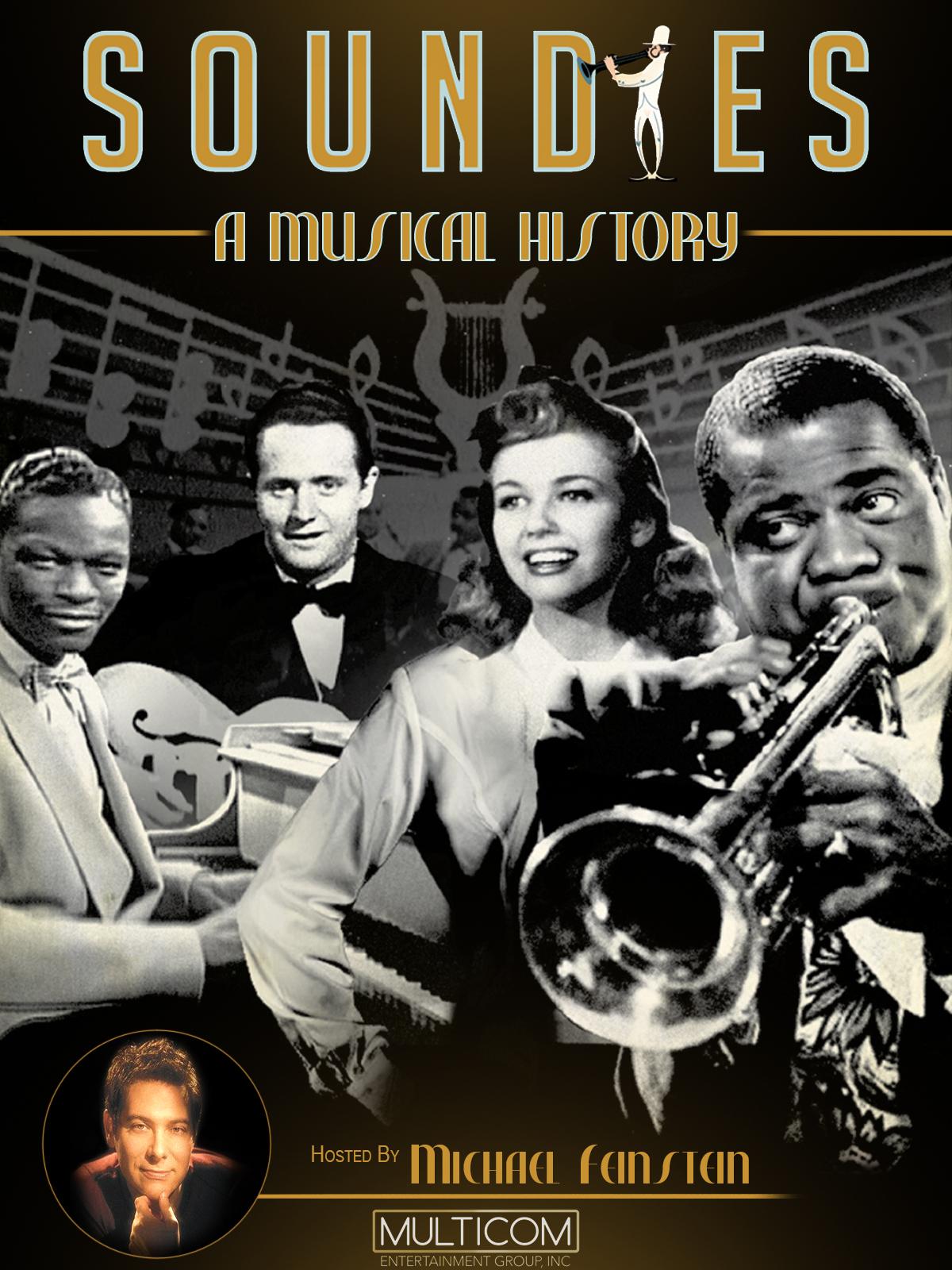
Soundies: A Musical History Hosted by Michael Feinstein
Before MTV and the age of television, there were Soundies. First appearing in 1941, these three minute black-and-white films featured artists of the Big Band, Jazz and Swing era, like Duke Ellington, Count Basie, Louis Jordan, Louis Armstrong, Gene Krupa, The Mills Brothers, Les Paul, Cab Calloway, and Fats Waller. The Soundies helped launch the careers of Doris Day, Nat King Cole, Liberace, and Dorothy Dandridge, among others. Viewed for a dime through a special machine called a Panoram, a movie jukebox, these forerunners to the music video could be seen in nightclubs, roadhouses, restaurants and other public venues across the U.S. These classic films remain as glorious time capsules of music, social history, popular culture, and tell the story of a crossroads in our country, when the uncertainties of war, race relations, and emerging technologies combined to write one of the most influential chapters in our nation¹s history.
ٹریلر
کاسٹ
Chris Lamson
Director
Michael Feinstein
Self - Host
Mark Cantor
Self - Soundies Historian
Stan Ridgway
Self - Musician
George Duke
Self - Musician
George Duke
Self - Producer
Leonard Maltin
Self - Film Historian
Wynton Marsalis
Self - Artistic Director, Jazz at Lincoln Center
Joe Franklin
Self - Talk Show Pioneer
Hugh Hefner
Self - Playboy Founder and Chief Creative Officer
Van Alexander
Self - Soundies Performer
Delilah Jackson
Self - Cultural Historian
Les Paul
Self - Soundies Performer
Dan Morgenstern
Self - Director, Institute of Jazz Studies
Kay Starr
Self - Soundies Performer
Hugh Martin
Self - Soundies Performer
Ginny Mancini
Self - Soundies Performer
Irving Fields
Self - Soundies Performer
Jackie Parton
Self - Soundies Performer
Russell Scholl
Self - Film Archivist
Chris Lamson
Writer
Jennifer Sneider
Writer
آپ کو یہ بھی پسند آ سکتا ہے
Addicted to Sexting
Rat Film
Stripped: Las Vegas
The Night Before
Sex, Explained
Sex Sells
Magic City: An American Fantasy
Marines
Marvel Studios: Assembled
Our Universe
The Mind, Explained
Trust Me: The False Prophet
Seduced to Slay
Michael Jackson: The Verdict
Anunnaki: Ancient Secrets Revealed
Rich & Shameless
Eat the Rich: The GameStop Saga
Should I Marry a Murderer?
Behind Bars: The World's Toughest Prisons
Working: What We Do All Day
Incredible Animal Journeys
One Day at Disney
What's Next: The Future with Bill Gates
Gathering Storm
تبصرے
10 تبصرے
source: Soundies: A Musical History Hosted by Michael Feinstein
This suitable-for-all-ages introduction to the Soundies is fun to watch and provides lots of information from enthusiastic fans and artists who were there when these gems were created. While this is not the full history and no Soundie is presented in full-length, un-edited form, what you do get is fascinating. Many of the artists presented and machines for playing Soundies will be entirely new to most viewers born after 1950. The DVD contains an additional 19 min.s: commentary and four more neat little Soundies. It made me want to see more! My only complaint regards the editing and packaging of the DVD. Listing Soundies/Artists on the back suggests un-edited, full-length Soundies. For this we shall have to look elsewhere.
Singer Michael Feinstein hosts this special about Soundies, three-minute film shorts of the popular songs during the '40s that were played in video jukeboxes called the Panorams. We start with what is called the best of the best: Duke Ellington's "Hot Chocolate" which has various gymnastic-style dances of the Jitterbug. Formed by the Mills Publishing Company in 1940, these music videos of the day takes us through the various big band sounds of Jimmy Dorsey, Fats Waller, Louis Armstrong, Gene Krupa, and The King Cole Trio featuring Nat King Cole. Since World War II began soon after, many of the films also showcase the patriotic nature of many of the tunes like "You're a Lucky Fellow, Mr. Smith". We also see the earliest film debuts of Doris Day, Yvonne De Carlo, Walter Liberace (best known by only his last name), Mel Blanc (hilarious as a drunk in a Spike Jones Soundie), Dorothy Dandridge (sexy in a jungle outfit), and Cyd Charisse. Wonderful recollections by Kay Starr and Les Paul along with commentary by Wynton Marsalis, Leonard Maltin, Hugh Hefner, and Joe Franklin add to the nostalgic flavor of the whole enterprise. Negative stereotyping involving African-American musicians of the day are also addressed here. Worth seeking out on DVD or PBS for anyone with an interest in musical film history.
Fans of American popular culture in the 1940s are at least peripherally aware of the soundies. They were video jukeboxes, produced by Mills Novelty and available in bars and similar venues. For a dime, the audience got eight three-minute musical shorts projected on a ground-glass screen. Mills issued a new set every week for six years. If you do the math, you'll come up with more than 2400 songs with images, often of the musicians, often of dancers. Some of the performers, like Doris Day and Nat King Cole, became major stars. Many remained in obscurity. Michael Feinstein presents the usual talking heads and surviving performers to talk about this industry, and offers major clips of many of the original soundies, ranging from current stars like Fats Waller to future stars like Dorothy Dandridge. The result is a good 75-minute documentary that gives a good grounding in the subject.
While most today would think that music videos started with the advent of MTV in the early 1980s, they actually were much older. In the late 1930s, a form of television, of sorts, was created...and by 1940 the Soundies were born. What were the 'Soundies'? Well, they were music videos that were played on a jukebox-like machine which was installed in various businesses, such as bars, pool halls or where ever they wanted them. So what did you get with the Soundie system? Well, eight music videos played on a loop...and the videos were cycled out every week. The system worked well and from 1940-47 they were ubiquitous. This documentary, hosted by Michael Feinstein, discusses the history of them and shows many clips from these videos. Well worth seeing and an important, if not forgotten, part of our history. Overall, very well made though it seems, at times, the documentary was a tad padded.
This suitable-for-all-ages introduction to the Soundies is fun to watch and provides lots of information from enthusiastic fans and artists who were there when these gems were created. While this is not the full history and no Soundie is presented in full-length, un-edited form, what you do get is fascinating. Many of the artists presented and machines for playing Soundies will be entirely new to most viewers born after 1950. The DVD contains an additional 19 min.s: commentary and four more neat little Soundies. It made me want to see more! My only complaint regards the editing and packaging of the DVD. Listing Soundies/Artists on the back suggests un-edited, full-length Soundies. For this we shall have to look elsewhere.
Singer Michael Feinstein hosts this special about Soundies, three-minute film shorts of the popular songs during the '40s that were played in video jukeboxes called the Panorams. We start with what is called the best of the best: Duke Ellington's "Hot Chocolate" which has various gymnastic-style dances of the Jitterbug. Formed by the Mills Publishing Company in 1940, these music videos of the day takes us through the various big band sounds of Jimmy Dorsey, Fats Waller, Louis Armstrong, Gene Krupa, and The King Cole Trio featuring Nat King Cole. Since World War II began soon after, many of the films also showcase the patriotic nature of many of the tunes like "You're a Lucky Fellow, Mr. Smith". We also see the earliest film debuts of Doris Day, Yvonne De Carlo, Walter Liberace (best known by only his last name), Mel Blanc (hilarious as a drunk in a Spike Jones Soundie), Dorothy Dandridge (sexy in a jungle outfit), and Cyd Charisse. Wonderful recollections by Kay Starr and Les Paul along with commentary by Wynton Marsalis, Leonard Maltin, Hugh Hefner, and Joe Franklin add to the nostalgic flavor of the whole enterprise. Negative stereotyping involving African-American musicians of the day are also addressed here. Worth seeking out on DVD or PBS for anyone with an interest in musical film history.
While most today would think that music videos started with the advent of MTV in the early 1980s, they actually were much older. In the late 1930s, a form of television, of sorts, was created...and by 1940 the Soundies were born. What were the 'Soundies'? Well, they were music videos that were played on a jukebox-like machine which was installed in various businesses, such as bars, pool halls or where ever they wanted them. So what did you get with the Soundie system? Well, eight music videos played on a loop...and the videos were cycled out every week. The system worked well and from 1940-47 they were ubiquitous. This documentary, hosted by Michael Feinstein, discusses the history of them and shows many clips from these videos. Well worth seeing and an important, if not forgotten, part of our history. Overall, very well made though it seems, at times, the documentary was a tad padded.
Fans of American popular culture in the 1940s are at least peripherally aware of the soundies. They were video jukeboxes, produced by Mills Novelty and available in bars and similar venues. For a dime, the audience got eight three-minute musical shorts projected on a ground-glass screen. Mills issued a new set every week for six years. If you do the math, you'll come up with more than 2400 songs with images, often of the musicians, often of dancers. Some of the performers, like Doris Day and Nat King Cole, became major stars. Many remained in obscurity. Michael Feinstein presents the usual talking heads and surviving performers to talk about this industry, and offers major clips of many of the original soundies, ranging from current stars like Fats Waller to future stars like Dorothy Dandridge. The result is a good 75-minute documentary that gives a good grounding in the subject.