
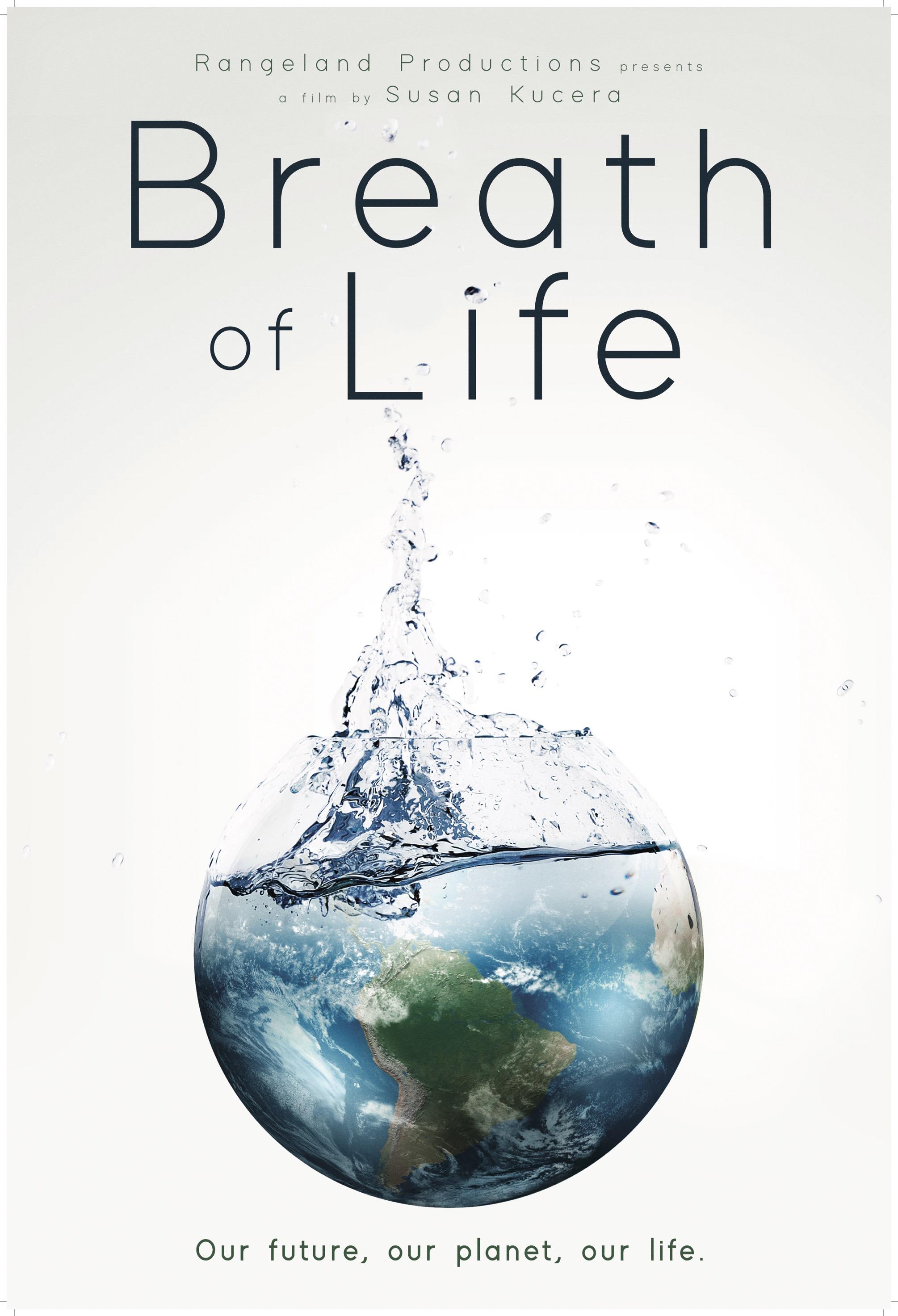
A global journey blends scientific insights with indigenous knowledge, revealing humanity's complex relationship with nature and our paradoxical approach to Earth's future.
ٹریلر
کاسٹ
Susan Kucera
Director
Robert Trivers
Self
Susan Blackmore
Self
William R. Catton
Self
Wayne Vene Chun
Self
Richard Dawkins
Self
George Dyson
Self
Brian Fagan
Self
Robert Gifford
Self
Clive Hamilton
Self
Bruce Hood
Self
David Korten
Self
John Marra
Self
Cynthia Matzke
Self
Thomas Metzinger
Self
Kari Norgaard
Self
Maureen O'Hara
Self
Paul Piff
Self
Jorgen Randers
Self
آپ کو یہ بھی پسند آ سکتا ہے
Addicted to Sexting
Rat Film
Stripped: Las Vegas
The Night Before
Sex Next Door
Sex Sells
The Business of Drugs
Marvel Studios: Assembled
Top Guns: The Next Generation
The Walking Dead: Origins
Trust Me: The False Prophet
Seduced to Slay
Michael Jackson: The Verdict
Emergency NYC
Cosmos: A Spacetime Odyssey
Top Secret UFO Projects: Declassified
The Manhattan Alien Abduction
The Takedown: American Aryans
Should I Marry a Murderer?
Predators
Christiane Amanpour: Sex & Love Around the World
Girls Gone Wild: The Untold Story
Trafficked with Mariana Van Zeller
White Lies
تبصرے
10 تبصرے
Loved this movie. Very very confronting and hard to watch. At times I found the storyline too circular that is why just a 9 instead of 10. But everyone in the world should see it. The scientists seem first rate and very clear and concise. The images were wonderfully chosen and filmed and as a result you were immersed in their power. You could not take your eyes of the screen. There is a lot of information that is available elsewhere but not put together in this way. I didn't quite understand the memes part as being part of the story. Nevertheless it is almost impossible to not be moved by this film and very affected. Wonder what else this director: Susan Kucera has done.. Antwerp high water mark for anyone else attempting to tackle this theme. well done
I am surprised that no one else has mentioned the issue that became increasingly frustrating the longer I watched. I heard at least 20, maybe 30 male experts in the first 15 minutes, with not a single female voice. I switched off at this point. While I applaud every effort at promoting sustainability, film makers cannot ignore half the population of the planet and expect us to clap. There are many female evolutionary biologists, ethicists, anthropologists etc who could have added so much, instead the film makers alienated so many. Very disappointing.
This documentary addresses profound themes about the way we live, our responsibilities to future generations, and the way our minds are ill-equipped to deal with our greatest problems. We hear from Texan farmers finding it ever harder to grow food as water becomes more scarce. We spend time with Hawaiians whose sustainable lifestyle and world-view are threatened by commercial short-term-ism. It's potentially revelatory, but bizarre editing sacrifices the story that could have been told. The film is supposedly about climate change and the limits to growth, yet it says surprisingly little about them. "Breath of Life" assumes you're well-read on these issues, so it won't say much to the people who haven't. And for those of us who already know what the film's going to say, what was the point in seeing it? There are many experts interviewed: admirable intellectuals with important things to say about ecology, psychology, economics, and more. Yet so much of what they say is edited down to tiny sound-bites. Often, the result is either the simplicity of a motivational poster, or a passing mention of complex ideas that need a lot of background knowledge to be understood. "The Anthropocene" is mentioned early on but not defined. Other documentaries and articles cover it, but this is why I say "Breath of Life" assumes a lot about its audience. Clive Hamilton's critique of geo-engineering is so hacked down the audience could be forgiven for thinking he supports it. A scientist's explanation of how plastic damages ocean life could have been the film's most powerful scene, but again so many of her words have been cut out it only barely makes sense. The few facts and figures lack context. A huge number appears on screen representing world debt. If you know some economics, you'll know that means public debt. If, say, my parents were to see this, their reaction would be "*World* debt? Who is it owed to?" We're told that atmospheric carbon dioxide will reach 800ppm in a specific year: it's not presented as one scenario representing one set of political choices. Nuclear power and GMOs are mentioned: are they problems, solutions, or both? It's not explored: we get quick negative quotes and then move on. These are just some examples of the terminology and concepts thrown about that you're just expected to know. In a blink of an eye, we go from our precarious agricultural system to unsustainable national debt: the connection between the two issues isn't explored, nor is the existing debate about debt. If public debt is so bad, does that mean we need austerity? No time to answer, apparently. Extensive footage of nature and human activity was created for this film, yet that doesn't save it from stock-footage clichés. If you anticipate lots of sped-up long-exposure shots of city lights at night, rolling expanses of parched soil, and the fragile Earth from space, you're entirely correct. It would be forgivable if each piece of footage related to the point currently being discussed, but the way it's used is often more like time-filling. It's saddens me because the film's topics should be on everyone's lips, and the raw material is good. The responsible thing for the film- makers to do now would be to open-source all their footage and let other editors have a go (as happened with "RiP!", for example). A remixed documentary could convey fewer messages more clearly, provide narration or captions to divide the film into chapters, and give context for what each chapter is trying to say. I'm even optimistic that this could result in a film that I'd rate very highly and recommend to everyone.
It has taken me a while to process what was presented in the film at the Watershed Theater. There are so many wonderful scientists and some of the concepts covered were ways of thinking I hadn't really thought of before. If I were to say anything detracting about the film is that you have to pay attention - and might even need to watch it again. There's no spoon feeding here. The ocean sequence still haunts me. I absolutely LOVE the Earth Island thread - magnificent! Robert Trivers, who I had never heard of is delightful. He is one of the scientists who make learning all these concepts quite enjoyable. I would have liked to see more of Richard Dawkins. I like that the film looks at humans in general whether you are a green or an oil company executive - we are all in this. That was truly refreshing. I would hope people see this film before the elections. We really do suffer from our short-term thinking, certainly the politicians prove this!
Spectacularly photographed in Europe, Scandinavia, North America and Hawaii, Breath of Life is a strikingly beautiful film about what we actually know about the near future of the world. A future not as it might ordinarily appear to the average person, pundit, politician, or even the most hard nosed climate scientist, but seen through the eyes of some of the world's leading evolutionary biologists and thinkers. And although there are quite a few PhD's in the movie, it is the straight talk of farmers in the drought stricken western United States and the wisdom of Hawaiians from the most isolated place on earth that bring the message home to where the heart is. There are huge concepts here vividly portrayed about the deep structure of the human mind that have never been so eloquently expressed on film before. Why are we modern humans in denial about catastrophes of our own making that may come to pass sooner than we think? There are plenty of films that tell us what we are doing to ourselves and our planet that may put our progeny in grave peril. Breath of Life is the only film that shows us why. It does so with such beauty, intelligence, truth and wonder, it is mesmerizing to watch.
Stunning and thought provoking. This film is a fascinating look at the human mind and how it shapes our world around us. Definitely should be required viewing.
I saw this film with a group at a sneak peek recently and could not stop thinking about it. Luckily, one of the participants, Bruce Hood was on hand to extrapolate on some of the concepts covered in this film. We're really not aware of our actions as they relate to generations into the future. For the first time I understand why the tremendous debt countries have taken on pose such a problem and as one speaker so eloquently put it - when we take on debt we are promising to pay it back with future energy! No wonder we are constantly grabbing for resources. The thread using the cultural concept prevalent in ancient Hawaii that 'we're all in the same canoe' also hit home. We are so inter-related and inter-dependent and we're running out of space and resources to exploit and yet we behave as if we have an un-ending vast frontier left. The ocean section was truly shocking. Recommended viewing for discussion in schools.
Good information presented here re issues facing our planet but very depressingly presented. Everything was from an evolution viewpoint, this was emphasised over and over again, even to the t-shirt on 1 of the talking heads. And even though I totally loved what the Hawaiian man was saying and doing, it was a idealistic rather than hugely practical. Not every one can walk away from their job to plant taro. I have seen much better detailed information presented in other docos and with less in your face bias against those annoying people who actually believe in a creator God and our duty to look after this planet not just for ourselves but for all future generations.
I'm glad this film is set for release. I saw it at the Maui Film Festival and I am reposting Paul Wood's review of it "Here's an experience that should be required viewing—by international law—before the start of every inauguration or legislative session, at the installment of new county councils and prior to the launch of every UN General Assembly. It should have been screening nonstop at Tahrir Square during the Egyptian Revolution. As a single species we have to stop bickering and grabbing, and start looking together at the growing environmental catastrophe that we have caused. As this vivid documentary proves, 'We are cutting ourselves off from reality.' Because humans have pretty much filled the planet, we are no longer exploiting space. Now we have begun exploiting time—stealing from the future. The not-so-cheery, but vital, message: 'We have tremendous problems generated by ourselves but limited ability to know how to deal with them.' So says one of the dozens of scientists and environmentalists appearing here. They all see the threat eye-to-eye. This is a tough-love film. Remarkably, one particular success story is juxtaposed to the general mess—the practices and understandings of pre-contact Hawaiians. Vigorous contemporary voices speak of kalo and kuleana and aloha 'aina. So if we are to use this film as a global bap on the side of the head, it should be screened first right here, from our State Legislature to local community association meetings. What will you do about the problem—ride it into oblivion?"