
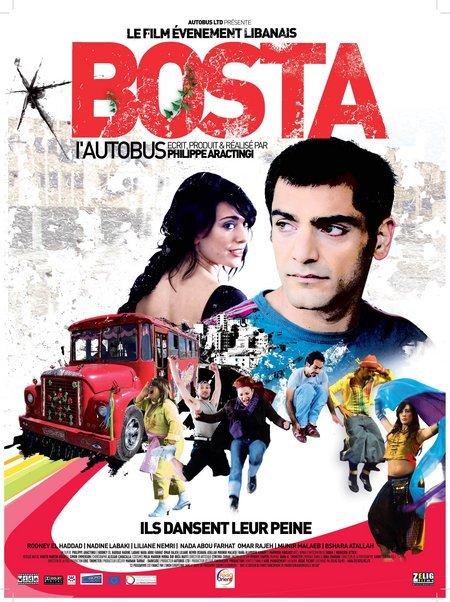
A Lebanese-French composer returns to Beirut, reunites old school friends, and renovates a bus to tour with their modern take on Debka dance, facing resistance and personal challenges along the way.
Trailer
Pemeran
Philippe Aractingi
Director
Rodney El Haddad
Kamal Maf'ouss
Nadine Labaki
Alia
Nada Abou Farhat
Vola
Liliane Nemri
Arzeh
Omar Rajeh
Omar
Mounir Malaeb
Toufic
Bshara Atallah
Khalil
Rana Alamuddin
Isabelle
Joelle Rizk
Katia
Mahfouz Barakat
William Maswani
Mahmoud Mabsout
Mr. Naim
Bader Haddad
Alia's Mother
Youssef Emalhoub
Alia's Father
Abeer Nehme
Alia
Latifa Saadi
Toufic's Wife
Sabah
Sabah
Philippe Aractingi
Writer
Mungkin Anda Juga Suka
Costa Brava, Lebanon
Costa Brava, Lebanon
The Sand Castle
Perfect Strangers
Zatima
The Originals
Wednesday
Into the Badlands
Outlaws
XO, Kitty
S.W.A.T.
The Cleaning Lady
Black-ish
A Discovery of Witches
The Four Of Us
MobLand
Hijack
Every Year After
Revenge of Others
Scarlet Heart: Ryeo
Strong Girl Nam-soon
MacGyver
Dear Hongrang
Komentar
10 Komentar
This film starts with an old man holding up traffic and taking a pee, right in the middle of the road, on a car battery to get it started. I thought for 35 minutes inward that this was a bad comedy, I thought it had way too much music queues, (not singing just background music or Alia singing into a microphone for a recording) but yet all that time I thought so differently from what this movie actually is. Without any knowledge of what this movie was about going in, I could not possibly tell you early in the film that this is a Musical Drama, with themes of both the aftermath of the Lebanese Civil War and creativity in dance. As a viewer outside of the Middle East you can probably tell now this movie threw me off guard a bit. The acting in this movie is not very good, not horrible by any means, but noticeable. I liked some of the music, mainly the dabkes oddly enough I found them quite enjoyable. The songs in this musical however are quite bad, mostly unimportant and seem like filler. They could've made this film better by only having the actual dance scenes as the music. Speaking of which, the "score" or "Soundtrack" or whatever you would want to call it (ambient noise mixed with queues of a woman singing) are very odd. There is a lot of landscape shots of the Lebanon countryside and city shots that have this exact same queue over and over again. It often looks and sounds like a horror film at times whenever these shots occur, or at the least the use of these queues are just inappropriate with their frequency and even timing in a lot of scenes. The rest of the movies elements are in the actual story, which I shall sum up as a troupe of dancers are dancing this new form of the traditional dabke, and while I didn't really get it in the beginning of the film, which is just confusing, this difference really made a showing at the wedding scene later on, where they perform and tick a lot of traditional older men off. They essentially then have a dance off and its not the worst thing. It was a bit of fun. I won't tell the ending of course. But I will say overall the story while its not great is probably the best thing with the movie alongside the dabke music if you like it. (If you don't, avoid this film like the plague) So I can give it a mediocre rating, it's not the worst thing I've seen, not nearly.
Very good job done! This movie is the first Lebanese movie that i see in the cinema; and to tell you the truth, it gave me the courage to produce a Lebanese movie in the future, why not? My Indian friend liked the movie too. He was reacting with every single part of it. One thing: Sabah's appearance was too short. I respect our beloved singer and i, like everybody, acknowledge her efforts to rise up with our traditional songs; but i felt her role was unnecessary ( too short). It could have been replaced by a huge screen playing one of her clips and dancers are performing in the front.At the end,I want to thank all the crew for their efforts!
I'm Canadian Lebanese, my auntie brought me this film from Lebanon as a present telling me it's a hit in Lebanon... at first i thought that it was another low-budget movie with bad actors and didn't really want to watch it...But then having nothing to do, i gave it a try and it changed my whole view about Lebanese movies: the direction was great(same for the camera shots) the quality of the image was comparable to a western movie, the actors did a big effort, the story and dialogs were excellent... the movie also deals with lots of Lebanese every day troubles and it makes the whole religious segregation between Lebanese just not worthy and ridiculous(i see a lot of those things when i go to Leb every summer) the movie also opened my eyes on what Lebanese can achieve...
This is a poorly produced low budget film with a very cheesy script. The voice over and dubbing technique is very amateurish and results in a lack of lip synchronization when the characters are singing or talking. This is absolutely distracting. The story is badly told with poor editing and scene sequencing, and really bad acting. Viewers have no idea at times what is happening with the plot. The movie, like the country itself, had a lot of potential but poor execution and production results in it never achieving a high level at all! Instead, it's more at the level of a really bad home movie.
As a fan of Lebanese work,I think "bosta" is one of the best among Lebanese movies and serieses.It's so real and easy to believe.you won't feel uncomfortable or bored while watching it.It takes you back in time and reminds you of how stupid we Lebanese were to dis-troy both our country and ourselves for the sake of nothing.you would start thinking:"if the war didn't happen,every thing would have been much more better to everyone".it teaches you a lesson,and it makes you accept change.way to go... the actors did a fine job,they were able to prove there abilities as better actors then most of the famous actors in the Arab world.And that is great.
One has to love one's roots deeply to write such a beautiful poetry. It is hard to believe that this the Director's first work. Except for the editing, nothing can be complained about the movie. This is my first Lebanese movie as a Bengali from India . I am in love already !
This film manages to take everything that is corny and cheesy in Lebanese cinema and squeeze it into 2 hours and 20 minutes, then it also takes elements from bad Hollywood romantic comedies and adds it to the mix. Aside from the fact that the director decided to use the civil war as a background for the events (which has become a staple of Lebanese cinema) he does it badly, so badly, I found myself cringing involuntarily. The main character is attempting to assemble a Dabke (traditional Lebanese dance) dance troupe and add a contemporary flavor to it - contemporary flavor that he's gained from spending 15 years in the country that colonized Lebanon that is civil and advanced unlike the peasants there- with the help of his childhood friends. Along the way, we observe the diversity of characters and their daily struggles in such a society while trying desperately to gain a laugh or two from "Some Ol' typical Lebanese-y behaviors"... HAHA- NOT. After these old friends get together, suppressed emotions rekindle and they now have to deal with them, with the inclusion of some bad Dabke choreography and singing that really serves nothing. Conclusion: this movie is bad. And Lebanese cinema has good directors, Phllipe Aractanji does not fall in that category. People should stop giving him money to make films.
It's a fever that has spread like wildfire, not only in Lebanon but in the entire Arab World. Watching Philippe Aractingi's "Bosta" is not an option. It's a necessity. Here's why... Following the premiere on December 1, "Bosta" has topped the box office ratings in Lebanon, beating Harry Potter among other international blockbusters. If you're Lebanese, you can expect - for once and for the first time - to see yourself in a world-class Lebanese feature film/musical, yourself as you are, not a melodramatized version of who you're supposed to be. "Bosta" is a movie about modern Lebanese identity. Beneath the colloquial Lebanese dialogue runs a subtext that reaches deep into the roots of Lebanese consciousness. The plot touches on sensitive themes (postwar survival, children/parent relationships, adult temptations, national identity, self-worth) and functions on several levels (that of the society, family, and individual). It captures the dynamics of many a dichotomy: the individual vs. the group, local vs. expatriate, young vs. old, past vs. present. Encompassing so much that evokes identification, "Bosta" will have a personal meaning for every Lebanese viewer.