
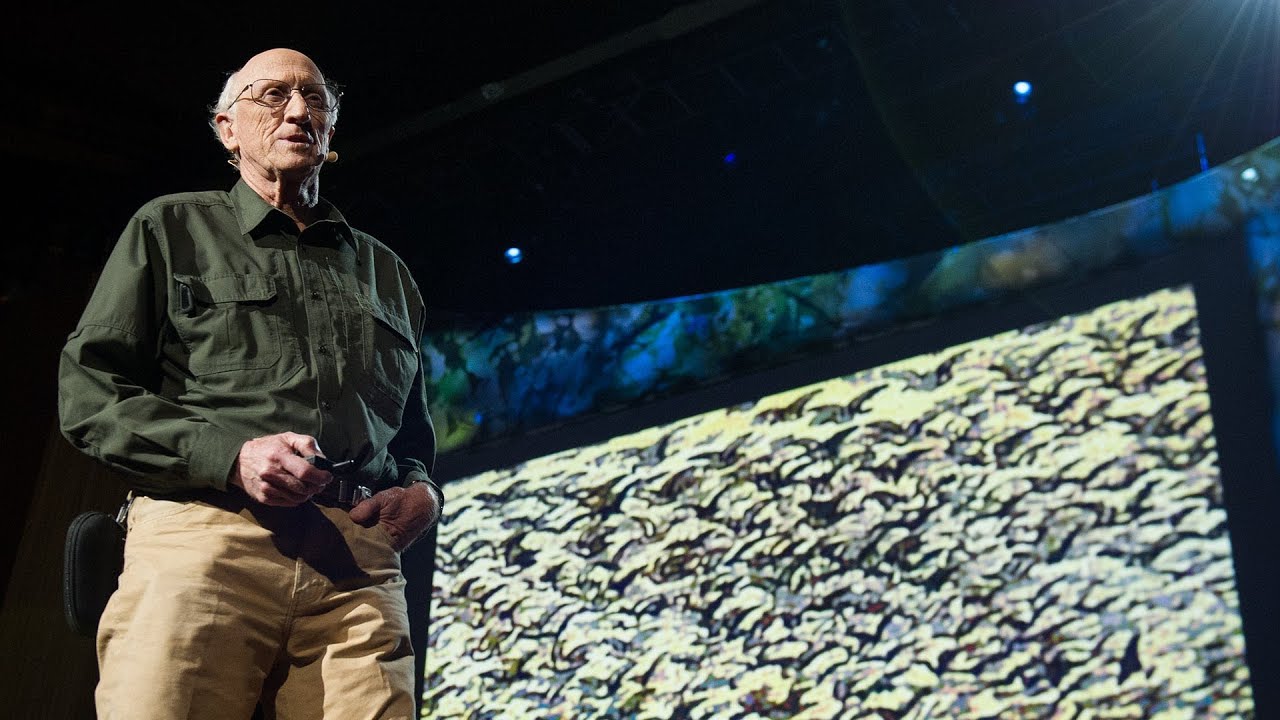
Is it time to bring back long-lost species? These talks tackle the possibility of a world where Jurassic Park doesn’t seem so science fiction.
आपको ये भी पसंद आ सकते हैं
Beekeeping with Maddie
Year 10 Science
Back to School - Expanded
More Christmas Videos!
Year5 Design and Technology
Year 8 Science
Year 9 Science
Meet methane, the invisible climate villain
Searching for.... | Wildlife Vlog Series!
KS2 Science
Types of Rocks for Children and more
KS1 Drama
Year5 Science
A new view of nature
Maddie Presents "Do You Know?"
Science at Home #Stayhome #Homeschooling | Operation Ouch
Shapes, Colors, & Music by CoComelon
CoComelon | Netflix Jr
Letters and Letter Sounds
Animal Fairy Tales: Season 3 (An ebook of 25 stories)
Kids Songs by CoComelon
CoComelon
Alphabet (ABC) Songs by CoComelon
CocoMelon | Little Baby Bum | Blippi - Nursery Rhymes & Kids TV Shows
टिप्पणियाँ
7 टिप्पणियाँ
It's the dream of kids all around the world to see giant beasts walk the Earth again. Could -- and should -- that dream be realized? Hendrik Poinar gives an informative talk on the next -- really -- big thing: The quest to engineer a creature that looks very much like our furry friend, the woolly mammoth. The first step, to sequence the woolly genome, is nearly complete. And it's huge. (Filmed at TEDxDeExtinction.) TEDTalks is a daily video podcast of the best talks and performances from the TED Conference, where the world's leading thinkers and doers give the talk of their lives in 18 minutes (or less). Look for talks on Technology, Entertainment and Design -- plus science, business, global issues, the arts and much more. Find closed captions and translated subtitles in many languages at http://www.ted.com/translate Follow TED news on Twitter: http://www.twitter.com/tednews Like TED on Facebook: https://www.facebook.com/TED Subscribe to our channel: http://www.youtube.com/user/TEDt
It's the dream of kids all around the world to see giant beasts walk the Earth again. Could -- and should -- that dream be realized? Hendrik Poinar gives an informative talk on the next -- really -- big thing: The quest to engineer a creature that looks very much like our furry friend, the woolly mammoth. The first step, to sequence the woolly genome, is nearly complete. And it's huge. (Filmed at TEDxDeExtinction.) TEDTalks is a daily video podcast of the best talks and performances from the TED Conference, where the world's leading thinkers and doers give the talk of their lives in 18 minutes (or less). Look for talks on Technology, Entertainment and Design -- plus science, business, global issues, the arts and much more. Find closed captions and translated subtitles in many languages at http://www.ted.com/translate Follow TED news on Twitter: http://www.twitter.com/tednews Like TED on Facebook: https://www.facebook.com/TED Subscribe to our channel: http://www.youtube.com/user/TEDt
Wolves were once native to the US' Yellowstone National Park -- until hunting wiped them out. But when, in 1995, the wolves began to come back (thanks to an aggressive management program), something interesting happened: the rest of the park began to find a new, more healthful balance. In a bold thought experiment, George Monbiot imagines a wilder world in which humans work to restore the complex, lost natural food chains that once surrounded us. TEDTalks is a daily video podcast of the best talks and performances from the TED Conference, where the world's leading thinkers and doers give the talk of their lives in 18 minutes (or less). Look for talks on Technology, Entertainment and Design -- plus science, business, global issues, the arts and much more. Find closed captions and translated subtitles in many languages at http://www.ted.com/translate Follow TED news on Twitter: http://www.twitter.com/tednews Like TED on Facebook: https://www.facebook.com/TED Subscribe to our channel:
Wolves were once native to the US' Yellowstone National Park -- until hunting wiped them out. But when, in 1995, the wolves began to come back (thanks to an aggressive management program), something interesting happened: the rest of the park began to find a new, more healthful balance. In a bold thought experiment, George Monbiot imagines a wilder world in which humans work to restore the complex, lost natural food chains that once surrounded us. TEDTalks is a daily video podcast of the best talks and performances from the TED Conference, where the world's leading thinkers and doers give the talk of their lives in 18 minutes (or less). Look for talks on Technology, Entertainment and Design -- plus science, business, global issues, the arts and much more. Find closed captions and translated subtitles in many languages at http://www.ted.com/translate Follow TED news on Twitter: http://www.twitter.com/tednews Like TED on Facebook: https://www.facebook.com/TED Subscribe to our channel:
Wolves were once native to the US' Yellowstone National Park -- until hunting wiped them out. But when, in 1995, the wolves began to come back (thanks to an aggressive management program), something interesting happened: the rest of the park began to find a new, more healthful balance. In a bold thought experiment, George Monbiot imagines a wilder world in which humans work to restore the complex, lost natural food chains that once surrounded us. TEDTalks is a daily video podcast of the best talks and performances from the TED Conference, where the world's leading thinkers and doers give the talk of their lives in 18 minutes (or less). Look for talks on Technology, Entertainment and Design -- plus science, business, global issues, the arts and much more. Find closed captions and translated subtitles in many languages at http://www.ted.com/translate Follow TED news on Twitter: http://www.twitter.com/tednews Like TED on Facebook: https://www.facebook.com/TED Subscribe to our channel:
The gastric brooding frog lays its eggs just like any other frog -- then swallows them whole to incubate. That is, it did until it went extinct 30 years ago. Paleontologist Michael Archer makes a case to bring back the gastric brooding frog and the thylacine, commonly known as the Tasmanian tiger. (Filmed at TEDxDeExtinction.) TEDTalks is a daily video podcast of the best talks and performances from the TED Conference, where the world's leading thinkers and doers give the talk of their lives in 18 minutes (or less). Look for talks on Technology, Entertainment and Design -- plus science, business, global issues, the arts and much more. Find closed captions and translated subtitles in many languages at http://www.ted.com/translate Follow TED news on Twitter: http://www.twitter.com/tednews Like TED on Facebook: https://www.facebook.com/TED Subscribe to our channel: http://www.youtube.com/user/TEDtalksDirector
The gastric brooding frog lays its eggs just like any other frog -- then swallows them whole to incubate. That is, it did until it went extinct 30 years ago. Paleontologist Michael Archer makes a case to bring back the gastric brooding frog and the thylacine, commonly known as the Tasmanian tiger. (Filmed at TEDxDeExtinction.) TEDTalks is a daily video podcast of the best talks and performances from the TED Conference, where the world's leading thinkers and doers give the talk of their lives in 18 minutes (or less). Look for talks on Technology, Entertainment and Design -- plus science, business, global issues, the arts and much more. Find closed captions and translated subtitles in many languages at http://www.ted.com/translate Follow TED news on Twitter: http://www.twitter.com/tednews Like TED on Facebook: https://www.facebook.com/TED Subscribe to our channel: http://www.youtube.com/user/TEDtalksDirector