
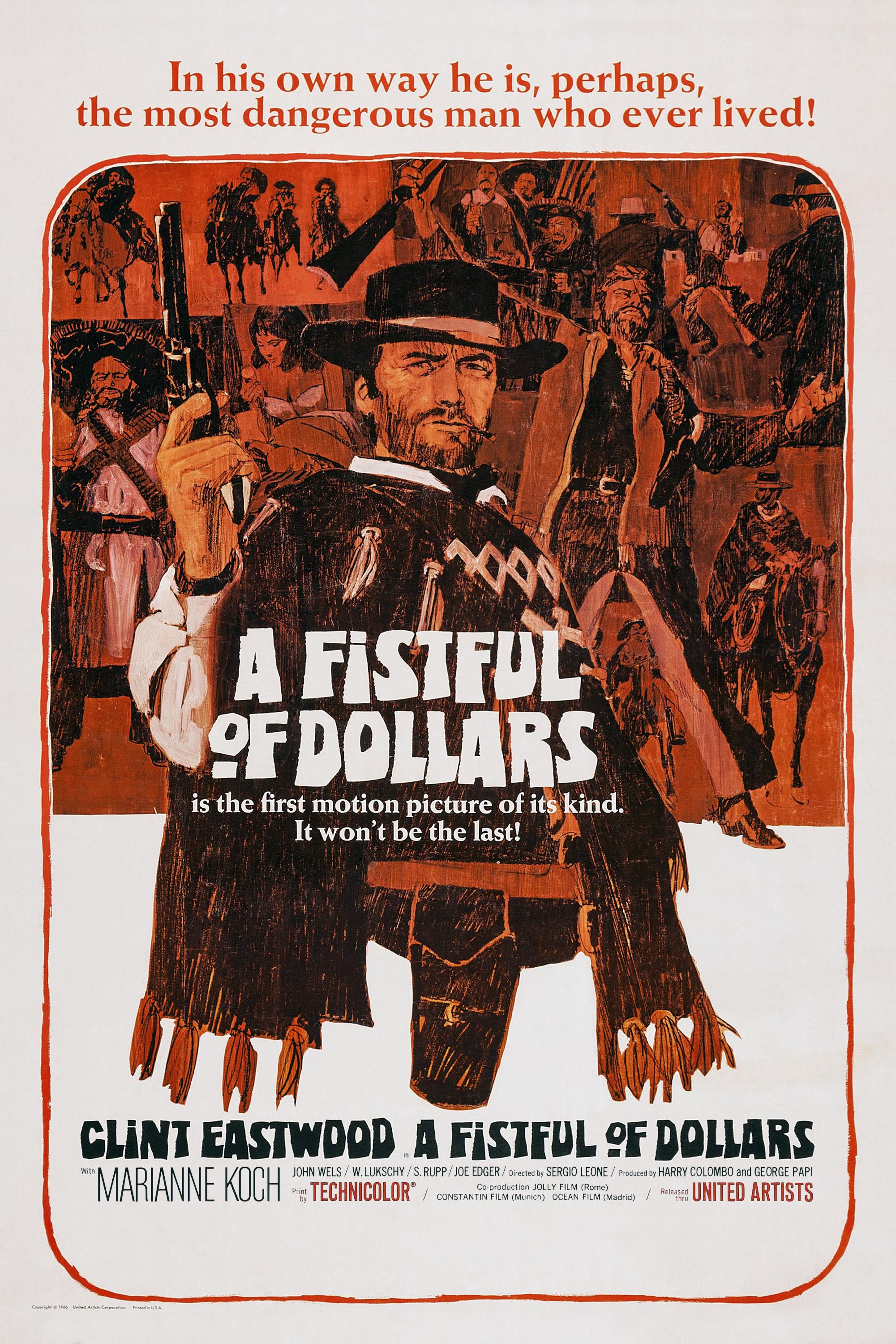
एक भटकने वाला बंदूकधारी लालच, गर्व और बदला लेने से अलग हुए शहर में एक दूसरे के खिलाफ दो प्रतिद्वंद्वी परिवारों की भूमिका निभाता है।
ट्रेलर
कलाकार
Sergio Leone
Director
Clint Eastwood
Joe
Gian Maria Volontè
Ramón Rojo
Marianne Koch
Marisol
Wolfgang Lukschy
John Baxter
Sieghardt Rupp
Esteban Rojo
Joseph Egger
Piripero
Antonio Prieto
Don Benito Rojo
Antonio Prieto
Don Miguel Rojo
José Calvo
Silvanito
Margarita Lozano
Consuelo Baxter
Daniel Martín
Julián
Benito Stefanelli
Rubio
Mario Brega
Chico
Bruno Carotenuto
Antonio Baxter
Aldo Sambrell
Rojo gang member
Raf Baldassarre
Juan De Dios
Luis Barboo
Baxter Gunman 2
Frank Braña
Baxter Gang Member
José Canalejas
Rojo Gang Member
Adriano Bolzoni
Writer
Mark Lowell
Writer
Víctor Andrés Catena
Writer
Sergio Leone
Writer
Jaime Comas Gil
Writer
Fernando Di Leo
Writer
Ryûzô Kikushima
Writer
Akira Kurosawa
Writer
Duccio Tessari
Writer
Tonino Valerii
Writer
आपको ये भी पसंद आ सकते हैं
Hostiles
Rust
Badland
The Homesman
That Dirty Black Bag
Yellowstone
1923
The Abandons
Hell on Wheels
Dutton Ranch
Joe Pickett
1883
Django
Killer Women
Lawmen: Bass Reeves
The English
Gunslingers
Maria e o Cangaço
Landman
The Son
Territory
Godless
Damnation
Gold Diggers
टिप्पणियाँ
8 टिप्पणियाँ
🤠😎🤠
When Per un pungo di dollari, or A Fistful Of Dollars, was released in the mid-1960s, the term "Spaghetti Western" was coined as a putdown to these brazen new films that dared to recreate the Wild West in a place as far away as Italy. However, the last laugh was shared by the Italian directors, whose new style of portraying Colonial America in a realistic style rather than the romanticised way that was characteristic of John Wayne and his contemporaries will be remembered long after the films of the romanticised style are no more. The plot is indescribably simple, as Clint Eastwood simply wanders into a town where gang warfare has stripped the economy to the point where only the local undertaker makes a profit and turns the two warring families against one another. Sergio Leone's best-known trademark, his dynamic use of widescreen ratios, comes to the fore here as Clint shares a film frame with no less than four of his enemies, all of whom have plenty to say to him and vice versa. This is one film where a pan and scan transfer is purely and simply vandalism. Some of the dialogue that is included here absolutely takes the cake for cleverness and wit, too. Asking four gunslingers to apologise to a horse, well, if it wasn't a man as famous for playing a gunslinger as Clint Eastwood, it'd be ridiculous. Transplanting old Samurai legends into the Wild West works well, as you can see here. Simply having an old mercenary who travels the land in search of wrongs to right and battles to be fought makes the story a lot more compelling than the Westerns where we are told every iota of the characters' motivations in the hope that it will give them some depth. The element of the main hero not getting involved in every scuffle that the bad guys cause, our semi-nameless hero's ignoring a drunken thug shooting at a little boy being the most obvious example, was another master stroke, one that got Eastwood involved in doing the film to begin with. The confrontation at the end of the film works well, too, with pyrotechnics exploding all over the picture in a bright display that keeps the film powerful and yet focused at the same time. All in all, Per un pungo di dollari gets nine out of ten from me. The lack of any interesting support characters does dull the story a little, but this mistake was quickly rectified in the two sequels. The addition of Lee Van Cleef also worked well, but in this effort, it's all Clint Eastwood, and while the rest of the cast are nowhere near as interesting, it's all a better watch than anything the Americans were lumping out at the time.
source: A Fistful of Dollars
Per un pugno di dollari
The first of Sergio Leone's "spaghetti westerns" is now overshadowed by its superior successors, but remains an exciting introduction to this peculiar genre. Clint Eastwood redefined the notion of a hero in this film, a man who seems to operate by a code but doesn't feel the need to explain it. Although the U.S. advertising campaign billed Eastwood's character as "The Man With No Name," a name is one thing he does have - Joe - but almost everything else about him is a mystery except for his deadly proficiency with a gun. Leone's style would be more pronounced in later films, but this one provided the template. Eastwood is superb, of course, as is Gian Maria Volante (billed as Johnny Wells) as his deadly opponent, Ramon Rojo. If it's slow moving at times, the music of Ennio Morricone always takes up the slack.
it took me awhile to get around to watching this movie,which is considered a classic by a lot of people.it was a bit too sedate for my tastes,although it wasn't a horrible movie and it probably bears viewing at least twice.it's the first of three movies in the Man With no Name trilogy,directed by Sergio Leone and starring Clint Eastwood as the man with no name.he's also the quiet man with no name.the character doesn't say much unless he needs to.he's brooding and mysterious,and doesn't give too much away about himself.he's also calm and cool,at least on the outside,showing little or no outward emotion. Eastwood is the perfect actor to play this character.though he was in the series Rawhide,it was apparently this series that rocketed him to fame.although i thought there were some slow moment here and there,i didn't hate the film,and i can understand why it has the following and reputation it does.for me,Fistful of Dollars is a 6/10
A classic. The first, or one of the first, films to introduce the concept of the Western antihero. Sergio Leone pioneered a lot of things here. The brightness, the oppressive sunlight. The ugly brutality of Western gunfights, that had always been cleaned up in Hollywood. I understand that Leone's occasional framing of the shooter and his victims in the same shot was not allowed at the time in American films. I thought, upon seeing this film years ago, that some characters (Eastwood) spoke in English, and other characters in Italian. Who knows, maybe some spoke Spanish or German. Must make for an interesting acting job. I rarely notice a movie's music, but the original score by Ennio Morricone was so fitting. Probably the best match of film and music up to that time, and only bested by Hugh Montenegro(?) in "The Good, the Bad, and the Ugly". A very good movie. Grade: A