
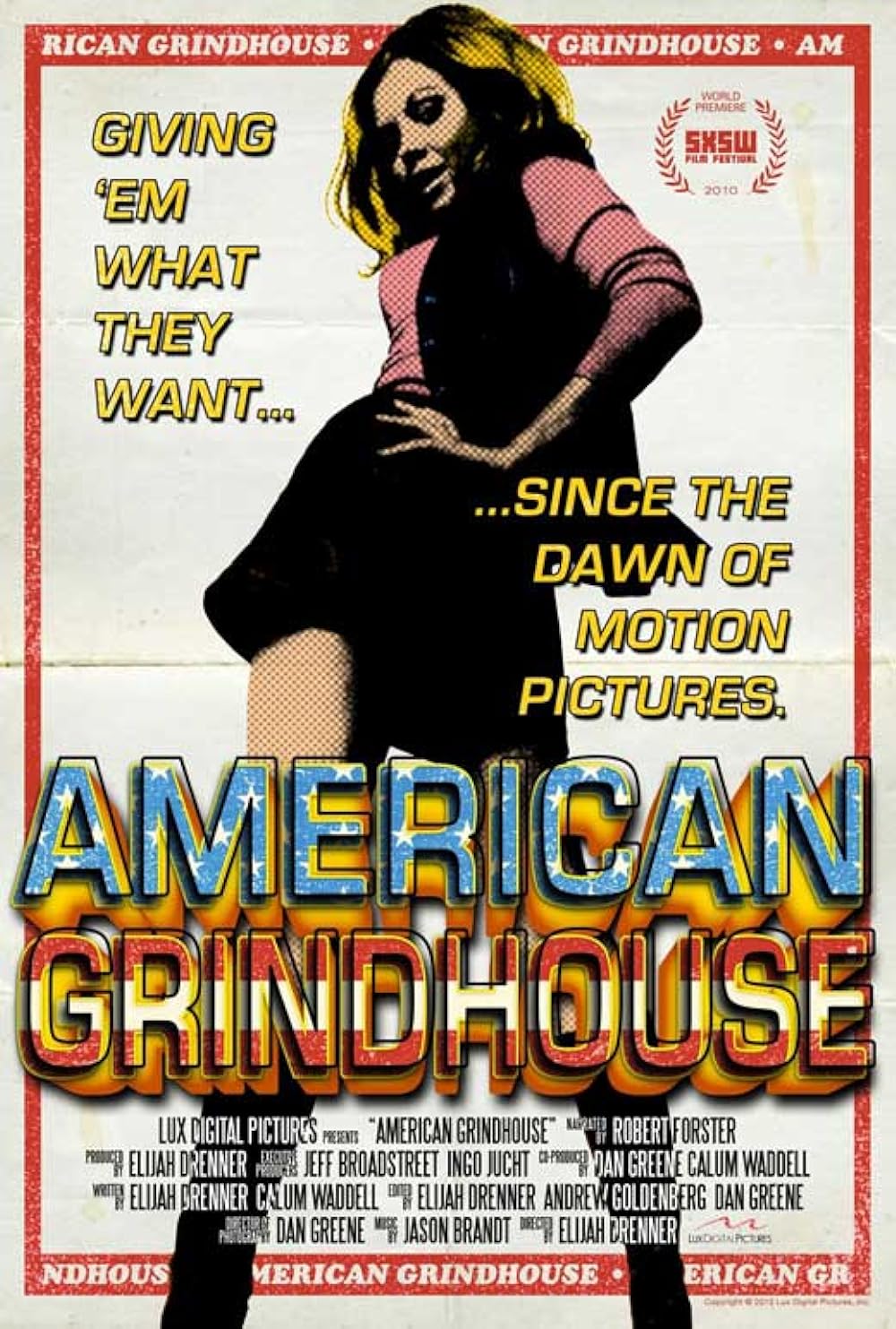
A documentary about the history of exploitation movies, from the silent-film era to the 1970s.
Bande-annonce
Casting
Elijah Drenner
Director
Robert Forster
Self - Narrator
Eric Schaefer
Self - Film Historian
Eddie Muller
Self - Film Historian
John Landis
Self - Director, 'Animal House'
Kim Morgan
Self - Film Historian
Fred Olen Ray
Self - Director, 'Hollywood Chainsaw Hookers'
Allison Anders
Self - Director, 'Mi Vida Loca'
Joe Dante
Self - Director, 'Gremlins'
Herschell Gordon Lewis
Self - Director, 'Scum of the Earth'
Jeremy Kasten
Self - Director, 'Wizard of Gore'
William Lustig
Self - Director, 'Maniac Cop'
Lewis Teague
Self - Director, 'Cujo'
David Hess
Self - Actor, 'The Last House on the Left'
Bob Minor
Self - Actor, 'Foxy Brown'
Jack Hill
Self - Director, 'Coffy' and ''Foxy Brown'
Fred Williamson
Self - Actor, 'Three the Hard Way'
Larry Cohen
Self - Director, 'Black Caesar'
Jonathan Kaplan
Self - Director, 'Truck Turner'
Elijah Drenner
Writer
Calum Waddell
Writer
Vous aimerez aussi
Addicted to Sexting
Rat Film
Stormy
Stripped: Las Vegas
Inside Hotel Chocolat
Sex Sells
L'Art d'être riche
Notre planète
Marvel Studios Rassemblement
Notre univers
The BMF Documentary: Blowing Money Fast
Top Gun: The Next Generation
Trust Me: The False Prophet
Michael Jackson: The Verdict
Rich & Shameless
L'argent, en bref
Cosmos: Une odyssée à travers l'univers
Side Hustlers
GameStop: Les geeks défient Wall Street
The Takedown: American Aryans
Should I Marry a Murderer?
Christiane Amanpour: Sex & Love Around the World
Disney Gallery: Star Wars: The Mandalorian
Engineering Catastrophes
Commentaires
10 commentaires
source: American Grindhouse
"American Grindhouse" was way better than I thought it was going to be. It tells its story very well. I've read a lot of books about film and I still learned a lot from this movie. Director Elijah Drenner does a great job documenting a great period of cinema.
I thought they did a great job of reviewing the history of the genre and sub-genres. Great to see Fred Olen Ray and Don Edmonds in this. Excellent work by the filmmakers. Loved the interviews.
Exploitation cinema has been around since the creation of film itself, as this extremely snappy and concise, yet still comprehensive and illuminating documentary astutely points out. Among the subjects covered are the definition of exploitation, the origins of exploitation in the silent movie era, the Hays Code, Tod Browning's "Freaks," educational shock docs (yep, we get to see some disgustingly explicit birth of a baby footage), film noir, 50's juvenile delinquent pictures, nudist camp romps, AIP fare, Russ Meyer, roughies, gore flicks, biker outings, chicks-in-chains movies, the 70's blaxploitation explosion, Nazisploitation, the eruption of *, and the ongoing legacy of grindhouse pictures in the early 21st century. The eclectic array of interviewees are quite lively and enjoyable, with especially stand-out contributions from film critic and historian Kim Morgan, a highly funny and dynamic John Landis, the ever-charismatic Fred Williamson, a seriously whacked-out David Hess, "Ilsa" director Don Edmonds (who flat out admits he made this notorious cult classic because he was starving and desperately needed the money), screenwriter James Gordon White, director William Lustig, exploitation legends Jack Hill, Larry Cohen, Herschell Gordon Lewis, and Ted V. Mikels, and actress Judy Brown. Zipping along at a constantly brisk pace, perfectly narrated by Robert Forster, and containing a wealth of choice trashy and graphic clips from countless gloriously down'n'dirty nickel'n'dime features, this baby is absolutely essential viewing for exploitation cinema buffs.
It's a far ranging exploration of the exploitation cinema. It takes a history trip from the beginning of film all the way to today. It doesn't really try to limit the scope, and skims through 100 years. It features several talking heads. The most famous of the experts is director John Landis. This serves as a general documentary of the fringe movie world. The best thing is all the clips of these old movies. The talking heads aren't digging too deep but are generally well informed. Robert Forster does a good job as the narrator. His gruff voice isn't the normal narration but somehow fits the subject matter. This is a steady march through history categorizing all the major movements hitting the big moments. The best interviews are the actual participants who are talking about their own movies. The doc does grind down as the movie has nowhere to go with the arrival of *. I guess that's another doc. The final section of Hollywood trying to rip off the grindhouse isn't quite as compelling. As a general doc, it hits most of the big points.
Cheerful, appropriately unfettered documentary on exploitation, sexploitation and blaxploitation movies, from 1913's "Traffic in Souls" to the (would-be) grindhouse movies of the present day (Tarantino's efforts rightly looked upon as homages rather than the real thing). Elijah Drenner co-wrote, co-produced and directed this clip-heavy essay on the names, faces and posters behind the salacious, scandalous, shocking and sometimes successful grade-B features that played in rundown theaters on the bad side of town. Of the celebrity interviews, only directors John Landis and Joe Dante are knowing enough to give us a broad spectrum of the now-cult genre. Drenner loves showing off the title cards and advertisements of the movies his guests are talking about, but there's no exploration into the financing, production or box-office returns of these pictures. It's a facetious, shallow entertainment--which may be purely intentional, as it accurately reflects the sex-drugs-and-gore-infatuated features on display. ** from ****
American Grindhouse is a straightforward clip compilation that traces the history of exploitation cinema from its very beginnings through to the present day. It's very ordinary in format, and the writing is hardly engaging, but it just about gets by thanks to the extraordinary assortment of interviewees they've assembled for the job. The documentary starts out by looking at the old sensation films of the 1930s before moving into the 1950s nudity wave. From the 1960s, the double whammy sellers of sex and violence become prevalent, with the likes of H. G. Lewis coming to the fore, and then the glory days of 1970s grindhouse cinema hit. The reliable Robert Forster is the narrator, while those being interviewed include John Landis, Joe Dante, William Lustig, Jack Hill, and many more besides. Tons of clips are also used to illustrate various points, but for the most part this is a generalised celebration of exploitation cinema, extremely superficial but entertaining nonetheless.
This is a terrific documentary for fans of exploitation cinema and B movies. The documentary charts the history of US exploitation films from the beginnings of cinema to the modern day. It was Tarantino and Rodriguez that revitalised the term Grindhouse when they made their double feature but it took off in the 1960s with the change of mores and loosening of censorship laws. It allowed filmmakers to exploit and challenge an area of cinema that was designed for discerning adults that like terror, sex, violence and buckets of blood. The documentary is narrated by Robert Forster and interviews starts, directors and fans of the genre including Joe Dante, John Landis, Fred Williamson, Larry Cohen, William Lustig, Lewis Teague and others. However it is not just talking heads, you have clips from grindhouse films and especially a good representation of clips from films of the 1960s and 70s.
A documentary about the history of exploitation movies, from the silent movie era to the 1970s. This film covers it all: from the earliest Edison films, to the pre-code days (who knew the 1920s were so raunchy), to the story of "Freaks" and the end of Tod Browning's career. With interviews from John Landis, Joe Dante, and William Lustig, you have it all: the importance of H. G. Lewis (despite his questionable talent, as Landis points out), and the world of Larry Cohen and his "no permits" approach to renegade movie making. If nothing else, the story of "Ilsa" and how the director got involved is priceless. That film has achieved such cult status -- it is probably known by far more people than who have ever actually seen it.
This is basically a primer to the grind house world, so if you've already been immersed, you're not going to get much. But for anyone else, it's very recommended. You're bound to find a few gems to track down.