
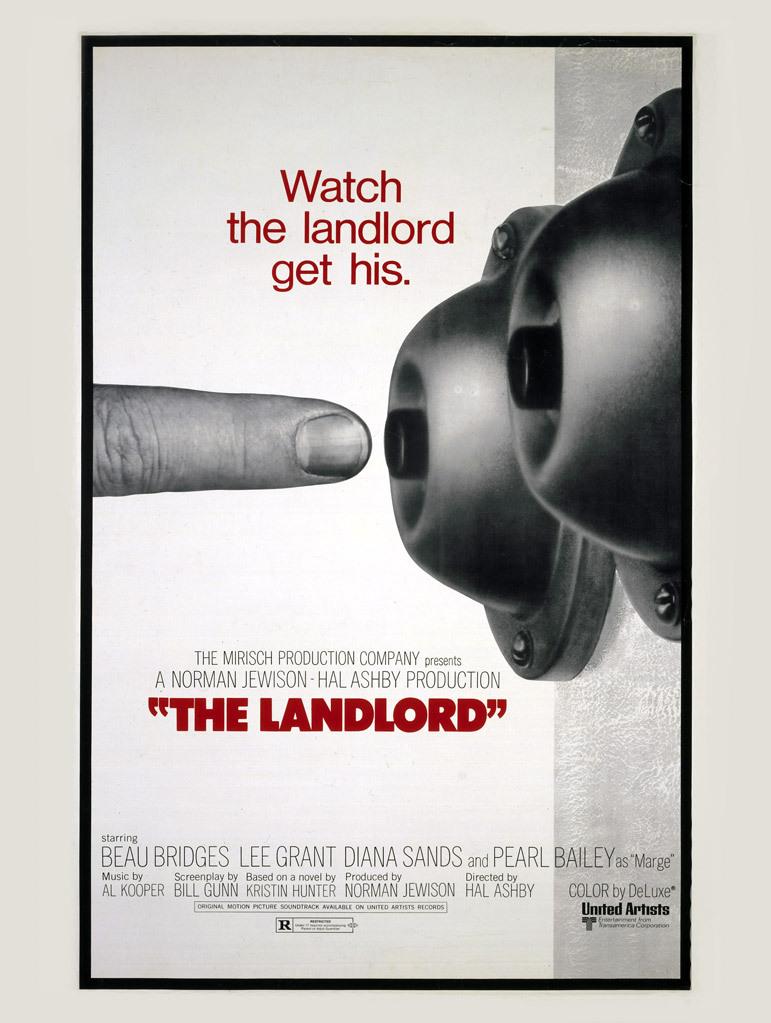
Naïve 29-year-old Elgar Enders buys a building in a black Brooklyn ghetto to evict the tenants and upgrade it. But instead, he grows fond of the tenants and falls in love with a mixed-race girl while his wealthy parents disapprove.
Trailer
Cast
Hal Ashby
Director
Beau Bridges
Elgar
Lee Grant
Mrs. Enders
Diana Sands
Fanny
Pearl Bailey
Marge
Walter Brooke
Mr. Enders
Louis Gossett Jr.
Copee
Marki Bey
Lanie
Mel Stewart
Professor Duboise
Susan Anspach
Susan Enders
Robert Klein
Peter
Will Mackenzie
William Jr.
Gretchen Walther
Doris
Doug Grant
Walter Gee
Stanley Greene
Heywood
Oliver Clark
Mr. Farcus
Florynce Kennedy
Enid
Joe Madden
Grandfather
Grover Dale
Oscar
Bill Gunn
Writer
Kristin Hunter
Writer
Maaari Mo Ring Magustuhan
Katie's Mom
Target
Elliot Loves
Aso Ebi Diaries
Sistas
Zatima
XO, Kitty
The Miniature Wife
Love, Victor
Love Bites
Modern Love
Love in the Time of Corona
The Beauty Inside
Marriage of Inconvenience
Only for Love
He's Into Her
F4 Thailand: Boys Over Flowers
Love is Sweet
Love Between Lines
Secret Lover
Put Your Head on My Shoulder
Miseducation
Please Feel at Ease Mr. Ling
Love Has Fireworks
Mga Komento
10 Mga Komento
xhpo
bad pension
source: The Landlord
Hal Ashby's debut film may be somewhat over-directed, but it is one of his best;funny, provocative and pointed. And I prefer it to Bound for Glory,Coming Home,Harold and Maude and Shampoo. The Landlord is Ashby's most audacious film and along with The Last Detail (1973)it's his best. The change in tone is consistent with the main character's developing awareness and involvement with the tenants he had planned to displace in order to convert the building into his private home. Lee Grant is terrific as Bridge's mother and earned an Oscar nomination for supporting actress and no less memorable are Diana Sands, Pearl Bailey, and Louis Gossett Jr. Bridges is winning as the landlord who arrives to make change and winds up being changed and Trish Van Devere is funny in her one scene. The on location shooting, terrific cinematography and surprising dialog keep it real and interesting. Not as well known as it should be.
Continuing to review movies featuring African-Americans in chronological order for Black History Month, we're now at 1970 when Diana Sands, Louis Gossett Jr., Pearl Bailey, Mel Stewart, and a light-skinned Marki Bey appeared in Hal Ashby's directorial debut having just won the Oscar for Best Editing on In the Heat of the Night for mentor Norman Jewison who produced this. The actual star is Caucasian Beau Bridges who's a rich son of Lee Grant who wants his own place so he buys a tenement building to convert into his own pad but is reluctant to throw the mostly dark-skinned borders out. I'll stop there and just say that the script by Bill Gunn from Kristin Hunter's novel provides many satirical moments and a nice dramatic turn near the end and Ashby's quick cutting of some scenes not to mention his lighting techniques provide ample interest throughout. But the tone was uneven to me to the point that I sometimes was confused as to what was the point of some sequences or the ways some characters turn out to be. Still, The Landlord was interesting enough that I may decide to watch this again if I feel the need to see something as offbeat as this one was.
It was a great movie. I'm only 22 yrs old and just saw it for the first time only recently. It is a great movie that is able to drive several points home--consisting of racial prejudice, the view of African-American lifestyle at that point in time, and even the social snobbery that can occur in the upper-class. What is so wonderful about it however is the fact that it showcases these issues with such a wonderful quick sense of humor that one minute you might be in silence from a profound piece of dialogue or suspended moment and then the next scene will quickly have you laughing. Beau was great and so was EVERYONE else, especially Lee Grant.
Elgar Enders (Beau Bridges) is a trust fund baby who has never really worked. He buys a ghetto tenement house. He plans to evict the tenants and remodel the house in gentrifying Brooklyn. The fish out of water starts to find himself falling for the black neighborhood and its people. Director Hal Ashby is starting the 70's with a comedic satire about race, wealth, and gentrification. It's got the 70's style. I like the premise. I like the ribbing but it's not that funny despite all the wacky attempts at humor. It's just dated. As a comedy, I struggle to get to a laugh. Like his Being There at the end of the decade, I have a tough time with Ashby's style of social comedy. I appreciate it but he rarely makes me laugh. Harold and Maude is probably the only one.
Movies that deal with race have often been awkward things. One of the biggest problems is they tend to be horribly patronising in tone, many of them looking essentially at how white people can help black people. Most of them were of course written by someone white, which while it doesn't necessarily make it ill-informed, it doesn't tend to help either. The Landlord is one of the few from this era that is based on source material by a black writer (novelist Kristin Hunter). Hunter's novel was adapted by Bill Gunn, who is also black. Of all the pictures I have seen dealing with race in America, it is by far the most confrontational, and really the only of this period that really challenges white social supremacy as well as overt racism. The late 60s and early 70s was really the age of the odd-looking movie, especially with all the new, young directors that were cropping up. The Landlord was the debut of Hal Ashby, a former editor who had recently won an Oscar for his very fine job on another race-related movie, In the Heat of the Night. Ashby has a somewhat blunt approach, and like most young directors seems to be trying to make his mark with lots of unusual but ultimately pointless camera angles and extremely obvious symbolism. One thing that is very striking is how the scenes at the Enders family home are very white and the scenes at the flat block are very black. This is not done so much with set and costume design, but with lighting, strip-light brightness for the former and gloomy half-light for the latter. In fact the movie might as well be in monochrome for all the actual colour tone there is in it. The black/white metaphor of this is a little heavy-handed but at least it also serves the purpose of highlighting the stark difference in quality of life. What is probably best about Ashby's method here is the distance he puts between camera and subject, often putting a bit of scenery in between us and the action, making us feel like snooping witnesses. He will then suddenly take us by surprise with a close-up as a character delivers some key line of dialogue. In line with Mr Ashby having been an editor, The Landlord is very much an editor's movie. This was also the age of weird editing pattern, and there is a lot of cutting back-and-forth, mixing various scenes together. Sometimes this is rather effective (for example the powerful montage of schoolchildren towards the end, or the sight-gag inserts of what Lee Grant is imagining when she finds out she will have a black grandchild), but mostly it is just a little distracting, and because it is so mechanical it threatens to alienate the audience from the material. However, shining through the rather ostentatious style are some very fine acting performances (especially from Bridges, Grant and Diana Sands), notable for their realism in spite of the occasionally bizarre situations they are in. And what's more, in amongst this choppy editing is a story which is at turns comical, thought-provoking and gently poignant, which alongside its hard-hitting stance ultimately carries a message of hope and humanity.
I tried to stay with "The Landlord". I really did. I watched it first because I was into early 1970 movies filmed on location in New York City. When I found that there wasn't too much background footage, I stuck with it to see where it was going. Now, I understand what the writer and filmmaker were going for: the perception and direction of the black community at this period of time and the integration of a naive white person in the midst of it. But I found it to be slow moving, not due to the actors - who do a decent job - and wondering where it was going and ultimately when it was going to end. I know that tons of people like and love this film. And I'm not saying it's awful, but I did lose interest in it, very early on.
Gentrification is one of the issues covered in this comedy-drama. The plot also covers post-Civil Rights era feelings, race relations, and class distinctions. Elgar is a clueless 30 year old rich boy who thinks he's going to turn a Harlem tenement into a bachelor pad. The poor and working class African-Americans who live there will not be displaced so easily. There are good performances all around, especially by Lee Grant and the late Diana Sands. Robert Klein has a small role as a party guest at Elgar's parent's house who shows up in blackface.