
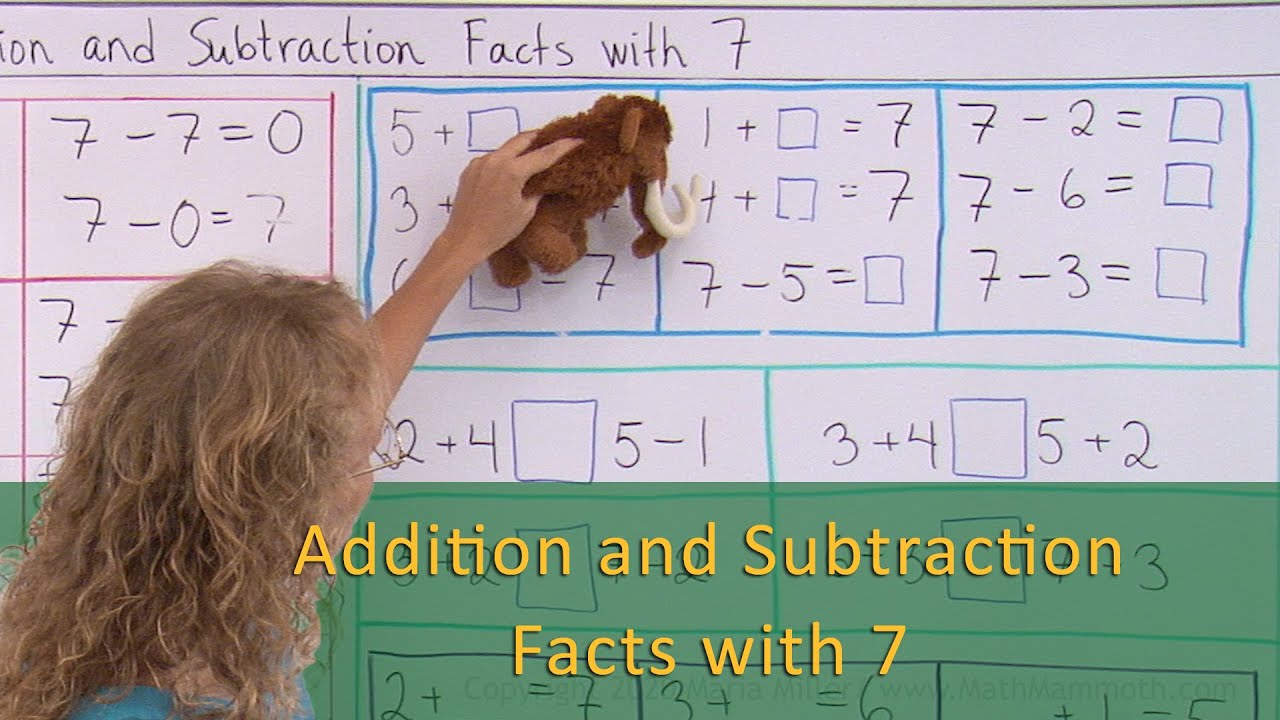
I show all the fact families with the sum of 7, organized into a table. Seeing the structure and the patterns in this manner helps develop number sense and helps children in the memorization work, also. Then we drill the facts for a bit. The lesson also includes an exercise where we compare expressions ("alligator mouths") and draw lines connecting facts from the same fact family.
Maaari Mo Ring Magustuhan
Alphabet (ABC) Songs by CoComelon
CocoMelon | Little Baby Bum | Blippi - Nursery Rhymes & Kids TV Shows
Learn English With Disney Movies
CoComelon - Happy Holidays
PrePrimary Maths
Year1 Maths
Year 11 Math
Year2 Maths
Year 10 Math
Year5 Maths
Maths
3rd Grade Math
رياضيات ( استاتيكا ) منهج مصري ثالث ثانوي العام 2017 - 2018
صف رابع الفصل الدراسي الثاني
Mga Grapo - Mga Linyuhang Grapo - 3 - Pagpapatunayan sa Mga Linyuhang Grapo 1
Mga Bahagi, Decimal, Porsyento at Mga Base ng Numero - Mga Base ng Numero - 27 - Mga Base ng Numero at Mga Simultaneong Ekwasyon
Year 1 Math
Math on the Rocks
Pry2 Math
JSS 3 Junior Mathematics
Numberblocks - Number Adventures | Learn to Count | Maths for Kids
Numberblocks Special Moments ✨
Kids Songs by CoComelon
CoComelon
Mga Komento
8 Mga Komento
I show all the fact families with the sum of 9, organized into a table. Seeing the structure and the patterns in this manner helps develop number sense and helps children in the memorization work, also. Then we drill the facts for a bit. The lesson also includes a missing number exercise, an exercise where we compare simple addition and subtraction expressions, and word problems (with Mathy :^).
I show all the fact families with the sum of 9, organized into a table. Seeing the structure and the patterns in this manner helps develop number sense and helps children in the memorization work, also. Then we drill the facts for a bit. The lesson also includes a missing number exercise, an exercise where we compare simple addition and subtraction expressions, and word problems (with Mathy :^).
I show all the fact families with the sum of 6, organized into a table. Seeing the structure and the patterns in this manner helps develop number sense and helps children in the memorization work, also. Then we drill the facts for a bit. The lesson also includes an exercise where draw lines connecting facts from the same fact family, and a word problem.
I show all the fact families with the sum of 6, organized into a table. Seeing the structure and the patterns in this manner helps develop number sense and helps children in the memorization work, also. Then we drill the facts for a bit. The lesson also includes an exercise where draw lines connecting facts from the same fact family, and a word problem.
I show all the fact families with the sum of 8, organized into a table. Seeing the structure and the patterns in this manner helps develop number sense and helps children in the memorization work, also. Then we drill the facts for a bit. The lesson also includes an exercise of finding missing numbers (a little bit of algebra in disguise), and some word problems.
I show all the fact families with the sum of 8, organized into a table. Seeing the structure and the patterns in this manner helps develop number sense and helps children in the memorization work, also. Then we drill the facts for a bit. The lesson also includes an exercise of finding missing numbers (a little bit of algebra in disguise), and some word problems.
I show all the fact families with the sum of 7, organized into a table. Seeing the structure and the patterns in this manner helps develop number sense and helps children in the memorization work, also. Then we drill the facts for a bit. The lesson also includes an exercise where we compare expressions ("alligator mouths") and draw lines connecting facts from the same fact family.
I show all the fact families with the sum of 7, organized into a table. Seeing the structure and the patterns in this manner helps develop number sense and helps children in the memorization work, also. Then we drill the facts for a bit. The lesson also includes an exercise where we compare expressions ("alligator mouths") and draw lines connecting facts from the same fact family.