
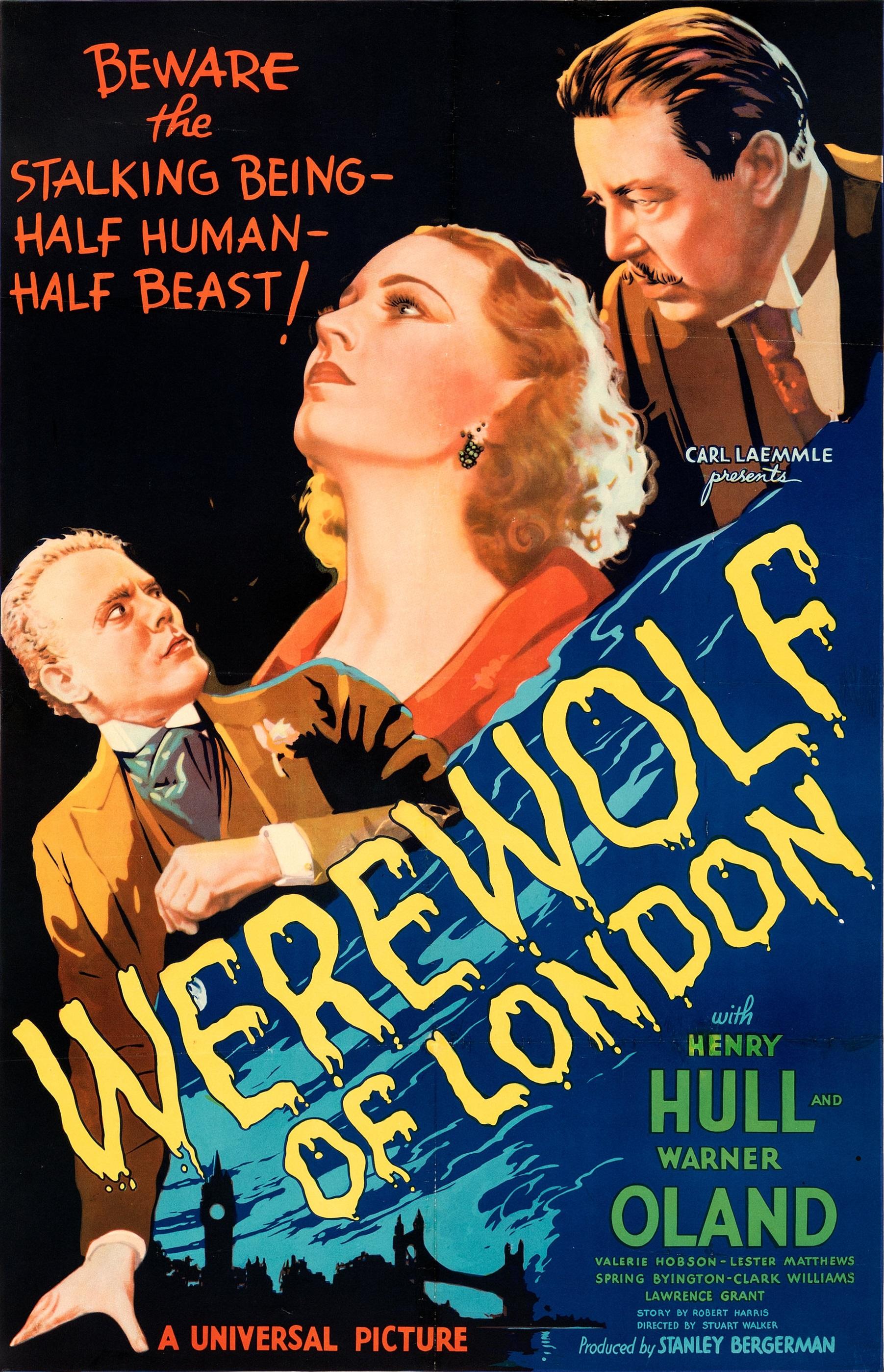
After botanist Wilfred Glendon travels to Tibet in search of a rare flower, the Mariphasa, he returns to a London haunted by murders that can only be the work of bloodthirsty werewolves.
Trailer
Pemeran
Stuart Walker
Director
Henry Hull
Dr. Glendon
Warner Oland
Dr. Yogami
Valerie Hobson
Lisa Glendon
Lester Matthews
Paul Ames
Lawrence Grant
Sir Thomas Forsythe
Spring Byington
Miss Ettie Coombes
Clark Williams
Hugh Renwick
J.M. Kerrigan
Hawkins
Charlotte Granville
Lady Forsythe
Ethel Griffies
Mrs. Whack
Zeffie Tilbury
Mrs. Moncaster
Jeanne Bartlett
Daisy
Reginald Barlow
Timothy
Egon Brecher
Priest
Wong Chung
Coolie
J. Gunnis Davis
Detective
Herbert Evans
Detective Evans
Eole Galli
The Prima Donna
John Colton
Writer
Robert Harris
Writer
Harvey Gates
Writer
Edmund Pearson
Writer
Mungkin Anda Juga Suka
Werewolf Castle
A Love Story from the Streets
Missionary
Intimate Betrayals
Stranger Things
Siren
The Strain
Anne Rice's Mayfair Witches
Wolf Pack
Interview with the Vampire
Hemlock Grove
The Secret Circle
Light as a Feather
Chilling Adventures of Sabrina
The Changeling
Tales of the Walking Dead
The Returned
Into the Dark
Ghost Wars
Channel Zero
Dead of Summer
The Twilight Zone
Superstition
Goddess Bless You from Death
Komentar
7 Komentar
source: Werewolf of London
Werewolf of London
This movie is an old friend. I have seen it countless times since childhood and remain fascinated by both the highly original story and the sometimes whacky element of humor which softens a classic horror tale. When comparing movies in the werewolf genre, one has to refer to "The Wolfman", which starred Lon Chaney, Jr. and Claude Raines. It is, I think, the humor of "Werewolf of London" that sets it apart. Spring Byington probably makes the film with her "Aunt Ettie" with excellent support from the "Mrs. Whack" and "Mrs. Montcaster" (I cannot remember the names of the actresses). Also, the werewolves, as played by Henry Hull and Warner Oland, are more frightening than that of Lon Chaney because the makeup tends to reveal more of the human character in their faces. Thus does Oland's revelation to Hull that "A werewolf is neither man nor wolf, but a satanic creature with the worst qualities of both," nicely set the tone for what is to follow.
5 years ago, I would never thought I would even try to watch a black and white movie but 5 years later , I am not just watching it, I am actually really enjoying some oldies. This is another really good movie, the movie is only 75 mins long, so it'kind of short and the movie didn't take long to get started at all. I liked how the movie flowed, it's was not all action packed or anything, there were some in trusting scenes here and there. The effect in this were surprising, really good for it's time and I did found parts of it really funny, with those two old drunken ladies on stairs, they were so funny. The acting was great however I wasn't to keen on the ending, he went down too easy! 7 out of 10 from me.
WEREWOLF OF LONDON (1935) does not satisfy as a whole, but it does have some memorable spots. The basic plot tells of a introverted botanist (Henry Hull) who is stricken with the ability to become a werewolf. The film's great moments are peppered through out. There's the beautifully photographed scene in Tibet, where moonlight is almost sun-beach bright. There's the bit in the zoo with a cockney hag fooling around with the zookeeper. Hull's perfomance is superb. We feel his anger over his failed marriage to much younger Valarie Hobson, his fear over his new affiction. It's a shame the screenwriters didn't dwell on his marriage more. The film has a humdinger of an ending, especially with the werewolf's last line.
Whilst in Tibet searching for a rare flower, botanist Dr. Glendon (Henry Hull) is bitten by a werewolf. Howard Maxford praises its "effective sequences", and truly, yes, the metamorphosis is decent for its time. Mike Mayo is less sympathetic (surprisingly) and believes the reason this film hasn't matched Chaney's version in fame is because, "Glendon is such a cold protagonist that it's difficult to muster up much sympathy for his predicament." This is, of course, a Universal film, prior to their much more famous "Wolf Man". Director Stuart Walker did not go on to do much else for horror, though he did do two adaptations of Charles Dickens. Any horror historian needs to see this, as it is not only an early werewolf tale, but really is the seed that blossomed into "Wolf Man". The same makeup was even used (though toned down last minute, unfortunately).