
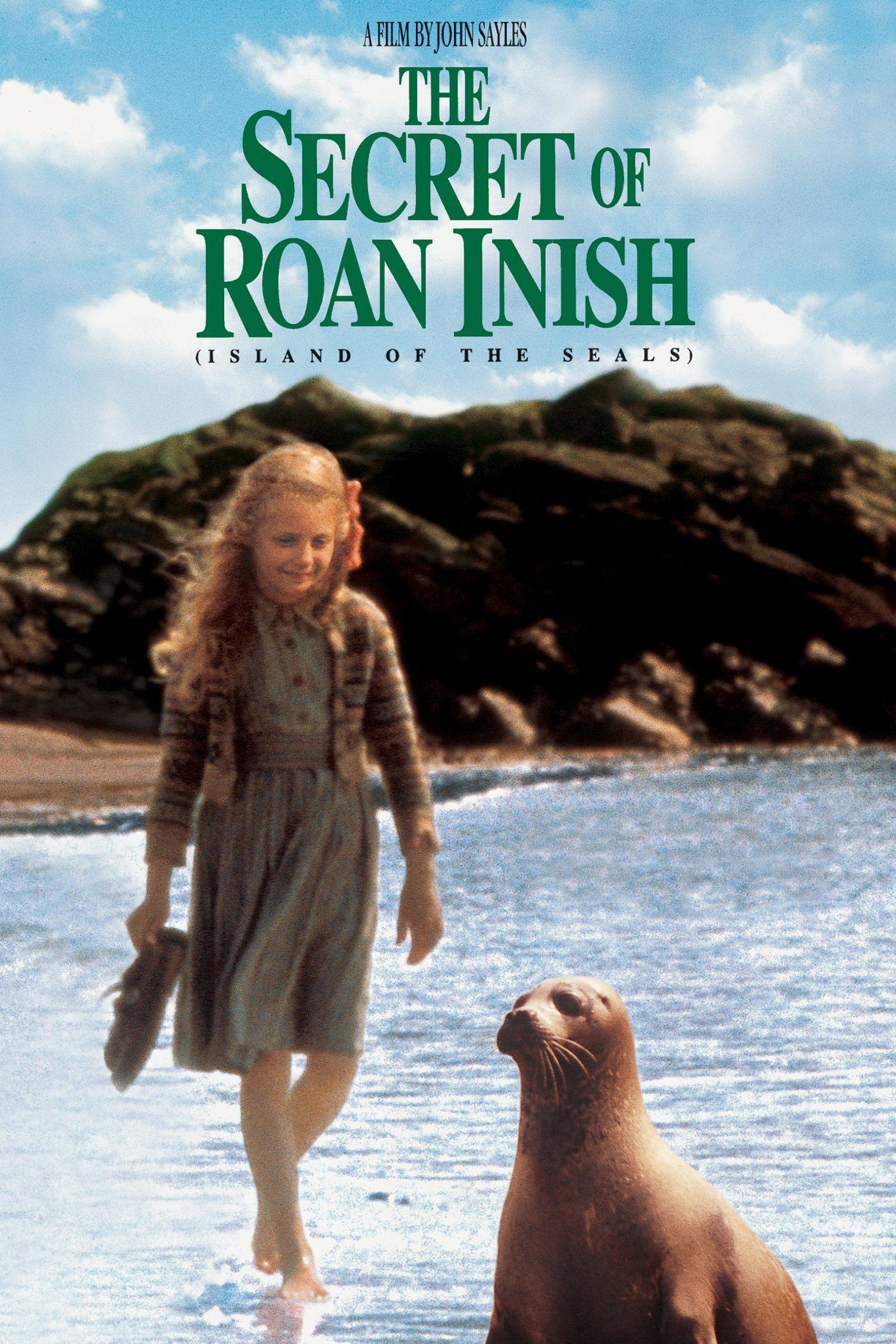
Young Fiona lives with her grandparents in a small fishing village where she takes an active role to unravel the mysterious secrets.
ट्रेलर
कलाकार
John Sayles
Director
Jeni Courtney
Fiona
Eileen Colgan
Tess
Mick Lally
Hugh
Pat Slowey
Priest
Dave Duffy
Jim
Declan Hannigan
Oldest brother
Mairéad Ní Ghallchóir
Barmaid
Eugene McHugh
Bar Patron 1
Tony Rubini
Bar Patron 2
Richard Sheridan
Eamon
Micheal MacCarthaigh
Schoolmaster
Fergal McElherron
Sean Michael
Brendan Conroy
Flynn
John Lynch
Tadhg
Frankie McCafferty
Tim
Gerard Rooney
Liam
Susan Lynch
Selkie
Suzanne Gallagher
Selkie's daughter
Rosalie K. Fry
Writer
John Sayles
Writer
आपको ये भी पसंद आ सकते हैं
नाइटबुक्स
The Secret Garden
Three Wishes for Cinderella
Momo
Deadtime Stories
The Bureau of Magical Things
Spellbound
Ruby and the Well
Ruby and the Well
The Secret Score
Princess Mirror-Belle
The Worst Witch
wolves of blood moon
1802 Love Defies Time
The Madison
Arena zero
The dawn of Olympus son of apollo
not the bride he wanted
zodiac epoch
battle racer
what she took for granted
Teen Wolf
All the Queen's Men
Lucifer
टिप्पणियाँ
10 टिप्पणियाँ
nice movie
source: The Secret of Roan Inish
Some people would label this a children's movie...and yet, it has all the mystery and beauty that accompanies films for adults who love poetry and traditional storytelling and classic literature. Watch this film, and you'll get a good idea of Irish tradition and life and their constant belief in legend and lore, which has made them into the wonderful and strong race that they are today. There is a deep sense of family...a truly strong family who has clearly had its ups and downs and yet has come out even stronger than before. A family that has been through generations of change, adapted, continues to change and yet still holds onto the traditions and stories along the way. Stories that others might assume are myth and faery tales. And stories that we know aren't anything but the truth woven into a magical tale. In most Irish tales and legends I've read, there is a quest which keeps the main character(s) pushing forward through all the challenges of life. Fiona's store in this movie is no different. She's a little girl lost at the beginning when we meet her, wandering through the smog of the city to find some way to latch onto her father who is lost and sad with grief over a dead wife and a dead and missing baby boy. Her true quest begins when she is sent to live with her grandparents who still live by the sea. And the quest truly becomes a quest when she learns that her baby brother Jamie has been spotted on Roan Inish, the Island of the Seals where her family originated from. The music weaves itself around the characters and the story to make it more complete than it would be without it. It is both peaceful and stirring, providing the background for the cultural ear. With the music and the intricate storytelling, one can become truly lost in this story. And truly a part of it. If I had children, this is one movie I would have them watch over and over again. Like Disney's "Darby O'Gill and the Little People," this is a movie to entertain children of all ages.
You have to suspend belief during "The Secret of Roan Inish" and accept Irish legend as fact. This shouldn't be too difficult for moviegoers weaned on Star Wars and Die Hard. Let's hope so because "The Secret of Roan Inish" is a rare movie, a fairy tale, told from a child?s perspective, but for adults as well as children. Roan Inish is an island off the coast of western Ireland from which 10-year-old Fiona's family has recently decamped for the mainland because of hard times. Now directly across the water from their beloved island, Fiona's grandparents take her in after her city-living father can no longer care for her. And there are secrets. Unbeknownst to Fiona there is a branch of her family descended from Selkies, beings half seal and half human. Unlike mermaids though, Selkies are either all human or all seal, depending on their mood. And if you can catch a human Selkie, they're yours until they discover where you've hid their seal skin. And with a beautiful female, Fiona's grandfather did just that, married her, raised a family, but alas one day she finds her seal skin and she's off to the sea. This legend segues into a modern mystery and a challenge Fiona must face. Slow paced, beautifully photographed, well acted and directed, this is a unique gem of a movie.
The Secret of Roan Inish is a unique film which reveals in a slow paced story, the relationship of the Irish people to the sea and land. Roan Inish weaves its magic through the well written dialogue of characters who tell the story of a family ancestor who was a mythological selkie, as well as the lost infant raised by seals who populate the abandoned island. They comment on the loss of native language and culture by a generation of young islanders who left for jobs in the city. The return of a small island girl to her grandparents permits director John Sayles to examine with the girl, the island's history, and its community whose knowledge is grounded in oral history and the past. Set in the post-war economy, desire to leave the old ways to incorporate benefits of modern urban life is seen only briefly as intrusive on the people whose community is intimately tied to the sea. The strength of the film is in how it presents the need and place of intergenerational knowledge, the preservation of the language, and the unique place of ethnic heritage based in oral traditions. What sets this film apart from others is how it is a "family film" without resorting to clichés, but instead, is the kind of movie entertaining to all age groups without talking down to anyone. That the film was not better marketed is likely the fault of the studio that did not know how to sell the film's idea to American audiences grown accustomed to mindless car chases, exploding buildings, and gratuitous violence as well as irritating, smart-mouth kid actors. Roan Inish has none of these elements although the brief nudity of one child actor could offend some who would find offense in any presentation of the human form in any context. But for this, the film allows audiences to be drawn into the story of children who value and desire to restore their heritage and family, and take responsibility to act. The production values of this film are high, its plot thoroughly believable. DP Haskell Wexler uses the beauty of the Irish countryside to paint a stunning image of the landscape and sea that makes one wish to return to the old sod. Sayles's cast are character actors not familiar to most audiences in the US, but who are able to carry the film with authenticity and grace. The child actors are especially mature and believable. This is a film that should be seen by more audiences but probably won't and that is unfortunate for The Secret of Roan Inish is a gem in a sea of mediocre Hollywood fare.
My father's family left a small island off the Donegal Coast early in the 20th Century and this film gave us a wonderful insight into life on such an island. The reality of the film really made it for us, the soda bread (or scone bread) as we called it on the table, the turf fires and the whitewashed walls. Even the seal colony is like Inishtrahull Island where our Dad was from. I recommend this film without hesitation if you have any roots or interest in Ireland. One blooper we noted in the subtitles. A kid is being teased for speaking Irish at the start (the film clearly shows why the language was so damaged in the early 20th Century and who was to blame). His fellow pupils are shown in the subtitles as saying "Eject, Eject" when of course they are actually shouting "Eeejit", the word Idiot in an Irish accent!. One other blooper we noted in the subtitles was a complete misinterpretation of Killybegs, a fishing port in Donegal which was titled something completely different.
My kids want to watch this one over and over. They love the accents as well as the magical story. It's just as terrific for adults - with lovely landscapes, beautiful music and fine acting. Highly recommended for families weary of the usual garbage marketed to kids.
"The older the fiddle, the sweeter the tune." - Irish proverb Part of cinema's "Irish boom" in the lead up to the Anglo-Irish ceasefires, "The Secret of Roan Inish" is a low key, fairly unassuming piece of fantasy by director John Sales, notable mostly for some good cinematography by the legendary Haskell Wexler. Like all of these films ("Waking Ned Devine", "Far and Away", "Riverdance" etc), "The Secret of Roan Inish" exemplifies what writer Natasha Casey calls "Cletic commodification", reducing Ireland and Irishness to "Celtic myths", quaint, pre-modern, rural landscapes, and a depiction of the nation as being forever pre-colonised. Unsurprisingly, the film was widely distributed in America and Britian (since John Ford, "Irishness" has always been used as a vehicle to allow white audiences to role-play being white minorities/victims), but only had a limited release in Ireland. Its pastoral, regressive image of Irish society is more commercially viable outside of its home territory. The film is often touted as being Sayles' only non-political film, but this isn't true. Its tales of when "man and beast lived side-by-side, sharing the sea", of "monsters shedding their past skins", of a little girl's self determination and slow journey back to her roots, are designed specifically for the Irish diaspora. It's a call for a people to return to their homes and live alongside the now tamed beasts of Old England. "Everyone wants to march into the future," one haggard Irish character says, mourning about how his country "just got left behind." But the film's solution is to avoid modernization and to delve deeper into the past; a regression into some mythical "pure origins", a move backward to re-establish a pre-colonial Ireland. This is not surprising. The grand narrative of a society moving from the pre-modern to the modern to the post-modern, breaks down in Ireland. After the Anglo-Irish and Civil wars, as well as hundreds of years of struggle, the Irish were concerned with maintaining the nationalist cultural identity that they were finally free to express in their self-governance. But what Sayles' film does is advocate delving into the "rich identity of Ireland's past", whilst serving up only Disneyland trinkets. It's the condescending David Lean view of Ireland; the art house equivalent of a Lucky Charms cereal box. So it's not only that the film fails to give a genuine ideology of contemporary Ireland, or that it chooses an escape to the past instead of clarifying historical events, but that it pretends to be about "identity" when actually it's relying on mythology in order to avoid questions of authenticity (or the impossibility thereof). Ironically, with the Irish film industry in ruins, "Irishness" has increasingly become a sort of "viscious circle", foreigners projecting "Irishness" onto a country who must now parrot (and export) such cosy, plastic "Irishness" in their own art if they hope to garner international attention. Sayles is unwittingly participating here in the kind of damaging, bottled-tourism and cultural kitsch that he denounces so well in "Limbo" and "Sunshine State". Ignoring these issues, the film works fairly well as a children's fantasy, though I suspect most kids and adults will find "Roan Inish" too plain and too slow. Compare the film to Victor Erice's "The Spirit of the Beehive", a masterpiece which, like "Roan Inish", merges history, myth and childhood. 7/10 – Worth one viewing.