
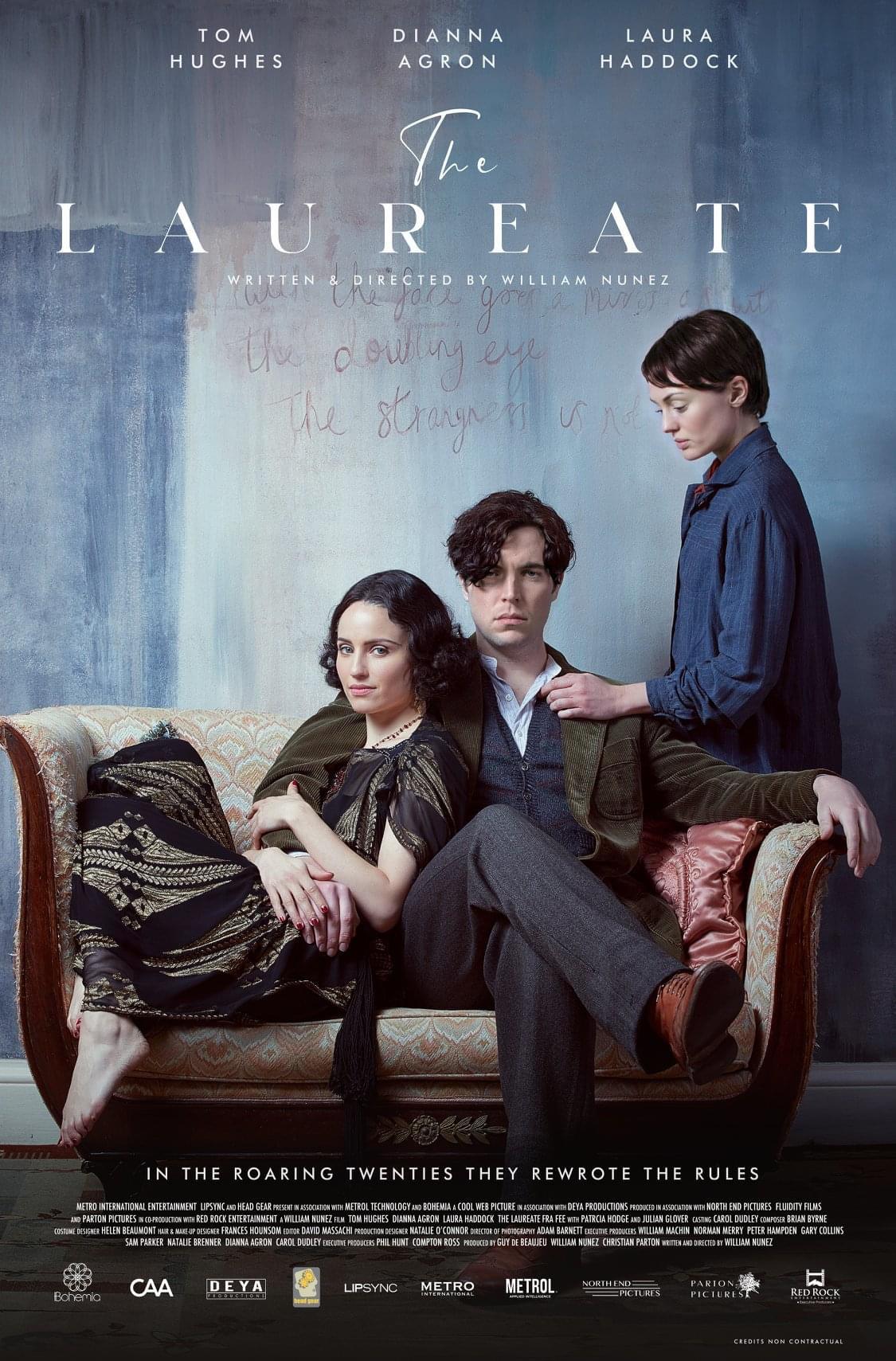
A married couple on the brink of disillusion allows a stranger to live with them in their idyllic cottage. Will this stranger push their fragile state over the edge?
ٹریلر
کاسٹ
Julian Glover
Alfred Graves
Laura Haddock
Nancy Nicholson
Dianna Agron
Laura Riding
Tom Hughes
Robert Graves
Patricia Hodge
Amy Graves
Fra Fee
Geoffrey Phibbs
Christien Anholt
T. S. Eliot
Edward Bennett
Jonathan Cape
Indica Watson
Catherine Nicholson
Edwin Thomas
Edmund Blunden
Timothy Renouf
Siegfried Sassoon
Jamie Newall
Dr. Lake
Orlando James
Club Member
Paulette P. Williams
Mary
Meriel Hinsching
Elfriede
Ronay Poole
Bohemian Woman
Ruth Keeling
Midwife
Stephen Bull
Poetry Club Member
آپ کو یہ بھی پسند آ سکتا ہے
The Laureate
Hemingway's Garden of Eden
Played and Betrayed
Suspension of Disbelief
Malpractice
Franklin
The Rev
You & Me
Creedon's Atlas of Ireland
Unchosen
The Couple Next Door
Gypsy
The Diplomat
Liaison
Cobra
The Diplomat
Betrayal
Black Earth Rising
Clique
The Honorable Woman
Still Waters
The Undeclared War
Trauma
Scandal
تبصرے
9 تبصرے
The full story of Robert Graves is almost unbelievable and worth a film being made about it. This is not it. Maybe a TV series might have been the answer as they seem to have tried to get a quart into a pint pot. Agron is not mad enough to play Riding and Haddock playing Nicholson comes off as being g sappy instead of the feisty feminist she was. As a result none of the drama comes off as being credible a d we are left with an interesting story, but that's all.
source: The Laureate
Successful British poet Robert Graves (Tom Hughes) is dealing with writer's block haunted by post-war PTSD. His wife Nancy Nicholson (Laura Haddock) is a progressive feminist and his work partner. They have young daughter Catherine Nicholson. American writer Laura Riding (Dianna Agron) is a fan. She starts living with the family as Catherine's tutor. She becomes Nancy's political soul-mate and lover. Then she becomes Robert's muse and lover. The group's dynamics continue to change as they are joined by Riding fan Geoffrey Phibbs. This is a historical bio of British poet Robert Graves and his unusual relationship. T. S. Eliot does not come off looking good in this one. I don't know their real stories. This Eliot would not make it in the MeToo era. The staircase scene comes out of nowhere. It's jarring and plays like a horror movie. They need to foreshadow Riding's craziness with something earlier. These characters are intriguing. The craziness does catch me off-guard.
This was nothing but disgraceful waste of time and poison for my mind and heart. Immorality is honesty; that was the moral of this nonsense. A shameful blow to everything good, noble and clean.
The full story of Robert Graves is almost unbelievable and worth a film being made about it. This is not it. Maybe a TV series might have been the answer as they seem to have tried to get a quart into a pint pot. Agron is not mad enough to play Riding and Haddock playing Nicholson comes off as being g sappy instead of the feisty feminist she was. As a result none of the drama comes off as being credible a d we are left with an interesting story, but that's all.
I don't understand the low average rating for this movie, or the high ratings for many "best-selling" movies. Among many other virtues of this film, I would point out that it is at least a study of people being truly loving and bravely honest and generous with each other and themselves, in their intermingling relationships, much unlike the cowardly selfishness and jealousy of many usual, conventional relationships.
I enjoyed the film much more than some of the reviews here because I think it was made for a general audience who would not know who Robert Graves was. It took the breakup of his marriage to emerge from PTSD and becomes a poet devoted to Laura Riding. The sets were amazing and I thought the performances were very good. As a person who has actually read many biographies on Robert Graves, attended the Graves society meetings, and have met his sons (by his 2nd wife) I can say all those events did indeed happen. I suspect Nunez actually watered down some events to make the characters more likeable. That must be the reason there is one child instead of four and Nancy is a bit softer. Laura by all accounts was off her rocker and a completely polarizing person. I think the film actually waters this down for general audience effect. The most important theme I found interesting (which surprised me by all the accounts on the web and reviews) was that Robert was bisexual. That was not the case. Robert was raised by a puritanical mother and apart from her family was never in the company of women from the time he was five until after the war. He did have a schoolboy crush on a boy which was not physical and thought himself gay . During the War, he was friends with Sassoon, Owen etc. In fact, he fell in love with the nurse tending to him after his wounds and shortly afterwards with Nancy who he quickly married. So in his later years, he called himself a pseudo homosexual which is not a hybrid but rather as "not genuine or a sham" The fact that he married a woman caused a strain with Sassoon who believed Graves was homosexual. There was no record of bisexuality ever in Graves life so it is interesting this reworking of his history as he affairs with his female "Muses" throughout the rest of life is well known. Back to the film, I think I knew what they were trying to do which was more about the breakup of a family in order to save oneself creatively more than just a telling of a great writer. There could have been more nuanced in the acting especially in the character of Nancy as a feminist who acts braves and makes this pact but slowly cracks as Riding takes over Graves' life and her own. At the end of the film, Graves sets out to write the opening lines of his seminal work Goodbye to All That and make the decision to leave England to pursue a life with Riding. Overall a good introduction to the life of Graves but please read the biographies to get the full story!,
The Laureate