
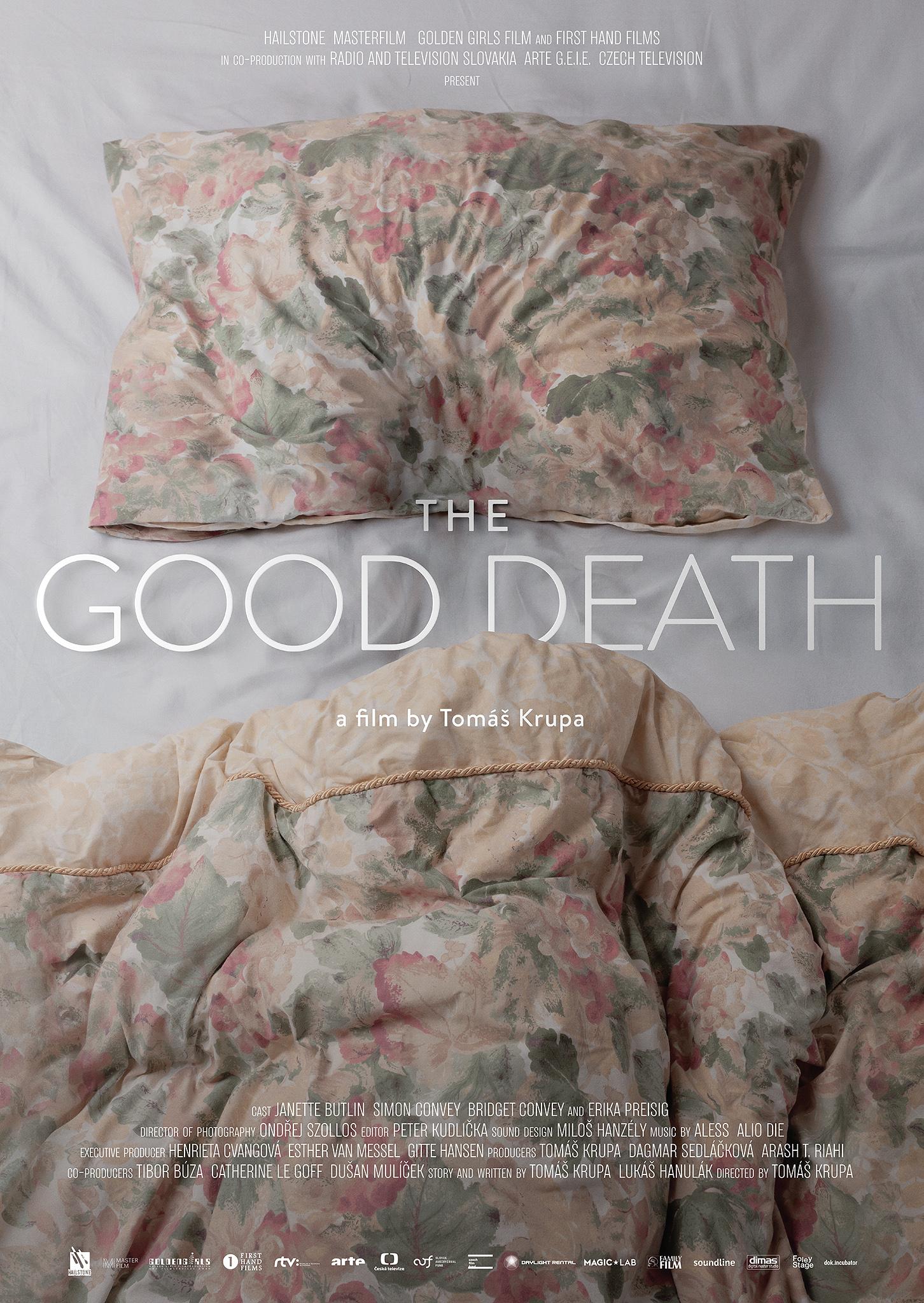
Janette is terminally ill and wants to die in a dignified way but British laws do not allow it. She gets in touch with Dr. Erika in Switzerland, who is willing to help her. Muscular dystrophy, the illness that Janette suffers from, has affected her family for generations. Janette's mother was wheelchair bound for decades, becoming a prisoner in her own body. Janette refuses to wait for death in unbearable pain so she opts for physician-assisted suicide. Before leaving on her last journey from England to Switzerland, she has to explain her intention to her family members and close friends. Her son Simon has also inherited this illness and, therefore, has much more sympathy regarding her decision than his sister Bridget. If no cure for this illness is found, he will face the same decision process as his mother. Both children try to convince Janette to postpone her death. Do we own our life or does it own us?
ٹریلر
کاسٹ
Tomas Krupa
Director
Janette Butlin
Self
Bridget Convey
Self
Simon Convey
Self
Erika Preisig
Self
Lukas Hanulak
Writer
Tomas Krupa
Writer
آپ کو یہ بھی پسند آ سکتا ہے
The Good Death
The Sailor
Sexology
Bigay hilig: Sexual Fetish
FC Barcelona: A New Era
Raiders of the Lost Past with Janina Ramirez
Greta Thunberg: A Year to Change the World
The Real Unforgotten
Inside Hotel Chocolat
FC Barcelona: A New Era
The Listener
Reunion
The Listeners
Adults Only!
Ashley Madison: Sex, Lies & Scandal
Our Planet
Magic City: An American Fantasy
Sex & Pleasure
Generation Porn
Serengeti
High Society
Trust Me: The False Prophet
Michael Jackson: The Verdict
Our Oceans
تبصرے
5 تبصرے
source: The Good Death
There is nothing really new when it comes to assisted suicide. It's a choice thas has been sistematically denied in the vast majority of places, for whatever reasons. Denied by people in important positions, possibly enjoying good health and likely based on their personal beliefs. They frequently think there is a satisfactory solution to every problem and reduce a terminally ill person's struggle to something they believe can be mitigated greatly, as if a person who spent their own life facing degrading conditions woudn't have tried everything possible before, nor thought about the implications of an irreversible decision. So this documentary cannot bring anything to the table that wasn't already discussed in other films alike, in terms of the central question, which is why is that choice denied. And maybe it's for the better it doesn't go there. Its strength lies, however, in being a documentary, not acting. More so in showing the dying person's closest relatives supporting her no matter how hard they would like to avoid what was her final decision. Even if in the short span of the film they still remain strangers to you, it is difficult to watch. It is not something to be enjoyed. Rather it is intended to make us question the very roots of many of our beliefs. Hopefully it will touch the hearts and minds of those in charge in a way that allows the real discussion to take place in an educated, respectful manner, without judgement or prejudice, and especially, leaving religious beliefs aside. There is a moment when Janette says she is not brave because she chooses to die, since that is the easy choice. The hard one would be to endure her condition until the end. I disagree. To endure would be not only cruel to herself but to others that care for her, and in being miserable the impact would transcend her own life. This is not a matter of bravery, it is a matter of love. Love for others and love for oneself.
There is nothing really new when it comes to assisted suicide. It's a choice thas has been sistematically denied in the vast majority of places, for whatever reasons. Denied by people in important positions, possibly enjoying good health and likely based on their personal beliefs. They frequently think there is a satisfactory solution to every problem and reduce a terminally ill person's struggle to something they believe can be mitigated greatly, as if a person who spent their own life facing degrading conditions woudn't have tried everything possible before, nor thought about the implications of an irreversible decision. So this documentary cannot bring anything to the table that wasn't already discussed in other films alike, in terms of the central question, which is why is that choice denied. And maybe it's for the better it doesn't go there. Its strength lies, however, in being a documentary, not acting. More so in showing the dying person's closest relatives supporting her no matter how hard they would like to avoid what was her final decision. Even if in the short span of the film they still remain strangers to you, it is difficult to watch. It is not something to be enjoyed. Rather it is intended to make us question the very roots of many of our beliefs. Hopefully it will touch the hearts and minds of those in charge in a way that allows the real discussion to take place in an educated, respectful manner, without judgement or prejudice, and especially, leaving religious beliefs aside. There is a moment when Janette says she is not brave because she chooses to die, since that is the easy choice. The hard one would be to endure her condition until the end. I disagree. To endure would be not only cruel to herself but to others that care for her, and in being miserable the impact would transcend her own life. This is not a matter of bravery, it is a matter of love. Love for others and love for oneself.
source: The Good Death