
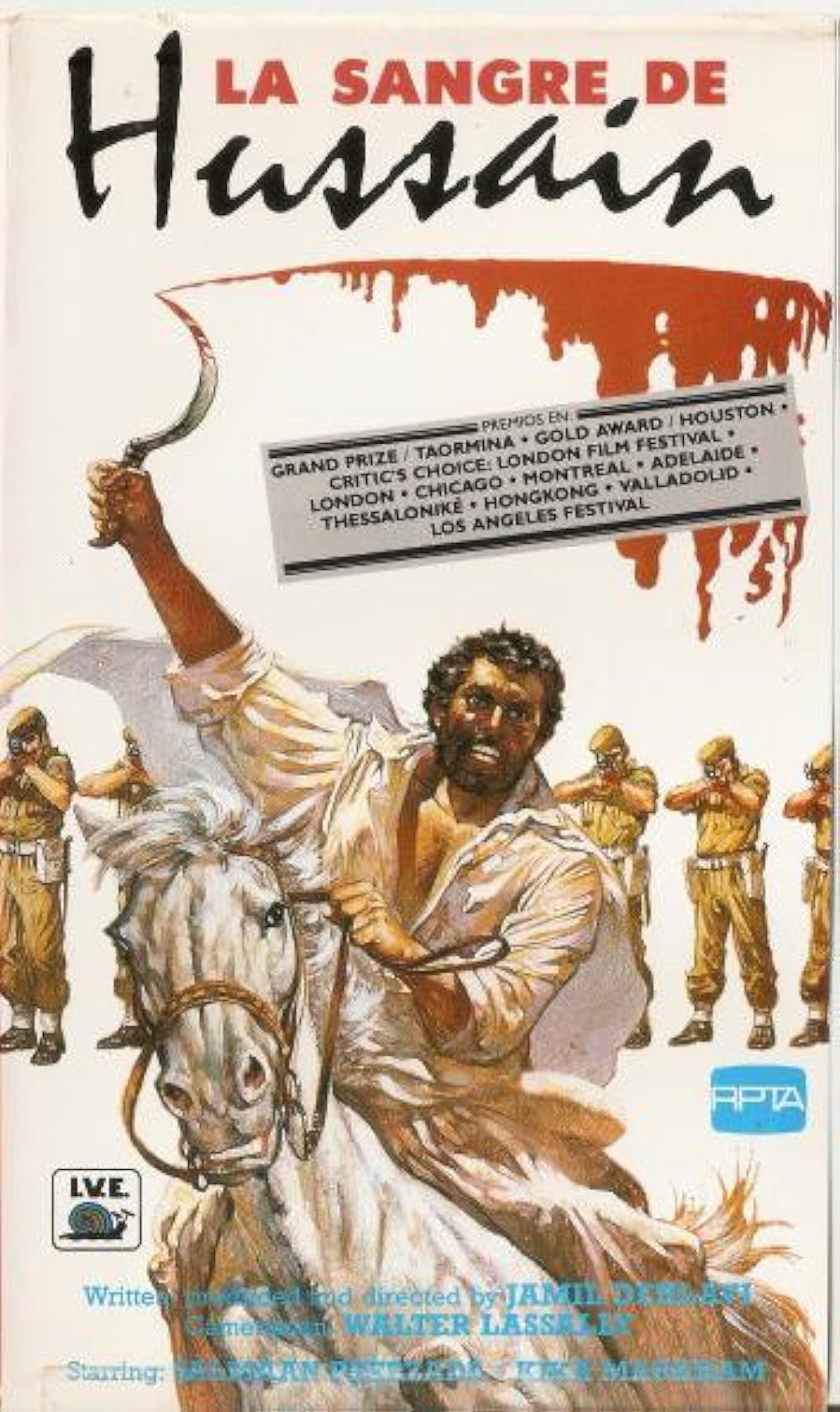
A dramatic depiction of the life of Hussain, with allegorical references to the history of the Prophet Muhammad and his descendants. It is prophesied that Young Hussain will one day lead the impoverished masses to a better life. It is his brother, Hasan, however who gains in prominence and when the government is overthrown in a military coup, he tries to adapt. Hussain in the meanwhile gets married and leads a small band of rebels in an attempt to fight the military dictatorship.
Bande-annonce
Casting
Jamil Dehlavi
Director
Salmaan Peerzada
Hussain Murtaza
Salmaan Peerzada
Selim
Kika Markham
Katherine
Durriya Kazi
Hussain's Wife
Kabuli Baba
Fakir
Mirza Ghazanfar Begg
General
Fauzia Zareen
General's Wife
Zil-e-Subhan
Peasant
Abdul Karim Baloch
Akbar
Jamil Dehlavi
Zahid
Mubila
Prostitute
Khayyam Sarhadi
Policeman
Aliya Begam
Mother
Shoaib Hashmi
Man at dinner table
Samina Peerzada
General's Daughter
Imraan Peerzada
Steward
Rafiq Abdullah
Writer
Jamil Dehlavi
Writer
Vous aimerez aussi
The Convert: Aux confins du monde
Sex Doll
Babes with Blades
MI-5 Infiltration
Darr Khuda Say
Ghar Titli Ka Par
Noorpur Ki Rani
Shanaas
Yaariyan
The Day of the Jackal
Showtrial
Thumbelina | LittleFox
Teen Wolf
The Oval
Lucifer
Zatima
Bel-Air
Stranger Things
The Chi
The Originals
Power Book II: Ghost
SEAL Team
Empire
Siren
Commentaires
5 commentaires
source: The Blood of Hussain
The director is one of the very few Pakistani directors to attempt and achieve intelligent narrative in cinema. I have only seen a couple of other movies by Dehlavi, but i believe that this film is his masterpiece. Of course, it holds greater value for Muslims, or those who are familiar with Islamic history ( or at least the events surrounding the incident at Karbala, which is alluded to in the film as well as in its title ). The plot deals with a military takeover of Pakistan ( ironically, by the time the filming came to an end around 1977, the late General Zia had imposed Martial Law in Pakistan ) and two brothers who get caught up in the resulting turmoil. One is an aristocrat, married to a British lady ( Kika Markham ) who is having an illicit affair with an army officer. The other sibling is a man of the people, living a simple life among the peasants. He owns land, and is fond of horses. He opposes the military's attempts at taking over the land of his people, while his jet-set brother quietly goes to work for the leader of the regime. the conflict between the brothers is dealt without the crutches of histrionics, which are a mainstay of Pakistani cinema. other characters and relationships are also dealt with intelligently. symbolism abounds, and the film is deliberately paced. but if you stay with it, the rewards are rich. the film is lensed beautifully, with some unforgettable images throughout. credit also goes to the special effects and make-up departments ( see if you can guess who plays the two brothers, and check out the scene where a sickle slices through a wrist! ). The film is infamous for being banned in Pakistan by the late General Zia-ul-Haq ( for being anti-Martial Law in theme ), and sadly has remained so since then. Still, it is available on video at better video stores ( Dehlavi was lucky enough to escape to England with the prints, subsequently releasing the film in 1980, with the help of BBC ). If you think that all Pakistani films are full of vulgar dances, ham acting and lousy plotlines, then you have to see this. The only comparison that comes to mind while watching it, is '1984' Whatever your views about Jamil Dehlavi ( especially in the light of the 'Jinnah' controversy ), don't miss out on this film. Rating: 8/10
source: The Blood of Hussain
The director is one of the very few Pakistani directors to attempt and achieve intelligent narrative in cinema. I have only seen a couple of other movies by Dehlavi, but i believe that this film is his masterpiece. Of course, it holds greater value for Muslims, or those who are familiar with Islamic history ( or at least the events surrounding the incident at Karbala, which is alluded to in the film as well as in its title ). The plot deals with a military takeover of Pakistan ( ironically, by the time the filming came to an end around 1977, the late General Zia had imposed Martial Law in Pakistan ) and two brothers who get caught up in the resulting turmoil. One is an aristocrat, married to a British lady ( Kika Markham ) who is having an illicit affair with an army officer. The other sibling is a man of the people, living a simple life among the peasants. He owns land, and is fond of horses. He opposes the military's attempts at taking over the land of his people, while his jet-set brother quietly goes to work for the leader of the regime. the conflict between the brothers is dealt without the crutches of histrionics, which are a mainstay of Pakistani cinema. other characters and relationships are also dealt with intelligently. symbolism abounds, and the film is deliberately paced. but if you stay with it, the rewards are rich. the film is lensed beautifully, with some unforgettable images throughout. credit also goes to the special effects and make-up departments ( see if you can guess who plays the two brothers, and check out the scene where a sickle slices through a wrist! ). The film is infamous for being banned in Pakistan by the late General Zia-ul-Haq ( for being anti-Martial Law in theme ), and sadly has remained so since then. Still, it is available on video at better video stores ( Dehlavi was lucky enough to escape to England with the prints, subsequently releasing the film in 1980, with the help of BBC ). If you think that all Pakistani films are full of vulgar dances, ham acting and lousy plotlines, then you have to see this. The only comparison that comes to mind while watching it, is '1984' Whatever your views about Jamil Dehlavi ( especially in the light of the 'Jinnah' controversy ), don't miss out on this film. Rating: 8/10
The Blood of Hussain