
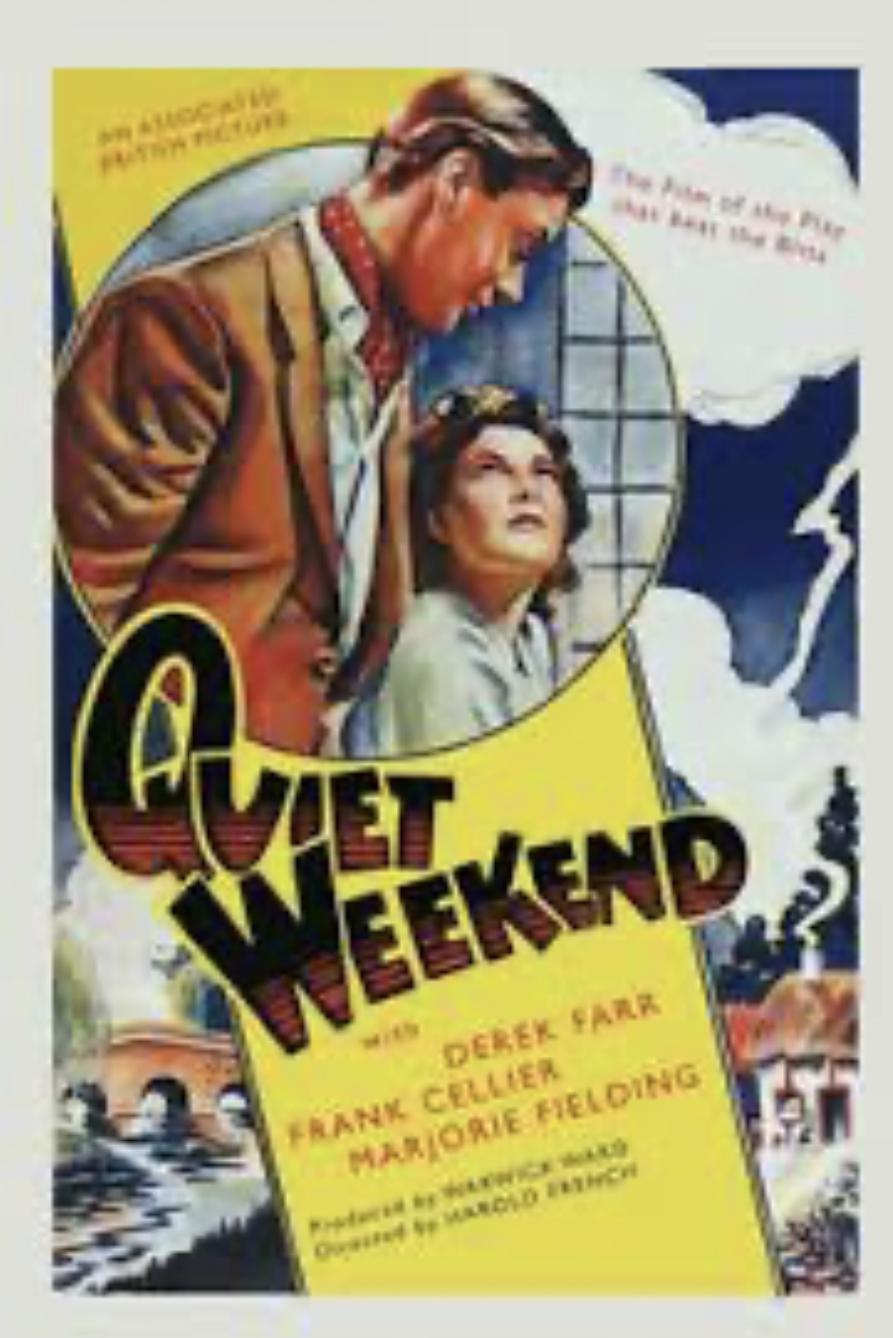
A British family hosts a weekend gathering at their country cottage, where the son's flirtatious socialite companion faces disdain from his adoring cousin, while the local magistrate indulges in salmon poaching.
الإعلان الترويجي
طاقم العمل
Harold French
Director
Derek Farr
Denys Royd
Frank Cellier
Adrian Barrasford
Marjorie Fielding
Mildred Royd
George Thorpe
Arthur Royd
Barbara White
Miranda Bute
Helen Shingler
Rowena Hyde
Edward Rigby
Sam Pecker
Josephine Wilson
Mary Jarrow
Gwynne Whitby
Marcia Brent
Ballard Berkeley
Jim Brent
Judith Furse
Ella Spender
Pat Field
Sally Spender
Hélène Burls
Bella
George Merritt
Police Sergeant
Christopher Steele
Vicar
Mary Martlew
Elena
Conway Palmer
Paul Perry
Richard George
Lorry Driver
Stephen Black
Writer
Esther McCracken
Writer
T.J. Morrison
Writer
Victor Skutezky
Writer
Warwick Ward
Writer
قد يعجبك أيضًا
Some Adult Content
Bonobo
Daphne
Hollywood Sex Wars
(لا) أحبه
The Three GentleBros
New Vanity Fair
Alan Titchmarsh's Gardening Club
Raised by Wolves
Citizen Khan
Man Like Mobeen
Queen of Oz
Defending the Guilty
نساء من هل
Smoggie Queens
Peacock
The Power of Parker
The Stand Up Sketch Show
The Goes Wrong Show
Small Prophets
ربة منزل أمريكية
الجيرة
Not Suitable for Work
آل جولدبيرج
التعليقات
10 تعليق
source: Quiet Weekend
Quiet Weekend
A real old fashioned gem. Obviously low budget but well compensated with good crisp direction and characterisation. Nothing nasty - even the upper class snob was almost likeable. A slice of English middle class probably gone forever.
Based on a play it is no too stagebound.Frank Cellier for once does not play a villain.The only real problem is who on earth would have a crush on Derek Farr.Only a lovstruck 18 year old.
This is so quintessentially 'English' you despair of what they'd make of it in Upper Sandusky. The short answer is of course it would never be shown there or indeed anywhere West of Penzance. It's the kind of world peopled by the kind of characters that Alan Ayckbourne has inherited and keeps alive and I for one am content. It's crammed to the gills with the kind of England that would be hard to find outside a play by Esther McCracken ans there should be a society for the preservation of the Quiet Weddings and Bonnets Over The Windmills of this world. There's a lovely irony in the fact that a revival of Quiet Wedding ended its run at the Coliseum on Saturday, September 2, 1939, just as the world it represented came to an end. This is a charming film that even the wooden Derek Farr can't impair and thank God Network have made it permanently available. All we need now is its big sister Quiet Wedding.
The charm in this film lies in its simplicity. Based on a stage play, it shows a middle class family staying at their weekend cottage, leading the easy type of life that has sadly long since disappeared. The highlights of this film are the dreadful concert and the poaching expedition.
The occasional attractive outdoor scenes simply throw into even sharper relief just how tinny and studio-bound the rest of this trivial sequel to 'Quiet Wedding' is as the cast just stand around and talk. And talk. And Talk. Two unexpected bits of casting are worth remarking upon though. Frank Cellier takes a break from representing cold-hearted capitalism to play a rather jolly and romantic old cove for once. While it also preserves for posterity in her stage role the bright-eyed and bushy-tailed young Barbara White who after only a handful of other film roles married Keiron Moore (who murdered her in 'Mine Own Executioner') and was lost to films forever.
For anyone born in the UK before about 1935 (as I was) this movie will bring back memories of austerity, such as very few cars and very little food and primitive plumbing. We all had to make do with what we had; the top rate of income tax was around 95%. Nevertheless the middle classes had those delicious cut-glass English accents; "thanks" was pronounced "thenks". The lower classes such as the old poacher, spoke their lines in broad accents and were usually considered to be comic characters. That has all changed now. This movie is good entertainment but also of value to the social historians. It is the way the British coped with the rigors of victory after WW II, i.e. paying off the huge loans owed to the USA while trying to become a socialist society.
Based on a play. A group assembles in the run-down country cottage owned by one couple. Their son's mousy would-be girlfriend takes on his glamorous 'latest', a haggard clothes horse with a ridiculous 40s hairdo. She asks her hostess if the family dresses for dinner. No, she says, because we don't have it. We have supper - something, and cheese and biscuits. As the mother goes out, the girlfriend mutters "cheese and biscuits". Sounds like nothing, but it's a very funny moment. Everyone is somewhat obsessed by food, but it was just post-war, and shortages and rationing ruled people's lives. No wonder Dad and friend Adrian go poaching salmon, which gives Adrian courage to propose to the lady he admires. Plus there's the ghastly village hall concert and antics of obnoxious rich party-goers. Everyone acts their socks off, including the wasps at the picnic. The salmon just has to play dead. By the way, it ends happily.
Having read Alex da Silva's comments on Marjorie Fielding's accent, I watched the film again and find that they just don't apply: she really does not say 'heppening' nor 'ectually', which was the way idle rich, aristocrats and royalty spoke. Her accent goes with the educated lower middle-class which the family is supposed to be. Charles Williams' music contributes to much of the film's charm. Otherwise, there isn't much excitement or intrigue and yet I keep going back to it. If you go onto the Pathé website you can find a short clip of the film being made in Hungerford in September 1945, with glimpses of the actors relaxing. I recommend Barbara White in 'It Happened One Sunday' where she does a very good Irish accent. I'm hoping to find 'While the Sun Shines' where she takes the lead in the 1947 film adaptation of the Rattigan comedy play, but it seems to be unobtainable at present.