
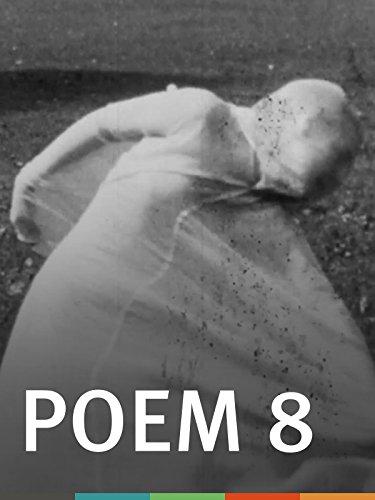
Independent film featuring modern dance in a forest, with the performers wearing white fabric costumes.
Trailer
Cast
Emlen Etting
Director
Mary Binney Montgomery
Dancer
Agnes Hitchcock
Dancer
Caresse Crosby
Dancer
Maaari Mo Ring Magustuhan
Ponyboi
Violet
Off Season
Love Duo
Nikah
Zhao Xiao Jie De Ri Ji
Secrets of the Asylum
What If
Uncle Unknown
Homecoming
Return of the Reaper
Mine
Skrrt with Offset
Legendary Carpenter
Bel-Air
The Chi
My Husband Is a Mafia Boss
Be My Boyfriend
The Prosecutor's Proposal
Where Your Eyes Linger
Kissable Lips
The Five Star Weekend
the rise of lycan queen
Arena zero
Mga Komento
6 Mga Komento
Poem 8
source: Poem 8
This early experimental film by Emlen Etting shows a woman dancing in a field of grass and wildflowers, then a train trip into a less natural environment, the city, where movement and beauty are subdued. It would seem to be a prefigurement of Maya Deren's work, but seems much more accessible. It does not use the camera tricks that Deren delights in to make people appear and disappear. It is, largely, a study in motion: the wind in long grass, the wind in trees. Yes, the dancing is sometimes overly modern and to my eye pretentious, but the creators seem to lack the annoying self-involvement that Deren's work conjures up in my mind. It is not about Etting or his subject, it is about the grace of movement. It reminds me of one of the complaints of D.W. Griffith about the studio-bound films: they had lost the wind in the trees. Etting has not lost the wind, and if his technique is not sufficient to hide his technique -- the art that conceals art -- at least he does not leave the audience to try to puzzle out what he intended. Art requires work from its audience, but appreciation of art is not the same as assembling a jigsaw puzzle.
source: Poem 8
This early experimental film by Emlen Etting shows a woman dancing in a field of grass and wildflowers, then a train trip into a less natural environment, the city, where movement and beauty are subdued. It would seem to be a prefigurement of Maya Deren's work, but seems much more accessible. It does not use the camera tricks that Deren delights in to make people appear and disappear. It is, largely, a study in motion: the wind in long grass, the wind in trees. Yes, the dancing is sometimes overly modern and to my eye pretentious, but the creators seem to lack the annoying self-involvement that Deren's work conjures up in my mind. It is not about Etting or his subject, it is about the grace of movement. It reminds me of one of the complaints of D.W. Griffith about the studio-bound films: they had lost the wind in the trees. Etting has not lost the wind, and if his technique is not sufficient to hide his technique -- the art that conceals art -- at least he does not leave the audience to try to puzzle out what he intended. Art requires work from its audience, but appreciation of art is not the same as assembling a jigsaw puzzle.