
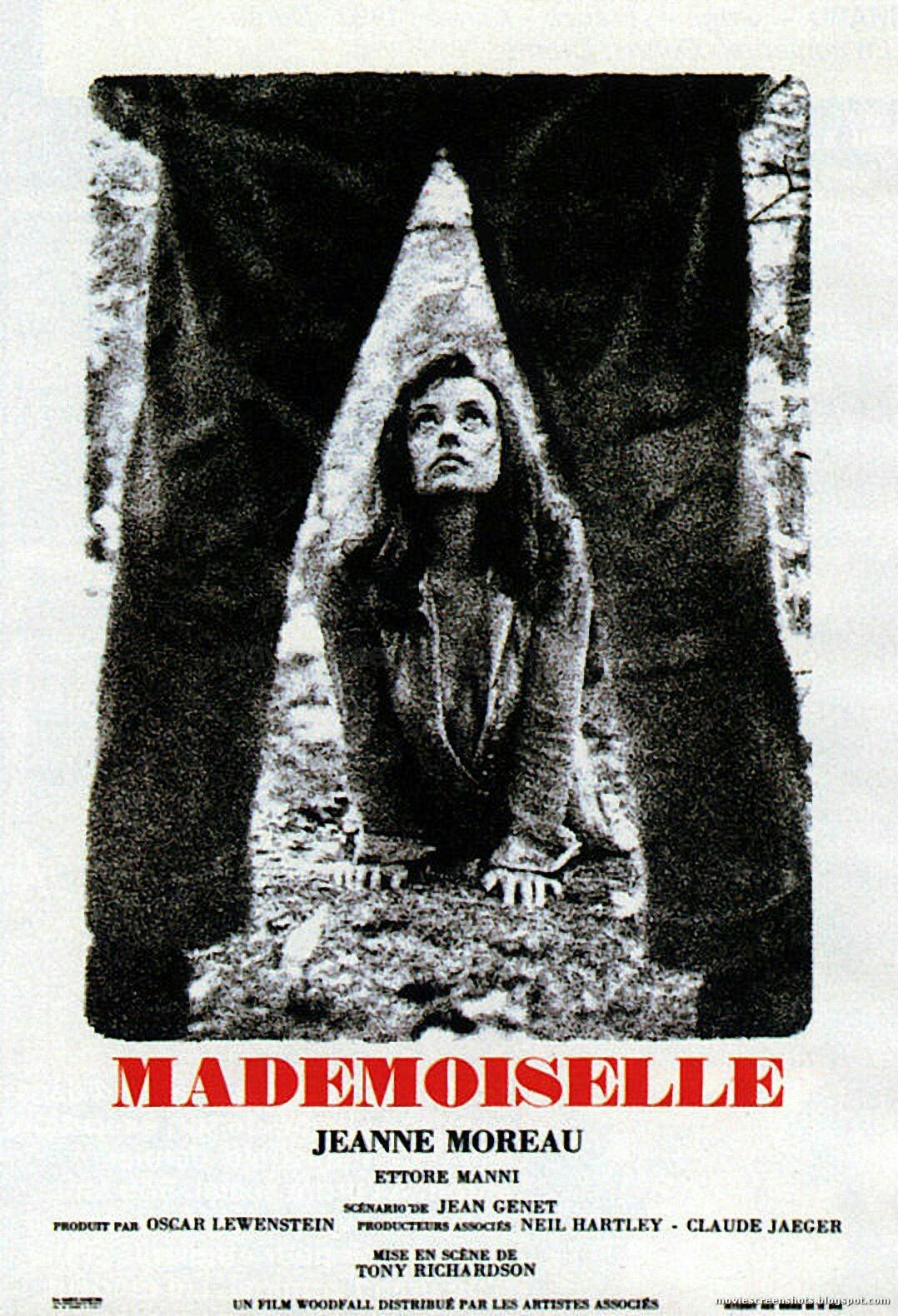
Residents of a small French town are quick to accuse Manou of arson because he seduced most of the towns women. No one suspects the real culprit, a woman committing random crimes, all in an attempt to draw Manous attention to he...
ट्रेलर
कलाकार
Tony Richardson
Director
Jeanne Moreau
Mademoiselle
Ettore Manni
Manou
Umberto Orsini
Antonio
Keith Skinner
Bruno
Georges Aubert
René
Jane Beretta
Annette
Paul Barge
Young Policeman
Pierre Collet
Marcel
Gérard Darrieu
Boulet
Jean Gras
Roger
Gabriel Gobin
Police Sergeant
Rosine Luguet
Lisa
Antoine Marin
Armand
Georges Douking
The Priest
Jacques Monod
Mayor
Mony Rey
Vievotte
Jacques Chevalier
3rd Policeman
L. Chevallier
Old Peasant
Jean Genet
Writer
Bernard Frechtman
Writer
आपको ये भी पसंद आ सकते हैं
The Convert
Sex Doll
Babes with Blades
Spooks: The Greater Good
Peaky Blinders
The Forsytes
The Full Monty
White House Farm
Grayson's Art Club
Sistas
Beauty in Black
Lucifer
Zatima
From
Power
The Witcher
SEAL Team
Adulting
The Cleaning Lady
The Family Business
Kwa Baba
Tulsa King
वो पहली बार
Alchemy of Souls
टिप्पणियाँ
10 टिप्पणियाँ
I gave up one third of the way through and turned to watch the paint dry on the wall. I got tired of Moreaux never changing her crabby facial expression. Whoever thinks this film was sensual must find a constipated expression titillating. If this was part of the French wave they should have flushed completely.
source: Mademoiselle
Mademoiselle
And ages well. Good story and players. Moreau as usual is great. Jean Genet gets in the head of others.
In a village populated only by cowardly fools, reprehensible things often occur such as fires, a flood, poisoning of the water, all caused by one person. Who is the author and why does this mysterious person does these things? You will see a movie not like others, with a sensual Jeanne Moreau, who, in one scene, the only funny one in the whole movie, she squeaks like a puppy. There are people like the character played by Jeanne Moreau in real life. And the actress managed an admirable portrait.
Spoilers herein. French films, even artificially French ones like this, compress all their depth and simplicity of reading together. So that after the first few it becomes so boring you need to invent your own depth. In this case, we are helped a little. The Italian and the fires and the sex and all that is imagined. Moreau knows this and adds some ambiguity to the dark world. Not bad if you can work with the layers as you move through the levels of dreams and remembered visions. And know something the French filmmaker's anxiety about Italian films' claims for more acute verity. Ted's Evaluation -- 2 of 3: Has some interesting elements.
I gave up one third of the way through and turned to watch the paint dry on the wall. I got tired of Moreaux never changing her crabby facial expression. Whoever thinks this film was sensual must find a constipated expression titillating. If this was part of the French wave they should have flushed completely.
This movie, most notable for its authors, Playwright Jean Genet, is a lost classic which one ups Bunuel's Diary of a Chambermaid in its portrayal of the secret twisted desires of the rural french. Jeanne Moreau stars as a teacher in a rural french village. Her secret desire for the Italian logger Manou leads her to acts of brutal destruction on the town. A brilliant story combined with luscious camera work and nearly silent but incredibly tense scenes with Jeanne Moreau lead to making this movie an absolute must see.
First a warning: if you can't stomach any scenes of animal suffering, do yourself a favor and steer clear of this film. I just saw a brand new print of this film. In all its Cinemascope glory, this is a breathtaking film, incredibly photographed and directed. And there are some incredible touches in the telling of this story. My problems with this film derive from a few things: 1. though the goal of this film is to build a dark and compelling yarn of the simple banality of evil, there are ways that you can read this film that really undo that goal, especially as it pertains to the female character at the center of the drama and the way we're ultimately encouraged to view the impetus of her rage, 2. the town ends up being a shadow character which is effective in some ways, but it is also unsettling. No question this is an important film that should be seen. 7.5
I learned about "Mademoiselle" from a "Salon" web interview with cinematographer John Bailey (see link below). He pointed out a remarkable thing—that the film consists entirely of static wide-screen shots. No pans, no zooms, no dollying, just one immaculate, immobile shot after another. That's one reason the film, unpleasant as it may be, has a calm unsettling pace that's the opposite of today's frenetic films. Bailey said: "...the fascinating thing about (Richardson's film) is there's not a single camera movement in the entire film...All the action happens within a static frame. This film is, like, two hours long, and it's absolutely riveting. It's so unlike anything that you would ever see now." from Salon article www.salon.com/ent/movies/feature/2003/07/03/cinematographers