
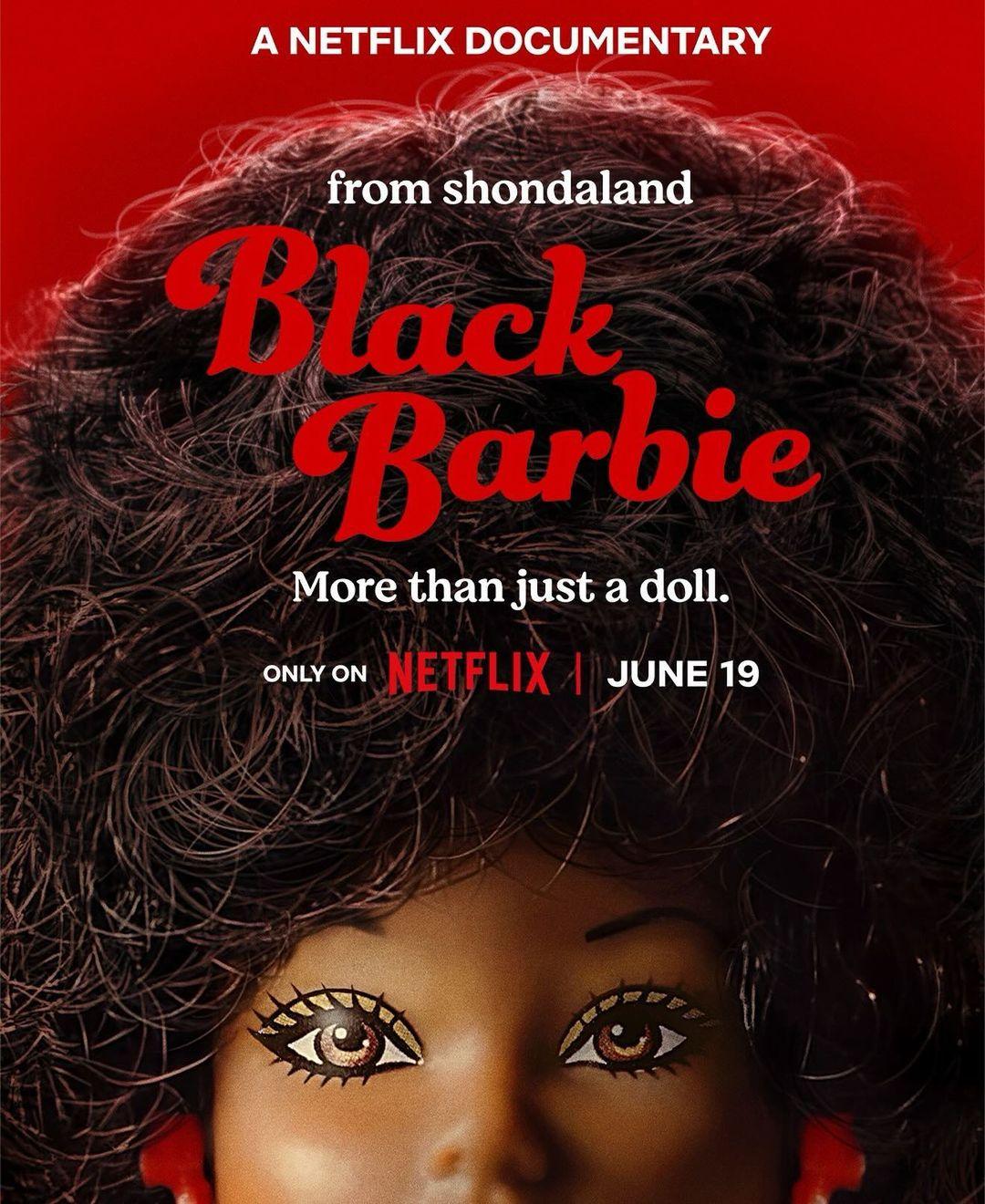
Avec cette histoire méconnue de la première Barbie noire, découvrez le rôle essentiel joué par trois pionnières de Mattel dans la création d'une poupée qui leur ressemblait.
Bande-annonce
Casting
Lagueria Davis
Director
Lagueria Davis
Self - Writer
Lagueria Davis
Self - Director
Beulah Mae Mitchell
Self - Mattel Employee, 1955 -1999
Maxine Waters
Self - U.S. Representative for California's 43rd District
Shonda Rhimes
Self - Television Creator, Author & Barbie
Amitis Motevalli
Self - Artist & Director at the William Grant Still Arts Center
Pat Turner
Self - Dance
Bill Greening
Self - Principal Designer for Barbie Signature at Mattel
Virginia Watson
Self - Black Barbie Collector
Monica L. Bailey
Self - Community Coordinator & Storyteller
Yolanda Hester
Self - Public Historian
Billie J. Green
Self - Doll Collector
Kitty Black Perkins
Self - Black Barbie Designer
Misty Copeland
Self - Ballerina, Author & Philanthropist
Ibtihaj Muhammad
Self - US Olympic Medalist, Entrepreneur & Barbie
Julissa Calderon
Self - Actress & Entrepreneur
Hayley Marie Norman
Self - Child Barbie Model & Actress
Shellie Lewis
Self - Writer
Shellie Lewis
Self - Producer
Ashley Blaine Featherson-Jenkins
Self - Actress
Ashley Blaine Featherson-Jenkins
Self - Host
Ashley Blaine Featherson-Jenkins
Self - Producer
Lagueria Davis
Writer
Vous aimerez aussi
Black Barbie
Addicted to Sexting
Rat Film
Stormy
The Many Lives of Martha Stewart
The Secrets of Your Food
For the People
The Man with 1000 Kids
Millionaire Murders
Danse avec le diable: Une secte sur TikTok?
1000-lb Best Friends
Too Large
Sex Sells
Magic City: An American Fantasy
Le règne animal
Marines: Au cœur du corps américain
Notre univers
The BMF Documentary: Blowing Money Fast
Les Principes du plaisir
The Mind, Explained
Trust Me: The False Prophet
Seduced to Slay
Michael Jackson: The Verdict
New York : Au cœur de l'urgence
Commentaires
6 commentaires
As a BB collector, I was eagerly looking forward to this documentary. For those of us who collect BB there is very little media attention given to the historical significance of BB. I thought the doc was well done, the narrator seemingly not liking dolls at the beginning and then saying she liked them at the end I found to be fake for the sake of the documentary and unnecessary. At least that is how it came across. The inclusion of certain commentators was also puzzling. Why was Gabourey Sidibe, who had no experience with BB or anything of value to add to the documentary included? Was she there for window dressing or did the producers want to make a point? I still don't get it. At least other contributors could relay their direct experience either owning or playing with the dolls. The social experiment with the children and the dolls was interesting but was too long and should have been edited. Although the scene of the black boy grabbing up the white barbie claiming she is the nicest, prettiest etc..is a scene that will never leave me. My goodness I hope his parents are able to help him overcome his lack of self awareness. It also would have been interesting to see actual BB collections of people, like myself who have spent decades cultivating their collection. Maybe expand the documentary outside of the scope of a few people. The discussions with Kitty Black Perkins and the Mattel employees was fascinating and I would of liked to hear more details about specific dolls, especially the vintage ones including the black males. Christie/Brad /Francie/Cara/Curtis. This documentary was a decent effort but I found it lacking in many areas.
Don't miss out on this great documentary. It brought tears to my eyes as it highlights the significant challenges women of color face in feeling seen and appreciated. The film beautifully showcases the remarkable innovation that Black Barbie brought to the world of children's toys, breaking barriers and setting new standards. The documentary is shot in an incredibly captivating way, visually stunning, and deeply moving. It meticulously details the progressive steps in how Black Barbie got her unique look and how she has evolved over time, reflecting broader societal changes and inspiring many. This film is a must-watch for anyone interested in cultural history and the powerful impact of representation in media and toys.
Director and writer Lagueria Davis has created an amazing movie that asks so many questions about Barbie and what she means to the world of race. Yes, there were once no black Barbies, then there was only Julia, Barbie's black friend who had no African-American features, just the same doll with black skin. And today, we have come pretty far, but still not far enough, as this movie shows. Davis' aunt Beulah Mae Mitchell worked at Mattel for 45 years and was only the second black person to work at their headquarters. She became friends with the woman who created Barbie, Ruth Handler, as well as Kitty Black Perkins, who made the first black-featured Barbie. At one point, girls had to ask, "Why not make a Barbie that looks like me?" I was thinking about this today at a toy show, as when I was a kid, the only choices black kids had when buying Star Wars toys were Lando and one of his Bespin guards. That's it. Two black dolls and hundreds of other aliens and all white people. I liked how this film showed how people interacted with the doll as kids, what it means to them today and how the brand still needs to do better. That said, the fact that representation has increased does mean something. As a purchaser of boy toys growing up, G. I. Joe always had a diverse team of ethnicities and outlooks, even having multiple African-Americans: Roadblock, the heavy machine gun soldier who joined the army to learn how to be a chef; Doc, a military chaplain and medic who despite being on an anti-terrorism task force is a pacifist; Stalker, who escaped the ghettos of Detroit to be a leader and Alpine, who was an accountant and a mountaineer. On the cartoons, the Cobras even had black characters, such as Cobra officer Lieutenant Clay Moore and Raven, a Strato-Viper pilot. As for He-Man, an all-white line, they have added the Sun Man characters to their characters, providing some much-needed addition of other races. The "Barbie and Nikki Discuss Racism" moment in this in pretty weird, though. I think it's important to speak on these issues, but even G. I. Joe mainly handled problems like downed power lines. It's a big topic for kids to get into and are Barbie and Nikki the right people to be discussing these heavy issues? Black Barbie raises thoughts and questions I didn't think of and for that, I found it an interesting film. I'd liked if it was a little shorter, but it's not my movie or story to tell.
While some of the Mattel-worshippers in Black Barbie probably mean well enough, their incessant whinging about the lack of expensive black dolls left me shaking my head in disbelief as the credits rolled past. For many of us who grew up in ghettos, dolls were made by parents or ourselves out of anything available. Obviously it didn't take a huge multinational corporation to invent black dolls, yet Davis' message is that of learned helplessness: if your desires aren't being met, huge corporations must be coerced to step in. This is antithetical to the mindset of the productive class. It's a shame Davis didn't consider including an empowering viewpoint to balance the appeal to intersectional authoritarianism that permeates this loose excuse for a documentary. Such a let-down.